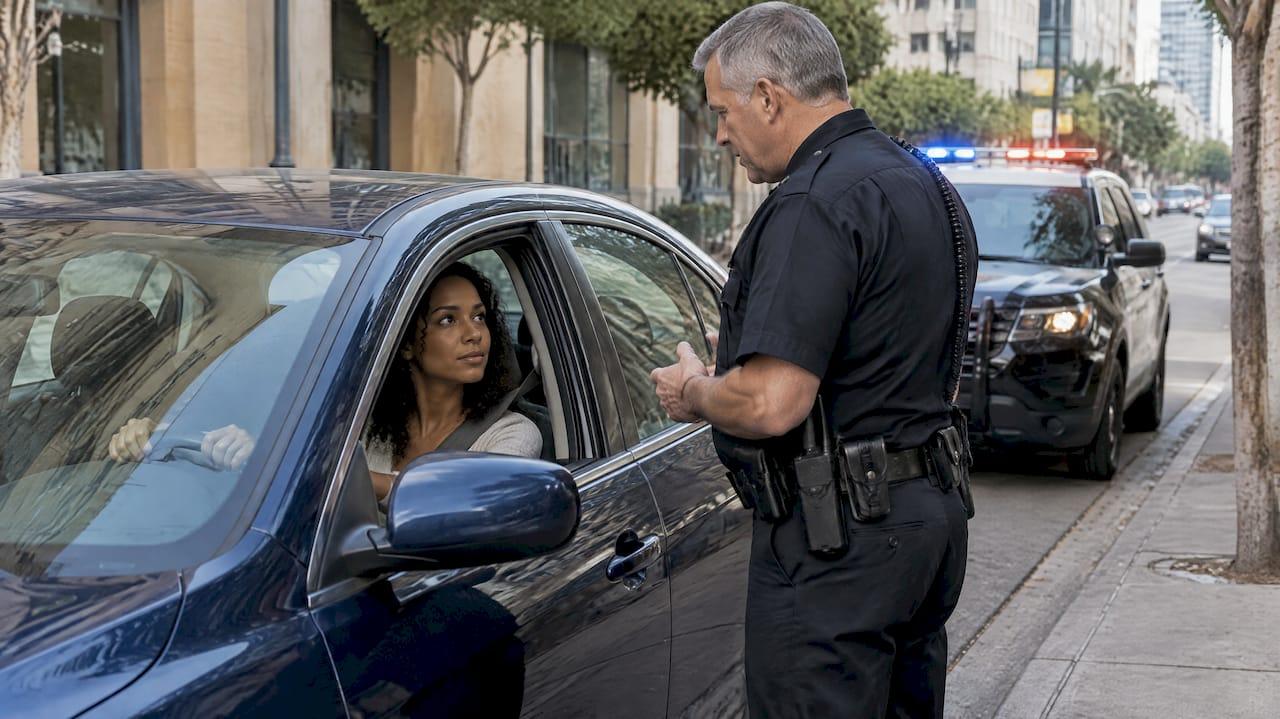
California has no legal THC limit for driving. A marijuana DUI is charged as driving under the influence of a drug under Vehicle Code §23152(f), and the question is impairment, not a number on a lab report. Legal cannabis and a medical card do not change that. A first offense can still bring jail exposure, fines, a DUI program and a license suspension, and the case usually turns on how the officer and the prosecutor try to prove impairment.
This guide explains the charge, how it is proven, what the penalties look like, what happens to your license, and where a defense typically has room to work.
TL;DR
- There is no "marijuana DUI" statute. Drugged driving is charged under Vehicle Code §23152(f), and cannabis counts as a drug.
- California has no per se THC limit. The state must show the substance impaired your driving, not merely that you used it.
- A first offense can mean up to 6 months in county jail, a $390 to $1,000 fine, a DUI program and a DMV suspension.
- Your license is on a separate clock. You have 10 days after arrest to ask the DMV for a hearing.
- A medical card or legal use is not a defense. Impairment evidence, the stop, and testing procedures are where cases are fought.
Table of Contents
- Is a marijuana DUI a real charge in California?
- Is there a legal THC limit for driving?
- How prosecutors try to prove marijuana impairment
- Blood tests, implied consent and refusal
- Penalties for a marijuana DUI in California
- What happens to your license
- Does a medical card or legal use protect you?
- Ways a marijuana DUI is defended
- What to do in the first days after an arrest
- Our perspective
- If you have been arrested for a marijuana DUI in San Diego
- FAQ
- Sources
Is a marijuana DUI a real charge in California?
Yes, though it goes by a different name. The code says it is unlawful for a person under the influence of any drug to drive a vehicle. Prosecutors and lawyers usually call it a drugged driving DUI, a drug DUI, or a DUI of marijuana. People searching online also say "driving high" or "stoned driving," but the charging document will cite the Vehicle Code.
Why does cannabis count as a drug? The Vehicle Code defines "drug" as any substance other than alcohol that could affect the nervous system, brain or muscles enough to impair, to an appreciable degree, your ability to drive the way an ordinarily prudent and cautious person would. Nothing in that definition cares whether the substance is legal to buy. The DMV's own handbook says California's DUI laws apply to both alcohol and drugs, including prescription and over-the-counter medications.
That last point matters for a reader who thinks of marijuana as a special case. In the eyes of the DUI statute it is not. It sits in the same category as a sedating prescription pill.
Is there a legal THC limit for driving?
No. For alcohol, the law sets a number: 0.08% BAC for most adult drivers, 0.01% if you are under 21 or on DUI probation, and 0.04% for commercial drivers and passenger-for-hire drivers, according to the DMV. The CHP's DUI policy likewise ties the per se alcohol charge in §23152(b) to a chemical test of 0.08 percent or greater. There is no equivalent for THC.
Why not? Because THC levels do not track impairment the way alcohol levels do. A Yale researcher studying THC and driving for the National Highway Traffic Safety Administration told CBS News that driving impairment lasts a few hours at most, while THC stays in the body much longer, so a simple limit would not work. A California lawmaker and former CHP officer said in the same report that relying only on a THC measurement could be inconclusive.
The CHP describes the standard the same way. A spokesperson told the Sacramento Bee that cannabis influence is judged by a totality of circumstances while driving, and that testing is ongoing to help officers determine what level is too much. A NORML policy expert in that article described California's approach as an effect-based standard rather than a per se limit.
For you, this has a practical meaning. A positive blood result is not the whole case. The prosecution still has to connect it to impaired driving.
How prosecutors try to prove marijuana impairment
Because there is no number to rely on, the case is built from layers of observation. Expect the evidence to come from some or all of these:
- The driving itself. The reason for the stop: weaving, speeding, a lapse in lighting, a collision.
- The officer's observations. Odor, eyes, speech, how you handled your license and registration, and what you said about when you last used cannabis.
- Field sobriety tests. The CHP manual identifies Horizontal Gaze Nystagmus, Walk and Turn, and One Leg Stand as the primary standardized field sobriety tests because of their scientific validation, and says officers should use them whenever possible. The same manual tells officers to record the stop and the driver's response as evidence.
- A chemical test. Blood is the usual choice for drugs. We cover the rules below.
- Any drug evaluation. Some departments use specially trained officers for a longer evaluation after arrest.
Each layer has weak points. Standardized field tests were designed around alcohol, and they are sensitive to conditions like uneven pavement, footwear, nerves, fatigue, medical conditions, or an officer who does not follow the protocol. Odor of cannabis shows past or nearby use, not impairment. A blood draw shows presence, sometimes long after any effect has passed. A defense lawyer reads the body-camera video, the report and the lab file side by side, looking for the gap between what the officer saw and what the state needs to prove.
If your case involves a drug in addition to alcohol, or cannabis combined with another substance, our page on drug-related DUI defense in San Diego explains how those charges are approached.
Blood tests, implied consent and refusal
California is an implied consent state. Under §23612, anyone who drives on California roads is deemed to have consented to chemical testing of blood or urine to determine drug content after a lawful DUI arrest. Refusal brings a fine, mandatory jail time if you are convicted, and a one-year license suspension.
The DMV handbook confirms that an officer who suspects you are driving under the influence of drugs or alcohol may ask for a blood or urine test, and that refusal means a one-year suspension or revocation of your driving privilege.
Two things are worth knowing before anyone is ever stopped:
- A roadside breath device is not the same as the post-arrest test. The consequences above attach to the chemical test after a lawful arrest, and the rules differ for drivers under 21.
- The legislature has looked at a five-nanogram threshold. A Senate committee analysis of a bill about drivers under 21 described a THC blood plasma level of five nanograms per milliliter as the proposed "detectible quantity." That was a proposal reviewed in committee. It is not a general adult limit.
Refusal decisions are high stakes and fact-specific. Our guide to chemical test refusal in California walks through what follows a refusal and how it is handled in court and at the DMV.
Penalties for a marijuana DUI in California
The penalties for a drug DUI follow the same sentencing scheme as an alcohol DUI. The numbers below come from the state Senate's March 2026 DUI overview and the San Diego Superior Court's DUI addendum. Actual sentences depend on your record, the facts, and the judge.
| Offense (within 10 years) | County jail | Fine | Program | License |
|---|---|---|---|---|
| First | Up to 6 months | $390 to $1,000 | 3-month program, or 9 months if BAC was 0.20 or more or you refused a test | 6-month court suspension |
| Second | Up to 1 year, 4-day minimum | $390 to $1,000 | 18 or 30 months | 2-year suspension |
| Third | Up to 1 year, 30-day minimum | $390 to $1,000 | Longer program, interlock device | Longer suspension |
| Fourth or later | Wobbler, up to 3 years, 30-day minimum | $390 to $1,000 | Program, interlock device | Longer suspension |
Sources: the state Senate DUI overview for jail ranges and offense levels, and the San Diego Superior Court DUI addendum for first and second offense fines, programs and suspensions.
You may see slightly different minimum jail figures from different sources. That is because minimums vary by statute section, by whether the court uses the lower or higher range, and by how a sentence is structured. NORML's summary, for example, lists 96 hours to 6 months for a first offense, while the San Diego court addendum lists 48 hours to 6 months. Your lawyer should tell you which applies to your charge and courtroom.
Some other points:
- Many first-offense cases do not end in the maximum. Outcomes depend on the evidence, any plea agreement, and mitigating facts. We make no promise about outcome in any case.
- Injury, a prior, or a commercial license change the picture. See our pages on DUI with injury, felony DUI, second DUI offenses and commercial license DUI.
- Under 21 is treated differently. Our guide to under 21 DUI in California covers the lower thresholds.
For a fuller picture of how a first case unfolds, read First Time DUI in California.
What happens to your license
There are two separate tracks, and people often miss the first one.
The DMV track (administrative). After a DUI arrest the DMV's Administrative Per Se law requires suspension of your driving privilege. The officer may take your license and issue a 30-day temporary license, and you can ask for a DMV hearing within 10 days. The state Senate overview says this suspension happens shortly after arrest, before the criminal case ends, and lasts 4 months for a first offense with no refusal and BAC under 0.15%, and 1 year if there are priors, a refusal, or a BAC of 0.15% or higher.

The court track. Court suspensions are triggered automatically on conviction. The same overview says they run from 6 months for a first conviction up to 4 to 5 years for a fourth or later conviction.
The 10-day deadline is the one that costs people their driving privileges, because it runs while you are still processing the arrest. A DMV hearing is a chance to challenge the stop, the arrest and the testing, and it can also reveal what the officer's evidence looks like. If you were arrested, read about the DUI DMV hearing process, and see how a San Diego DMV hearing lawyer can handle it.
If you hold a professional license, a DUI can reach beyond the DMV. Physicians can read what a DUI means for a medical license, and other licensed professionals should ask early about reporting duties.
Does a medical card or legal use protect you?
No. This is the most common misunderstanding. California law has no exception for lawful medical marijuana users, and the state must show the substance impaired the driver. The CHP's cannabis policy says the same from the enforcement side: qualified medicinal patients and caregivers are prohibited from driving while impaired by cannabis, and so are recreational users.
Several related rules can add charges to a DUI stop:
- Consuming in the vehicle. The DMV says it is illegal to smoke or eat cannabis while driving or riding as a passenger. The CHP policy also prohibits consuming cannabis in a vehicle on or off the highway.
- Open containers. Cannabis in the car must be in a sealed, unopened container or in the trunk or another area where passengers do not sit. That is the DMV's rule, and it applies to alcohol too.
- Possession limits. Adults 21 and older may possess up to 28.5 grams of cannabis and up to eight grams of concentrate under the CHP's summary of state law, linked above.
- Federal law. Cannabis remains a Schedule I drug under the federal Controlled Substances Act, as local reporting has noted. That matters on federal property and at borders and airports. See our page on federal and border defense.
So what about the questions people ask? Is hotboxing a parked car illegal? Consuming cannabis in a vehicle is prohibited under the CHP policy, and an officer who sees signs of impairment can investigate. Can you travel with marijuana from California? Within the state, the sealed-container rule applies. Crossing state lines or entering federal land raises federal issues, so get legal advice before you go.
Ways a marijuana DUI is defended
Every case is different, and a lawyer should review your actual reports and video. These are the questions a defense usually asks:
- Was the stop lawful? Without reasonable suspicion, evidence can be challenged.
- Was there real impairment? Driving that looks normal on video is a strong fact. So are clear speech, steady movement and a cooperative encounter.
- Were the field tests given and scored properly? Protocol, conditions and medical issues matter.
- What does the test result actually show? Because THC can remain after any effect fades, presence alone does not establish impairment at the time of driving. Timing of the draw matters too.
- Was the chain of custody and lab work sound? Blood evidence has to be handled and analyzed correctly.
- Is there a path to a reduced charge or dismissal? In some cases, negotiation or a diversion program is an option.
Once a case is filed, you will go through arraignment, pretrial and possibly trial. Our guide to the DUI court process in California explains each step.
What to do in the first days after an arrest
- Calendar the DMV deadline. You have 10 days from arrest to request a hearing.
- Write down what you remember. Where you were, when you last used cannabis, what the officer said, what tests were given. Do it while it is fresh.
- Do not discuss the case with anyone but your lawyer, and keep social media quiet.
- Keep your paperwork. The temporary license, the citation and any test paperwork.
- Do not drive on a suspended license. That creates a new charge.
- Talk to a criminal defense lawyer early. The DMV and court tracks run at once, and early evidence preservation can matter.
Our perspective
Cannabis DUI cases are some of the most defensible drug cases we see, because the state cannot point to a legal limit. It has to tell a story about impairment, and a story can be challenged.
We start with the evidence the prosecution needs to hold together: the reason for the stop, the video, the field tests and the timing of any blood draw. We also look at the person behind the file. A judge or jury should hear who you are, where you work, who depends on you and what happened that night.
That is how we approach every case. We combine trial experience with an understanding of diversion programs, and we look for chances to act early, sometimes before charges are filed. For a first-time arrest, a driver with a professional license at risk, or a veteran, that can change what the case becomes.
Logan Noblin
If you have been arrested for a marijuana DUI in San Diego
The Law Office of Logan Noblin, APC defends DUI and drug cases in San Diego, including drug-related DUI and marijuana offenses. We handle both the criminal case and the DMV side, and we look at diversion options where they fit. To discuss your situation, contact our San Diego criminal defense office.

FAQ
What is it called when you drive while high?
It is charged as driving under the influence of a drug, under Vehicle Code §23152(f). People also say drugged driving or marijuana DUI, but there is no separate cannabis statute. The same DUI penalty scheme applies as for alcohol.
Can I get a DUI for marijuana if it is legal in California?
Yes. Legal purchase and use for adults 21 and over does not permit impaired driving. The CHP's policy prohibits driving while impaired by cannabis for both medical and recreational users. The state still has to show impairment, not just use.
Is there a THC blood level that proves I was impaired?
Not in California. There is no per se THC limit, and researchers note that THC can remain in the body long after impairment ends. A blood result is one piece of evidence that a defense can examine, alongside the driving, the field tests and the timing of the draw.
Will I lose my license after a marijuana DUI arrest?
The DMV can suspend your driving privilege after arrest, separately from the court case. You can request a hearing within 10 days. A first-offense administrative suspension is 4 months under the state's overview, and refusing a chemical test brings a one-year suspension. A conviction adds its own court suspension.
Sources
- California Vehicle Code, DUI statutes (leginfo)
- California Vehicle Code §312, definition of drug
- California DMV Driver Handbook, Alcohol and Drugs
- CHP HPM 70.4 Chapter 4, DUI policy
- CHP HPM 70.4 Chapter 2, field sobriety tests
- CHP General Order 70.16, Cannabis Laws
- Sacramento Bee, driving while high under California law
- CBS News Los Angeles, California lacks a legal THC limit
- California Senate SB 65 analysis
- California Senate DUI overview, March 2026
- San Diego Superior Court DUI Addendum
- NORML, California drugged driving
- 10News, San Diego cannabis rules