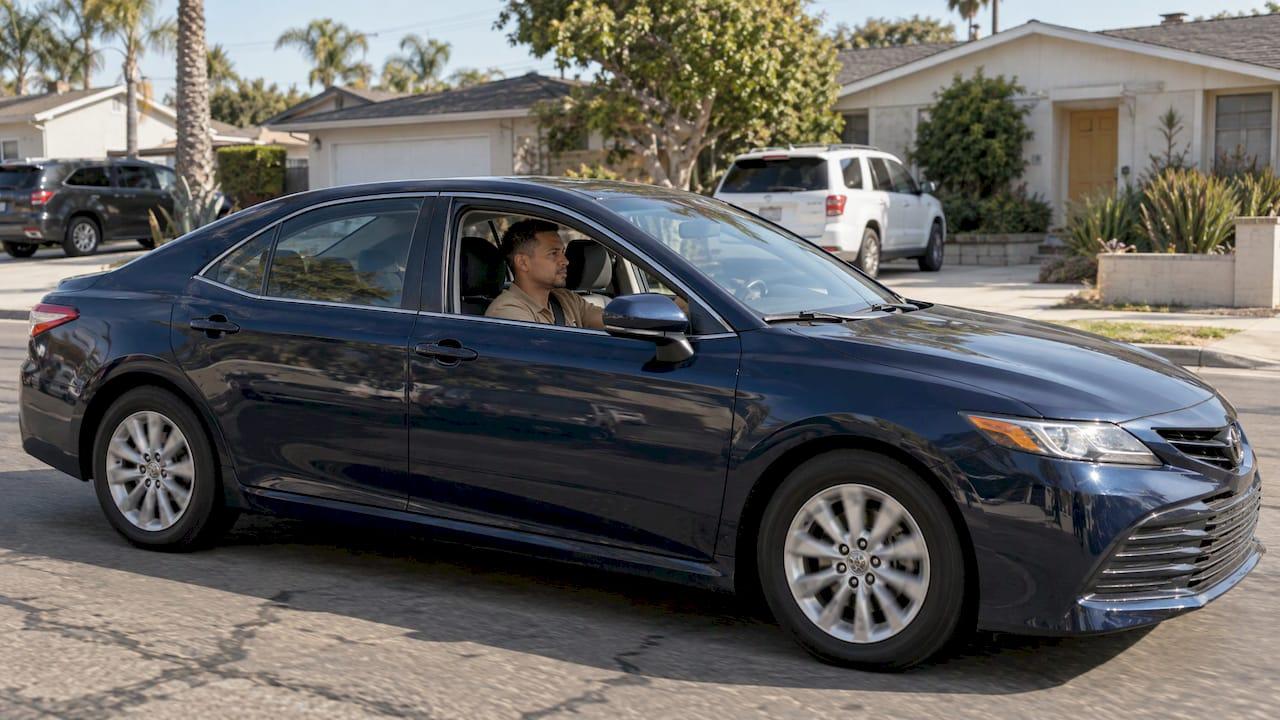
Vehicle Code 10851 is California's "joyriding" statute. It makes it a crime to drive or take a car that isn't yours without the owner's consent, even if you never meant to keep it. It can be charged as a misdemeanor or a felony, and what sounds like a minor offense can carry real jail exposure and a lasting record. Below, we explain what the law says, what prosecutors have to prove, how penalties work, and the defenses that come up most often.
TL;DR
- VC 10851(a) covers taking or driving someone else's vehicle without consent, with intent to deprive the owner of it either permanently or temporarily. The statute itself says this applies with or without intent to steal.
- It is a "wobbler": up to one year in county jail and a fine of up to $5,000 at the base level, with felony exposure and a fine of up to $10,000 in specified situations.
- Joyriding is not the same as vehicle theft. Theft requires intent to permanently deprive the owner. Joyriding does not.
- Real defenses exist, including consent and a genuine mistaken belief that you had permission.
- A felony 10851 charge can often be reduced or resolved well when handled early by a defense attorney.
Table of Contents
- What VC 10851 actually prohibits
- What prosecutors must prove
- Joyriding vs. vehicle theft
- Misdemeanor or felony: penalties under 10851
- Attempted 10851
- Defenses to a joyriding charge
- Our perspective
- Reducing or resolving a felony 10851
- What to do if you're charged or under investigation
- Get help with a 10851 charge in San Diego
- FAQ
- Sources
What VC 10851 actually prohibits
The text of California Vehicle Code § 10851(a) makes it a public offense to drive or take a vehicle that is not yours, without the owner's consent, and with intent to deprive the owner of title or possession. That intent can be permanent or temporary. The statute also reaches anyone who is a party, accessory, or accomplice in an unauthorized driving or taking.
That last point catches people off guard. You don't have to be the one behind the wheel to be charged. A passenger who helped plan the ride, kept watch, or otherwise took part can face the same charge as the driver.
The law is called "joyriding" because of the typical picture: a group of teenagers take a neighbor's car for a spin and bring it back, or abandon it down the road. But the statute is much broader than that picture. It is used in cases involving:
- A borrowed car that wasn't returned when promised
- A rental or employer vehicle used outside the agreed purpose
- A car driven after someone else stole it
- A vehicle taken during a family or relationship dispute
- A car taken from a repair shop or valet
What prosecutors must prove
Courts have spelled out the elements. In People v. Green (1995), the Court of Appeal described them as follows:
- You drove or took a vehicle belonging to someone else.
- The owner did not consent.
- You had the specific intent to deprive the owner of title or possession, permanently or temporarily.
Knowing the car was stolen is not itself an element. The court said it can be evidence of your intent, though. If a prosecutor can show you knew the car was stolen, they will use that to argue you meant to deprive the owner of it.
The jury instruction for felony 10851, CALCRIM No. 1820, adds two practical details. A "taking" requires that the vehicle moved some distance, however small. And prior permission doesn't carry over: even if the owner let you or someone else drive the car before, a jury may not conclude the owner consented on the charged occasion based on that earlier consent alone.
Taking versus driving
The statute covers two different acts, and the difference matters. In People v. Frye (1994), the Court of Appeal explained that the statute can be violated just by driving a car without the owner's consent. You don't need to have been the person who originally took it. The "taking" itself is limited to removing the vehicle from the owner's possession.
So someone who gets into a car days after it was stolen and drives it can be charged under 10851 as a driver, even though they never took it from the owner.
The Court of Appeal in People v. Green also explained that the driving language applies where someone first gets lawful possession and later forms the intent to deprive the owner of it. It also applies where someone obtains the car under circumstances showing they knew their use was depriving the owner of possession. A friend who borrows your car and then decides to keep it for weeks is the classic example.

Joyriding vs. vehicle theft
People use "joyriding" and "grand theft auto" as if they were the same. Legally they aren't.
According to a Los Angeles County District Attorney legal brief, taking a vehicle with intent to deprive the owner only temporarily is not theft, because it lacks intent to steal, meaning intent to permanently deprive. Unlawful driving after the theft is complete is not a form of theft either.
This distinction drives the charging decision. A 10851 count can rest on four different theories: a theft-based taking, a non-theft taking, a driving after a theft, or a driving without a theft. The theory the prosecutor picks affects how the case is classified and how it can be reduced.
If your charge involves property crimes more generally, our guides on grand theft versus petty theft in California and grand theft under PC 487 explain how those charges work.
Misdemeanor or felony: penalties under 10851
VC 10851 is a wobbler, meaning prosecutors can file it as a misdemeanor or a felony. Van Orden confirms 10851 violations are wobblers.
The statute sets out the punishment:
| Level | Custody | Fine |
|---|---|---|
| Base offense, 10851(a) | Up to 1 year in county jail, or imprisonment under Penal Code 1170(h) | Up to $5,000, or both fine and custody |
| Specified vehicles (felony) | 2, 3, or 4 years under Penal Code 1170(h) | Up to $10,000, or both fine and custody |
A sentence under Penal Code 1170(h) is served in county jail, not state prison, in most cases. The statute lists which vehicles trigger the higher range, so read the current text of the section or have an attorney confirm how it applies to the vehicle in your case.
Beyond jail and fines, a conviction can bring formal probation, restitution to the owner for damage, and a criminal record that shows up in background checks. Courts have also treated vehicle theft convictions under 10851(a) as crimes of moral turpitude in immigration cases, which is why non-citizens should speak with a defense attorney before any plea.
How Proposition 47 changes the picture
Proposition 47 reclassified some theft offenses, and it matters a lot here. The LA County DA's brief states that Prop 47 applies to 10851 violations based on theft of a vehicle. When the charge rests on taking a vehicle with intent to permanently deprive the owner, the prosecution must also prove the vehicle was worth more than $950 for the offense to qualify as a felony. It cites People v. Page (2017) and People v. Jackson (2018) for that rule.
The Court of Appeal reached a consistent result in Van Orden. A 10851 conviction based on taking a vehicle worth $950 or less, with intent to permanently deprive the owner, qualifies for reduction to misdemeanor petty theft.
The flip side is that, per the same brief, the other methods of violating 10851, including post-theft driving, may be punished as felonies regardless of the vehicle's value, citing People v. Morales (2019) and People v. Lara (2019). So an older, inexpensive car can still lead to felony exposure if the prosecutor charges driving rather than theft. The California Supreme Court noted in People v. Page that 10851 can be violated by either taking or driving, and it left open whether Prop 47 should also extend to takings without intent to permanently deprive.
This is a technical area, and the facts of the charge (taking or driving, theft intent or not, value of the car) change the answer.

Attempted 10851
What if the car never moved? CALCRIM 1820 says a taking requires movement and lists attempted unlawful driving or taking as a lesser included offense. Prosecutors sometimes file an attempt charge when someone was caught inside a car, or working on the ignition, before it went anywhere. Whether a charge like that holds up depends on the evidence of intent and what was actually done, which is something a defense lawyer will test.
Defenses to a joyriding charge
Because 10851 turns on consent and intent, those are where most defenses live.
Consent
If the owner agreed to your use of the vehicle on that occasion, there is no offense. The consent has to cover the specific occasion. Permission last week, or permission for a different purpose, doesn't automatically carry over, and CALCRIM 1820 says a jury can't rely on earlier consent alone to find consent on the charged occasion. Texts, call records, and witnesses who heard the owner agree are the kind of evidence that matters.
Mistake of fact
If you honestly believed you had permission, that can negate the required intent. In People v. Speck (2022), the Court of Appeal held the trial court erred by refusing to give the mistake of fact instruction (CALCRIM No. 3406). The defendant's mistaken belief that he had the owner's consent would have negated the intent element of the 10851 charge. The court also stressed that the mistake must go to an element of the crime, and the belief must describe circumstances that, if true, would make the act innocent.
In plain terms: "I thought my roommate's boyfriend said I could use it" can matter, but it has to be a belief about permission, and the facts have to support it.
No intent to deprive
The prosecution must prove you meant to deprive the owner of possession, even temporarily. Someone who moved a car a few feet to get out of a driveway, or who believed the vehicle was abandoned, may lack that intent.
Identity and participation
In cases involving several people, the question is often who actually drove, who knew the car wasn't the driver's, and who merely rode along. Being a passenger isn't a crime by itself. Prosecutors need evidence of participation or of the intent required to be an accomplice.
Problems with the stop or the evidence
How police found the car, how they identified the driver, and whether statements were obtained properly can all be challenged. These issues are specific to each case.
Our perspective
We see 10851 charges walk in the door described as "just a joyride," and we take that framing seriously, because the statute does too. The law doesn't require that anyone meant to steal anything. That makes the charge easy to file and, if handled carelessly, easy to turn into a felony record.
The first thing we look at is how the charge is built. Was it filed as taking, or as driving? Is there a theft theory, and if so, what was the car worth? Those answers affect whether the case can be reduced and what arguments we can make. Our approach is to learn the client's actual story and build the case around it. That includes pre-charge intervention, where we can step in before a case is formally filed.
Many of the people we meet are young, first-time defendants, or people in a family or relationship dispute where a car became the flashpoint. Others are professionals whose careers or licenses are at risk. In each case we work toward the strongest outcome available: a dismissal, a not guilty verdict, a reduction from felony to misdemeanor, or a diversion program where the facts qualify. We also look ahead to what comes after, including record clearing, so a single bad night doesn't follow someone for decades.
Logan Noblin
Reducing or resolving a felony 10851
Because 10851 is a wobbler, there are several ways a felony charge can end up as something much less serious.
- Negotiation before filing or at the preliminary stage. Prosecutors may agree to file or reduce the case to a misdemeanor, particularly for first-time defendants where the car was returned undamaged.
- Penal Code 17(b) reduction. A judge can reduce a wobbler to a misdemeanor in some circumstances. We explain three times to file a 17(b) motion in a separate guide.
- Prop 47 treatment. If the theory is a theft-based taking of a car worth $950 or less, misdemeanor treatment may apply, as discussed above.
- Diversion. Some misdemeanor cases qualify for court-supervised programs that end in dismissal, such as misdemeanor diversion under PC 1001.95. Whether it's available depends on the charge and the judge.
- Trial. When the evidence on consent or intent is weak, a trial may give the best shot at acquittal.
What to do if you're charged or under investigation
- Don't explain yourself to police or the car's owner. A casual "I only borrowed it" can be used as proof you knew it wasn't yours or that you took it without consent.
- Keep your evidence. Save texts, call logs, and messages that show permission. Write down names of anyone who was present.
- Don't contact the owner to "smooth things over" without advice. It can be seen as pressure on a witness.
- Return nothing and move nothing on your own. Handling the vehicle, or its contents, after the fact can complicate your position.
- Talk to a criminal defense attorney early. The earlier a lawyer is involved, the more options exist, including contacting the prosecutor before charges are filed.
- If you have an open warrant or probation issue, deal with it right away. Skipping court dates can create new problems.
Get help with a 10851 charge in San Diego
The Law Office of Logan Noblin, APC defends people charged with vehicle theft and joyriding in San Diego. Our San Diego vehicle theft and joyriding defense page explains how we handle these cases, and you can see everything we handle on our main site. Our approach centers on your story, on early intervention where possible, and on trial-ready preparation.

If you're facing a 10851 charge, contact us for a consultation. Fees for criminal cases depend on the case type, and we'll go over them with you.
After the case is over, we can also help with expungement and record clearing where eligible.
FAQ
Is VC 10851 a felony or a misdemeanor?
It can be either. The statute allows up to one year in county jail and a fine of up to $5,000 at the base level, with felony punishment of two, three, or four years and a fine of up to $10,000 for specified vehicles. Prosecutors choose how to file, and a judge can sometimes reduce a felony later.
Do I have to intend to keep the car to be guilty of joyriding?
No. The statute applies if you intended to deprive the owner of possession either permanently or temporarily, with or without intent to steal. That's what separates joyriding from theft, which requires intent to permanently deprive.
Can I be charged if I was only a passenger?
Possibly. The statute reaches anyone who is a party, accessory, or accomplice in an unauthorized taking or driving. Simply riding along isn't enough by itself, but evidence that you helped or knew the car was taken without consent can support a charge.
What if the owner let me use the car before?
Earlier permission doesn't settle the question. CALCRIM 1820 says a jury may not infer consent on the charged occasion from earlier consent alone. Consent on that specific occasion is what counts, and texts or witnesses can help show it.
Is attempted joyriding a crime?
CALCRIM 1820 lists attempted unlawful driving or taking as a lesser included offense of felony 10851. Whether the facts support it, especially if the car never moved, is a question for your attorney.
Sources
- California Vehicle Code § 10851, California Legislative Information
- People v. Green (1995), Justia
- CALCRIM No. 1820, Justia
- People v. Frye (1994), FindLaw
- Los Angeles County DA One Minute Brief 2025-11, Vehicle Code § 10851
- People v. Van Orden (2017), Justia
- People v. Page summary, California Appellate Project
- People v. Speck (2022), Justia