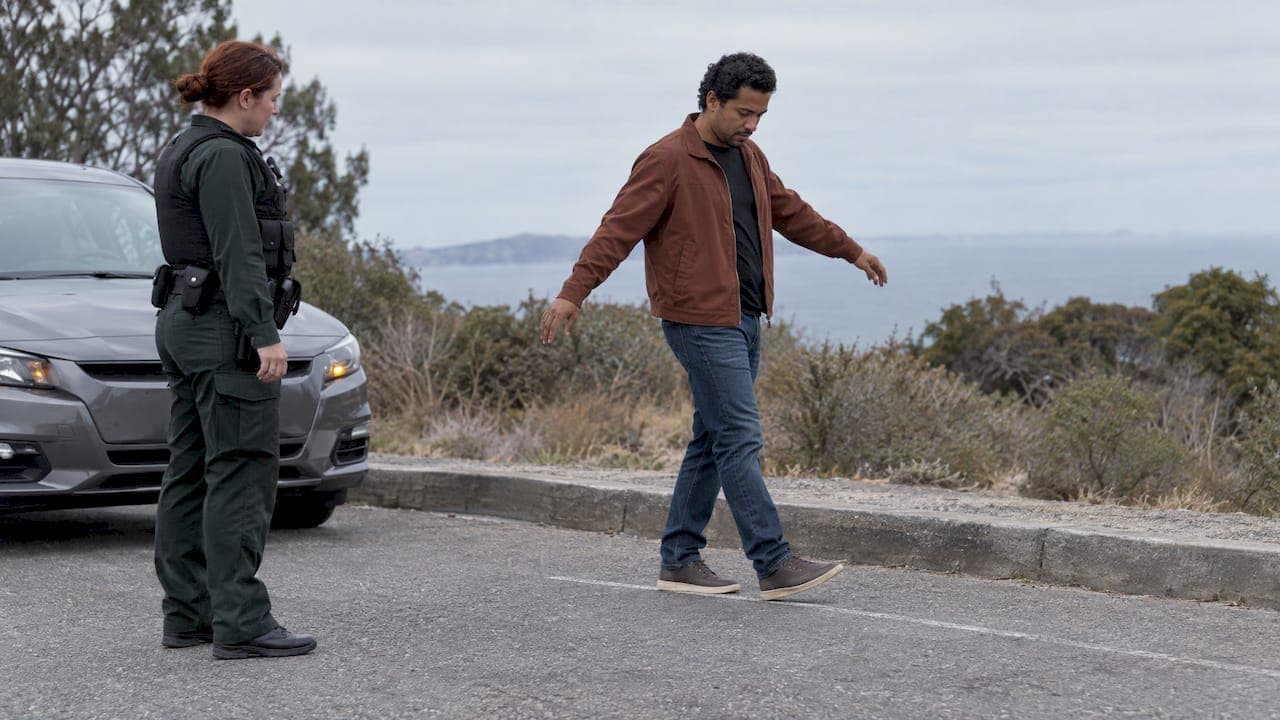
Field sobriety tests are less accurate than most drivers are told, and more accurate than some websites claim. The best-known federal study reported that officers using the standardized battery made the right call about 91% of the time. Independent scientists say that number depends heavily on how the study was built. Below we cover what the research found, why a roadside result can be wrong for a sober person, and what it means if you were arrested in San Diego after one.
TL;DR
- A 1998 NHTSA-funded study reported that officers were 91% accurate in judging whether a driver was at or above 0.08% BAC. That study involved 297 drivers and was run under controlled conditions.
- Independent statisticians say the headline accuracy figure is a property of the statistic, not a measure of the chance that you are impaired. It swings widely with the BAC level of the people tested.
- The tests were validated against alcohol, not marijuana. The National Institute of Justice found that THC levels did not track field sobriety test performance.
- Nerves, footwear, age, balance problems, road surface and unclear instructions can all produce "clues" in a sober driver.
- A failed roadside test is not proof of a DUI. It is one piece of evidence that can be challenged, along with the stop, the arrest and the chemical test.
Table of Contents
- What field sobriety tests are meant to do
- The numbers behind the 91% claim
- Why a sober person can fail
- Field sobriety tests and drugs
- How these results are used and challenged
- Do you have to take a field sobriety test?
- Our perspective
- If you were arrested in San Diego
- What to do in the days after a DUI stop
- FAQ
- Sources
What field sobriety tests are meant to do
A field sobriety test is a roadside exercise an officer uses to decide whether there is enough to arrest you for driving under the influence. It is not the test that proves your blood alcohol concentration. That comes later, from a breath, blood or urine sample.
NHTSA, the federal traffic safety agency, recommends a three-part standardized battery for officers:
- Horizontal gaze nystagmus (HGN). The officer watches your eyes follow a stimulus, looking for involuntary jerking.
- Walk-and-turn. You take heel-to-toe steps along a line, turn, and walk back while following multi-step instructions.
- One-leg stand. You hold one foot off the ground and count.
The last two are "divided attention" tests. They ask you to listen, remember instructions and balance at once. Officers score a set number of clues on each test, and a certain number of clues is treated as a sign of impairment.
Other exercises, such as reciting the alphabet, touching your nose or counting backward, are non-standardized. They have no validated scoring system behind them at all.
Officers use these tests to build the probable cause for an arrest. According to NHTSA research on breath test refusals, once you are arrested, implied consent laws typically require a chemical test, and refusing it can bring automatic license suspension or revocation separate from the DUI charge. The roadside test and the post-arrest test are different things with different rules.
The numbers behind the 91% claim
Most articles on this topic quote one of two sets of figures: the high ones from the government, or lower ones from defense sites. Here is where each comes from.
The NHTSA validation study
The study most often cited is the 1998 validation of the SFST battery at BACs below 0.10 percent. It looked at 297 motorists. Officers estimating whether a driver's BAC was at or above 0.08% were reported as 91% accurate. Officers were 94% accurate in their decisions not to arrest when the estimated BAC was below 0.08%.
Those are strong results, and prosecutors cite them. But there are limits to what they show:
- Officers in the study were trained and working with the standardized procedure, in a research setting.
- The figure describes officers' overall decisions, not how often each individual test is right.
- It reflects the mix of drivers in that sample, including how many were well above or well below the limit.
What independent researchers say
A statistical evaluation of the SFSTs published in 2005 took a fresh look at the 91% accuracy presentation from the original report. More recently, a 2021 paper in Law, Probability and Risk argued that the high reported accuracy is a property of the statistic, not of the test.
Its point is easy to follow with an example. "Overall accuracy" can look excellent if most people tested are clearly sober or clearly drunk. The authors reported that the same measure showed 100% arrest accuracy at 0.00% BAC while dropping to 1% at 0.30% BAC. That means the figure does not tell you the probability that a particular driver who failed was actually impaired. The tests also perform worse when the question is close, such as a driver near 0.08%, which is exactly where most contested DUI cases sit.

A scientific and legal review of the SFSTs made a related point. The supporting research is limited and often does not control for confounding variables. And the tests were validated to estimate BAC, yet courts often use them as evidence of general physical, mental or driving impairment, a purpose they were not validated for.
The "68%" and "77%" figures
You will see figures such as 77% for HGN, 68% for walk-and-turn and 65% for one-leg stand repeated across law firm websites. We do not rely on them here. They trace back to older studies, often at higher BAC levels, and different pages quote them in different ways. If you see a number without a link to the study it came from, treat it with caution, whichever side is quoting it.
Why a sober person can fail
One laboratory study asked whether these tests are designed for failure. Officers judged significantly more sober people as impaired when those people performed field sobriety tests than when they did ordinary tasks. The authors suggested the tests may be predisposed toward flagging people who are not intoxicated.
In real stops, the conditions are worse than in a lab. Common reasons for "clues" that have nothing to do with alcohol include:
- Footwear and surface. Heels, work boots, sloped shoulders, gravel and wet pavement all affect balance.
- Lighting and traffic. Flashing lights and passing cars can interfere with eye tests and distract you.
- Physical conditions. Back, knee or ankle injuries, inner-ear problems, age and excess weight can all affect balance.
- Nerves. Being pulled over at night by an armed officer is stressful, and stress makes it harder to follow multi-step instructions.
- Fatigue. A driver coming off a long shift may sway without a drop of alcohol.
- Instructions. If the officer does not give instructions the standardized way, the results are not standardized either.
That last point matters in court. The NHTSA manual describes the tests as valid when administered and scored in the prescribed manner. A defense attorney's job is often to compare what the officer actually did with what the training says should have happened. Body camera and dash camera video is frequently the best evidence for this.
Field sobriety tests and drugs
The tests were built around alcohol. For cannabis, the picture is weaker. The National Institute of Justice reported that field sobriety test performance and THC levels were unreliable indicators of marijuana intoxication. Participants showed decreased cognitive and psychomotor functioning even when the THC in their blood, urine and oral fluid was low, and biofluid levels did not correlate with test performance.
In practice, that cuts both ways. A driver may pass roadside tests and still be impaired, and a regular user may show no meaningful difference. Either way, a drug DUI case usually turns on more than the roadside exercises. If you are facing that kind of charge, our page on drug-related DUI defense in San Diego explains how we approach it, and our marijuana defense page covers related charges.
How these results are used and challenged
A failed field test rarely stands alone. The prosecution typically pairs it with the reason for the stop, the officer's observations (odor, speech, eyes), your statements and the chemical test. Each piece has its own weak points, and a defense usually tests all of them. For a general look at how field sobriety results are challenged in DUI cases, a second perspective can help you see the common arguments.
The lines of attack we see most often are:
- The stop. Was there a lawful reason to pull you over and to extend the stop?
- The administration. Were the instructions given correctly? Was the surface level? Did the officer ask about injuries or footwear?
- The scoring. Do the clues the officer reported match what the video shows?
- The chemical test. Breath machines need maintenance and proper observation periods. Timing also matters, because alcohol can still be rising when a sample is taken. We explain that in our piece on how a delayed test can support a rising BAC defense.
- The license. A DUI arrest in California starts a separate DMV process with its own deadline. Our guide to the DUI DMV hearing and protecting your license walks through it.
Do you have to take a field sobriety test?
In California, the roadside exercises are generally voluntary for adult drivers, and they are separate from the chemical test required after a lawful arrest. Rules differ for drivers under 21 and for people on DUI probation, and they differ from state to state. We cover the details in our article on whether you can refuse a field sobriety test.
The trade-off is real. Declining the roadside exercises gives the officer less evidence, but it does not stop an arrest if the officer already believes there is probable cause. Politely stating that you decline the exercises, staying calm and not arguing is almost always better than debating the law on the roadside.
Our perspective
We have sat across from many people who believed they had no defense because they "failed" the roadside tests. The first thing we tell them is that a field sobriety test is an officer's opinion, scored in real time, on a dark road, often by someone who has already decided what he thinks.
The science does not say these tests are worthless. It says they are a rough screening tool, validated for one narrow question under good conditions, and then stretched well beyond that in court. Our job is to show a judge or jury the gap between the lab and the roadside, and to tell the story of the person behind the report.
That is also why we start early. The video, the officer's training records and the timing of the chemical test all matter, and the sooner we review them, the more we can do with them. A DUI is not the end of your life, and many cases end in reduced charges, dismissals or not guilty verdicts when the evidence is examined closely.
— Logan Noblin
If you were arrested in San Diego
If a field sobriety test was part of your arrest, we can review the video, the officer's report and the chemical test, and tell you plainly what we see. We handle DUI defense in San Diego, including first-time DUI cases, second offenses, multiple DUI charges and commercial license cases. Call us before you talk to anyone else about what happened, and keep any DMV deadline in mind.
What to do in the days after a DUI stop
Your next steps matter more than the roadside result. These are practical, and none of them requires admitting anything.
- Write down what happened while it is fresh: where you were stopped, what the officer said, what you were wearing, the surface you stood on, and any injury or condition that affected your balance.
- Note the timeline. When did you last drink or eat, when were you stopped, and when was the chemical sample taken?
- Find out about your DMV deadline. It runs separately from the court case, and missing it can cost you your license.
- Do not discuss the case on social media or with the people who were in the car, other than your attorney.
- Keep your paperwork, including the citation, the temporary license and any release forms.
FAQ
Are field sobriety tests accurate?
They are accurate under controlled conditions and much less reliable on the roadside. NHTSA-funded research reported 91% accuracy in officer decisions at the 0.08% level, but independent researchers say that figure depends on who was tested and does not show the likelihood that any one driver was impaired. Real-world factors like footwear, injuries and nerves make errors more likely.
Does anyone ever pass a field sobriety test?
Yes. Sober drivers pass them all the time, and the standardized tests are scored by clues rather than as pass or fail. Still, studies have found that officers can flag sober people as impaired, so passing is not guaranteed even if you have had nothing to drink.
Why do police use field sobriety tests instead of a breathalyzer?
The roadside tests help an officer decide whether there is probable cause to arrest. The official chemical test generally comes after the arrest, under implied consent rules, and that is what measures your BAC. Refusing the post-arrest test can lead to a separate license suspension.
Can a bad field sobriety test result be thrown out?
It can be challenged, and a court may give it little weight if the officer did not follow standardized procedure or the conditions made it unreliable. Whether it is excluded or simply discounted depends on the facts and the judge. An attorney who reviews the video can tell you how strong the argument is in your case.
Sources
- Validation of the Standardized Field Sobriety Test Battery at BACs Below 0.10 Percent (NHTSA, 1998)
- DWI Detection and Standardized Field Sobriety Test Participant Manual (NHTSA, 2023)
- Research Note: Breath Test Refusals (NHTSA)
- Statistical Evaluation of Standardized Field Sobriety Tests (PubMed)
- High reported accuracy of the SFST is a property of the statistic (Law, Probability and Risk, 2021)
- The Standardized Field Sobriety Tests: a review of scientific and legal issues (PubMed)
- Field sobriety tests: are they designed for failure? (PubMed)
- Field Sobriety Tests and THC Levels Unreliable Indicators of Marijuana Intoxication (National Institute of Justice)