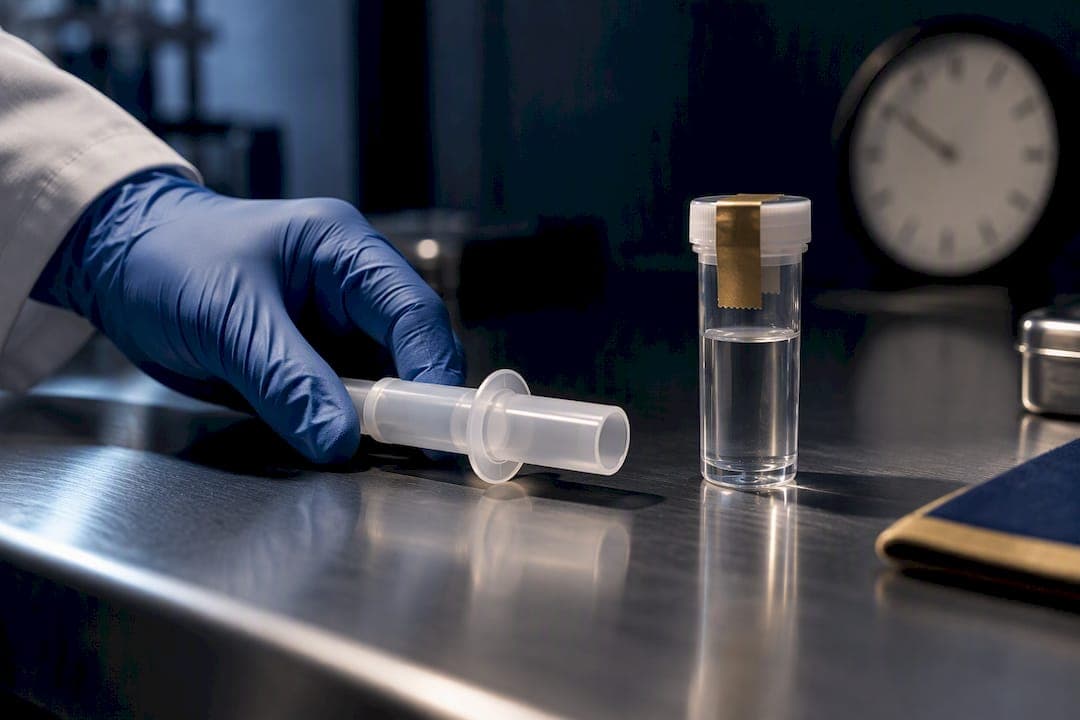
The rising blood alcohol defense argues that your BAC was below the legal limit while you were driving, even though a chemical test taken later showed a higher number. It only works for per se BAC charges, it depends heavily on timing between driving and testing, and most states limit or narrow it through statute. Whether it fits your case comes down to the evidence covered below.
TL;DR:
- The rising blood alcohol defense is most effective when there is a significant delay between the traffic stop and chemical testing, especially if drinking stopped near the time of driving.
- State statutes often limit or narrow the defense by defining the permissible testing window, making the defense less viable if testing occurred quickly or within statutory timeframes.
- Accurate retrograde BAC estimates depend on conservative, range-based calculations that account for individual metabolism and timing, with expert testimony preferred to address inherent uncertainties.
- Alternative explanations like mouth alcohol contamination or instrument errors can undermine the rising BAC argument and should be addressed separately through evidence and expert testimony.
- Building a successful defense requires fast evidence preservation, timeline reconstruction, and professional toxicology analysis, as the science behind retrograde extrapolation remains inherently imprecise.
Table of Contents
- What the rising blood alcohol defense actually argues
- How alcohol absorption and BAC timing actually work
- When statutory time windows help or block the defense
- Building the evidence: retrograde extrapolation and timeline reconstruction
- How much BAC typically rises and how prosecutors push back
- How a DUI lawyer builds a rising-BAC defense
- What the research and case record show about this defense
- Why the defense plays out differently from state to state
- How your own metabolism changes the calculation
- Other explanations for a high reading and how to address them
- When this defense is worth pursuing and when it is not
- How the Law Office of Logan Noblin can help with your case
- Sources
- FAQ
What the rising blood alcohol defense actually argues
The defense targets one specific legal element: the claim that your BAC was at or above the limit while you were operating the vehicle. A rising BAC defense says the number on the test reflects a later point in your body's absorption phase, not your BAC at the wheel. It applies to per se BAC offenses, where the charge is built entirely around a number, rather than impairment-based charges built around observed behavior.
Because per se statutes make the test result the centerpiece of the prosecution's case, attacking the timing of that result attacks the case itself. According to Nolo's overview of the defense, a later chemical test showing a BAC at or above the limit may not reflect the driver's actual BAC while driving if the body was still absorbing alcohol.
Courts typically weigh:
- The time gap between the traffic stop and the chemical test.
- Evidence of when drinking stopped relative to driving.
- Whether an expert can credibly place the driver in the absorption phase at the time of driving.
How alcohol absorption and BAC timing actually work
Alcohol enters the bloodstream through the stomach and small intestine, and BAC keeps climbing until absorption outpaces elimination. Peak BAC is typically reached within 30 to 60 minutes of the last drink, according to the National District Attorneys Association's alcohol toxicology resource, though that window shifts depending on the person and the drink.
Several situational factors slow absorption and push the peak later:
- A full stomach, especially fatty food, delays gastric emptying and absorption.
- Certain medications interfere with normal digestion.
- Individual metabolic differences change how fast alcohol clears the stomach.
- Carbonated drinks tend to speed absorption rather than slow it.
Peer-reviewed toxicology research notes that absorption can extend well past the typical window, sometimes beyond two hours, when physiological or situational factors intervene, a point forensic toxicologists increasingly flag as research on alcohol pharmacokinetics has examined.
In routine social drinking, BAC typically rises only a very small amount after the last drink, per the NDAA's toxicology summary, which is why the defense usually needs either a long delay to testing or a large amount consumed shortly before driving to matter in court.
When statutory time windows help or block the defense
Many states have narrowed the rising BAC defense by writing time windows into their per se statutes. Some define the offense as a BAC measured within two or three hours of driving, which can convert what would otherwise be a strong timing argument into a moot point, an approach Nolo's guide to the defense describes as one of the main ways states have limited the argument.
The defense tends to be strongest when:
- There was a substantial delay between the stop and the actual chemical test.
- Drinking stopped very shortly before driving began.
- Testing fell outside the state's statutory window, where one exists.
It tends to be weakest when:
- Testing happened quickly, well inside any statutory window.
- Officers documented visible impairment independent of the number.
- Drinking ended well before driving started, leaving little room for a rising curve.
Because these windows vary by state and are written into specific statutes, the practical answer to "does this apply to me" is always case-specific. A consultation with a DUI attorney familiar with your state's per se language is the only reliable way to know where your case falls.
Building the evidence: retrograde extrapolation and timeline reconstruction
Retrograde extrapolation is the calculation toxicologists use to estimate what a person's BAC likely was at an earlier time, working backward from a known test result. These calculations rely on assumptions about volume of distribution and elimination rate, often called the Widmark approach, and small changes in those assumptions can shift the result meaningfully.
Because of that sensitivity, forensic toxicology literature recommends reporting a BAC range rather than a single number. Peer-reviewed case analysis and Academy Standards Board guidance recommend using conservative ranges for volume of distribution and metabolism rate and presenting the result as a range, since exact single-point figures overstate precision the science does not support.
Building a credible timeline means gathering:
- The exact timestamps of the traffic stop, field sobriety tests, and the chemical test.
- The arresting officer's written report and any bodycam or dashcam footage.
- Receipts, tabs, or witness statements establishing when drinking stopped.
- Phone location data or surveillance footage placing you at specific times.
- Instrument calibration and maintenance logs for the breath or blood test device.
Pro Tip: Write down the exact time of your last drink and request copies of any receipts before memories and paper trails disappear.
How much BAC typically rises and how prosecutors push back
Social drinking usually produces modest increases, often under 0.02% after the last drink according to the NDAA's alcohol toxicology summary, which means the defense rarely overturns a case on its own unless testing was delayed or a large quantity was consumed right before driving.
Prosecutors typically respond with:
- Lab results showing testing occurred quickly, inside the statutory window.
- Officer testimony describing visible impairment, slurred speech, or failed field sobriety tests.
- Argument that the defense's own timeline still places the driver above the limit at the time of driving.
A measured BAC that barely exceeds the legal limit leaves less room for a rising curve to matter, since even a modest correction may not bring the number back under the threshold.
Separate technical issues, like mouth alcohol contamination or uncalibrated instruments, sometimes get raised alongside a rising BAC argument, but they attack the accuracy of the test itself rather than its timing, and the two arguments should not be blended in front of a jury.
How a DUI lawyer builds a rising-BAC defense
Turning this defense into something a judge or jury credits takes methodical work, not just an argument. A DUI lawyer approaches these cases with a structured process:
- Preserve all timing records immediately, including the arrest report, dispatch logs, and video timestamps.
- Request the chemical test's exact timestamp and compare it against the traffic stop time.
- Order the instrument's calibration and maintenance history to rule out separate accuracy problems.
- Retain a forensic toxicologist to build a range-based retrograde estimate rather than a single number.
- Develop independent timeline evidence, from receipts to phone data to witness statements, that corroborates when drinking actually stopped.
The toxicologist's deliverable is typically a range of plausible BAC values at the time of driving, along with the assumptions behind it. In court, that expert testifies to explain why a single test result does not settle the question of what the BAC actually was behind the wheel, leaving the jury to weigh a range against the prosecution's number.
What the research and case record show about this defense
Forensic toxicology literature treats retrograde extrapolation as a legitimate but imprecise tool, not a settled formula that produces one correct answer. Case examples analyzed in peer-reviewed forensic toxicology research show that back-calculated BAC figures shift considerably depending on which volume of distribution and metabolism rate assumptions an expert uses, which is exactly why the Academy Standards Board recommends courts see a range instead of a single figure.
That guidance matters in practice because it shifts the courtroom conversation. Instead of a prosecutor's expert asserting a precise BAC at the time of driving, the defense can press for acknowledgment that any retrograde estimate carries a margin of uncertainty. When that range overlaps the legal limit, or falls on both sides of it, the case stops being a clean number and becomes a question for the jury.
The strength of any individual case still depends on its facts. A short gap between the last drink and driving, combined with a longer gap before testing, gives an expert more room to argue a plausible rising curve. A case with a quick test, a long gap since the last drink, and officer testimony about visible impairment gives the defense far less to work with. There is no single case or study that proves the defense succeeds in a fixed proportion of DUI trials, and any claim to the contrary should be treated skeptically. What the research supports is narrower: the science behind back-calculation is inherently a range, not a point, and that uncertainty is a legitimate subject for cross-examination and expert testimony.
Why the defense plays out differently from state to state
The rising BAC defense is not applied the same way everywhere, largely because per se DUI statutes are not written the same way everywhere. Some states define the per se offense strictly around BAC at the time of driving, which leaves the defense fully available. Others write the offense around BAC measured within a fixed window, commonly two or three hours, after driving, a structure Nolo's legal overview points to as one of the more common ways states have narrowed the argument.
That statutory difference changes the entire strategy. In a state with a strict at-the-time-of-driving standard, showing that BAC was still rising at the moment of testing can be enough to create doubt about the number at driving. In a state with a testing-window statute, the same rising curve may be legally irrelevant because the law only cares about the number within the window, not the number behind the wheel.
Beyond the statutory text, acceptance also varies with how local courts treat expert testimony on retrograde extrapolation. Some jurisdictions are accustomed to hearing detailed toxicology testimony and give it real weight. Others are more skeptical of back-calculated ranges and lean more heavily on the raw test result and officer observations. Because these differences are baked into both statute and courtroom culture, a rising BAC strategy that works well in one state's courts may carry far less force in another's, even on similar facts. Anyone weighing this defense should ask a local DUI attorney how their specific state's per se statute and courts have historically treated the argument, rather than assuming the defense works the same way everywhere.

How your own metabolism changes the calculation
Retrograde extrapolation calculations rest on assumptions about how a body processes alcohol, and those assumptions do not fit everyone equally well. Volume of distribution and elimination rate vary from person to person based on body composition, sex, liver function, and overall health, and forensic toxicologists note that using standard population averages for someone who deviates from them meaningfully changes the reliability of the resulting estimate.
That variability cuts both ways for a rising BAC defense. If your metabolism absorbs alcohol more slowly than average, whether due to food intake, medication, or individual physiology, your BAC may plausibly have still been rising well past the typical 30 to 60 minute window discussed by the National District Attorneys Association, strengthening the timing argument. If your metabolism runs faster than average, the same argument loses force because your body may have already reached peak BAC and started eliminating alcohol before you were ever stopped.
This is part of why a generic, one-size-fits-all retrograde estimate is treated with caution in forensic toxicology. Peer-reviewed guidance on theoretical and retrograde BAC calculation recommends using conservative, range-based assumptions precisely because individual metabolic variation makes a single confident number scientifically unjustified. A toxicologist working your case should account for your specific characteristics, drinking history, and the timeline evidence available, not just plug your test result into a standard formula. That individualized analysis is often what separates a persuasive expert opinion from one a prosecutor can dismiss on cross-examination.

Other explanations for a high reading and how to address them
Not every unexpectedly high BAC reading is actually explained by a rising curve. Mouth alcohol, residual alcohol trapped in the mouth from a recent drink, breath spray, or even certain medical conditions, can produce an artificially high breath test result that has nothing to do with absorption timing. Raising a rising BAC argument alongside an unrelated mouth alcohol problem in the same breath can confuse a jury and weaken both points, so the two should be argued as separate, clearly labeled issues.
Instrument error is another alternative explanation worth ruling out early. A breath testing device that was not properly calibrated or maintained can produce inflated results regardless of when the person was tested, which is why maintenance and calibration logs belong on every evidence request list alongside timing records.
Blood testing carries its own separate issues, including improper storage, contamination, or delays in analysis that can affect the final number independent of absorption timing. When a case involves a blood draw rather than a breath test, those chain-of-custody and storage questions deserve their own scrutiny.
The practical approach in court is to address each alternative explanation on its own terms rather than folding everything into one argument. A toxicologist can testify separately about instrument reliability, mouth alcohol contamination, or absorption timing, and a jury asked to evaluate one clear, well-supported issue at a time is more likely to follow the reasoning than a jury handed several overlapping technical arguments at once.
When this defense is worth pursuing and when it is not
Cases with a long delay before testing, a short gap between the last drink and driving, and no statutory testing window tend to favor this defense. Cases with quick testing, clear officer-observed impairment, or a BAC well above the limit usually do not. Expert fees are real, so weigh the cost against the likely outcome, and talk to a lawyer early so timing evidence does not disappear.
— Logan Noblin
How the Law Office of Logan Noblin can help with your case
Building a rising BAC defense takes fast evidence collection and a toxicologist who can speak to your specific timeline, not a generic formula. The Law Office of Logan Noblin handles DUI defense built around each client's actual drinking timeline, testing delays, and medical or metabolic history.

Bring your arrest report, the exact time of your chemical test, receipts or witness names establishing when you stopped drinking, and any medications you were taking to your consultation. If drugs were also involved, our drug-related DUI page covers those added complications. Schedule a consultation through our DUI defense page to start building your timeline before evidence disappears.
This article is general information, not a substitute for advice from a qualified lawyer. Consult a qualified legal professional about your own circumstances before acting on anything here.
Sources
- What Is the Rising Blood Alcohol Defense? — Nolo
- Alcohol toxicology — National District Attorneys Association (NDAA)
FAQ
How much will 3 beers raise BAC?
The rise depends on body weight, sex, timing, and how quickly the beers were consumed, so there is no single fixed number that applies to everyone. In many social drinking situations, BAC often rises less than 0.02% after the last drink, according to the National District Attorneys Association, though a faster pace of drinking or an empty stomach can push it higher.
What is the best defense for a DUI?
There is no single best defense because it depends on the facts: testing delays, officer conduct, instrument accuracy, and your own timeline all matter. A rising BAC argument fits per se cases with a testing delay, while other cases lean more on challenging field sobriety procedures or instrument calibration.
How long does BAC keep rising?
BAC typically peaks within 30 to 60 minutes after the last drink, per the NDAA's toxicology summary, but that window can extend well past two hours when food, medication, or individual metabolism slow absorption, as forensic pharmacokinetics research has noted.
How often does a DUI case get dismissed?
There is no single published rate that applies across jurisdictions, since dismissal depends heavily on the specific evidence, the state's statute, and how the stop and testing were handled. A lawyer who reviews your timing records, test results, and officer reports can give a realistic assessment based on your actual case facts rather than a general statistic.