A 1538.5 motion asks a California court to suppress or return evidence obtained through an unlawful search or seizure, and if the judge grants it, that evidence generally cannot be used against you at trial. Only someone with a genuine, reasonable expectation of privacy in the place or item searched can bring the motion. You must file it before trial, with the exact procedure depending on whether you face a misdemeanor or a felony charge.
TL;DR:
- A suppression motion under Penal Code section 1538.5 must be precise, itemizing each piece of evidence contested and supported by relevant documentation.
- Filing deadlines and procedures differ between misdemeanor and felony cases, making timely and correct preparation crucial to preserve your rights.
- Standing depends on demonstrating a reasonable expectation of privacy, and legal grounds for suppression include invalid warrants, improper execution, or warrantless searches without exceptions.
- Live testimony is required at hearings to assess credibility, with cross-examination often determining the success of a motion, especially in warrantless search cases.
- Most failures in suppression motions stem from procedural errors, vague submissions, or missed deadlines, not necessarily the strength of the legal argument.
Table of Contents
- Penal Code §1538.5: what the statute requires
- Who has standing and what legal grounds support a suppression motion
- When and how to file: California's timing rules
- Inside the suppression hearing: proof, testimony, and transcripts
- What happens after the ruling: grants, denials, and appeals
- How to prepare a 1538.5 motion: a drafting and courtroom checklist
- A practitioner's view on suppression motions and when to get help
- The overlooked risk in every suppression motion
- Getting help with a 1538.5 motion in San Diego
- Sources
- FAQ
Penal Code §1538.5: what the statute requires
California Penal Code § 1538.5 sets the rules for challenging evidence obtained through a search or seizure, and it is unforgiving about form. The motion must ask for either the return of property or the suppression of evidence, and it cannot be a bare request. It must be in writing, supported by a memorandum of points and authorities, and served on the prosecution with proof of service filed alongside it.
The statute also demands specificity. Your memorandum has to list the particular items of property or evidence you want returned or suppressed, not a general objection to "everything the police found." Courts read this requirement literally, and a motion that lumps everything together without tying each item to a specific legal defect invites denial.
Where and when you file depends on the stage of the case:
- Preliminary hearing stage: felony defendants often raise the issue there, where the magistrate rules on the evidence presented at that hearing.
- Special hearing: if the motion was first made at the preliminary hearing, the statute grants a special hearing in superior court, but that hearing is generally limited to the preliminary hearing transcript plus evidence that could not reasonably have been presented earlier.
- De novo litigation: in other circumstances, the statute allows the motion to be fully litigated in superior court without the preliminary hearing limitations.
The statute also builds in real limits. Subsections (f), (g), (i), and (j) govern notice periods, response timing, and how many times a defendant gets to litigate the same issue. As a general rule, you get one full special hearing on a given search or seizure. Once that hearing happens, you cannot simply refile the same motion hoping for a different judge or a second bite at the same facts, unless new evidence genuinely was unavailable before. That single-hearing structure is why the initial filing matters so much: sloppy drafting the first time around tends to be permanent.
Who has standing and what legal grounds support a suppression motion
Not everyone touched by a search gets to challenge it. Motions pursuant to section 1538.5: theory and practice explains that a defendant must show a personal, reasonable expectation of privacy in the place or item searched before the court will even consider the merits. A passenger in someone else's car may have little standing to challenge a search of the trunk. Someone renting a room may have strong standing to challenge a search of that room but none over a search of the landlord's separate unit. Standing is decided first, and if you cannot clear that threshold, the substance of the search never gets examined.
Once standing is established, several grounds commonly support a 1538.5 motion:
- Invalid or overbroad warrant: the warrant lacked probable cause, misstated facts, or authorized a search beyond what the affidavit supported.
- Improper execution: officers exceeded the warrant's scope, searched areas not described, or ignored knock-and-announce requirements without justification.
- Warrantless search without a recognized exception: searches conducted without a warrant must fit an exception like consent, exigent circumstances, or search incident to arrest, and those exceptions have real boundaries.
- Fruit of the poisonous tree: evidence, statements, or physical items obtained as a direct result of an earlier illegal search or seizure can be suppressed even if the later search itself looked proper on its face.
Where a search happened under a warrant, the warrant is presumed valid, and the burden falls on the defense to show why it was not. Where the search happened without a warrant, the burden works differently, and the defense only needs to make an initial showing before the prosecution has to step in and justify what its officers did.
Specificity matters just as much here as it does in the drafting stage. A motion that names the exact item, the exact legal theory, and the exact factual defect preserves that argument for appeal. A motion that gestures broadly at "the search was illegal" without connecting facts to law risks waiver, meaning an appellate court may refuse to consider an argument that was never clearly raised below. Judges and prosecutors both read these motions closely for that kind of gap, and defense counsel who skip the detail work often lose issues they never realized they had given away.
When and how to file: California's timing rules
Timing separates a motion that gets heard from one that gets denied on procedural grounds alone, and misdemeanor and felony cases run on different clocks.
- Misdemeanor cases typically require a separate, pretrial special hearing dedicated to the suppression issue, held before the case proceeds to trial.
- Felony cases usually see the motion first raised at the preliminary hearing, where the magistrate can rule on it directly, with the special hearing or de novo option available afterward under the statute.
- Local deadlines matter. San Diego practice notes describe local rules that commonly require pretrial motions to be filed roughly 21 calendar days after arraignment, though the exact number can shift by department and case type, so confirming the current local rule before filing is worth the phone call.
- Responses and replies follow their own short clocks. The prosecution typically has a set number of days to respond in writing, and the defense often gets a shorter window to reply before the hearing date, so a late filing can cost you the chance to address the opposition's arguments in writing at all.
- Page limits apply without special permission. Local rules in many California counties, San Diego among them, commonly cap moving papers at around 15 pages unless the court grants leave to exceed that limit, and judges do not appreciate motions that ignore the cap.
- Proof of service is not optional paperwork. The statute requires it alongside the written motion and memorandum, and a motion filed without proper service on the prosecution can be rejected before a judge ever reads the substance.
Missing any one of these deadlines does not necessarily kill the underlying constitutional argument forever, but it often means arguing for relief from default before you can argue the search was illegal at all, which is a much harder position to be in.
Inside the suppression hearing: proof, testimony, and transcripts
A 1538.5 hearing runs on a specific order of proof, and knowing that order changes how you prepare. For a warrantless search, the defense carries the initial burden: you have to make what the theory and practice guide calls a prima facie showing that the search happened without a warrant. Once that showing is made, the burden shifts, and the prosecution has to come forward and justify the search under a recognized exception. The defense does not need to prove the entire case at this stage. The goal is narrower: show the search was unreasonable on its face and force the prosecution to meet its burden with real evidence.

That evidence generally has to be live.
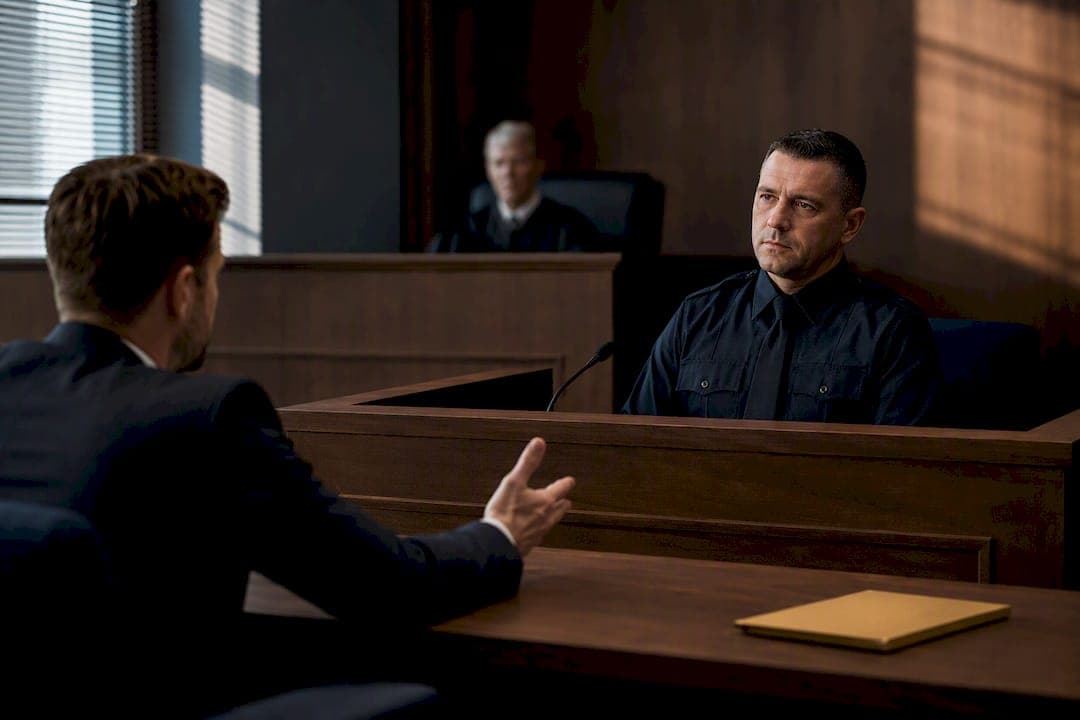
The California Supreme Court's holding in People v. Johnson established that suppression hearings generally require live testimony rather than sworn affidavits, because the judge presiding over the motion has to be able to assess a witness's credibility and demeanor in real time. An officer's written report might describe a consensual search or a plainly visible weapon, but a judge cannot weigh how convincing that officer is from a page. Live testimony puts the officer on the stand, subject to cross-examination, where inconsistencies in a report can be exposed in front of the person deciding the motion.
Suppression motions often turn on this kind of credibility fight, which is why experienced defense attorneys treat these hearings less like a paper argument and more like a trial in miniature.
That framing shapes what actually happens in the courtroom:
- Direct examination of officers by the prosecution establishes the basic narrative: why they stopped the car, why they searched the bag, what they claim they saw or smelled.
- Cross-examination by the defense is where most suppression motions are actually won or lost, probing inconsistencies between the officer's report, body camera footage, and live testimony.
- The judge rules from the bench, sometimes immediately and sometimes after taking the matter under submission for written findings.
Preliminary hearing transcripts play a specific and limited role. When a motion was first raised at the preliminary hearing, the statute generally restricts the special hearing to that transcript plus evidence that genuinely could not have been presented earlier. That limitation punishes defense teams who hold back at the preliminary hearing hoping for a better shot later. If a witness's testimony matters, it usually needs to be locked into the record the first time the issue comes up.
What happens after the ruling: grants, denials, and appeals
A ruling on a 1538.5 motion rarely ends the conversation, it just changes what conversation comes next.
- If the motion is granted, the suppressed evidence generally cannot be used against you at trial, and depending on how central that evidence was, the case may collapse into a dismissal, a renegotiated plea, or a prosecution appeal that pauses the case while a higher court reviews the ruling.
- If the motion is denied, you still have paths forward: in limited circumstances the issue can be renewed at a later stage, you can seek writ relief from the court of appeal before trial, or you can proceed to trial while preserving the objection for a direct appeal after conviction.
- The prosecution has its own options after a grant, including seeking appellate review of the suppression order or, in some circumstances, refiling based on evidence untouched by the ruling, and both sides typically face tight windows to act once a decision comes down.
- Timing after the ruling matters as much as timing before it. Writ petitions and appellate deadlines run on short clocks, and missing one can convert a winnable legal issue into a waived one.
A granted motion does not always mean the case disappears. Prosecutors sometimes have enough independent evidence to proceed anyway, just on a thinner record. A denied motion does not always mean the fight is over either. It means the next fight happens in front of a different set of judges, with a different set of rules about what gets reviewed and how.
How to prepare a 1538.5 motion: a drafting and courtroom checklist
Preparation determines whether a suppression motion gets a fair hearing or gets brushed aside on a technicality. The following checklist reflects what actually needs to be in the file before a hearing date arrives.
- Draft the caption and written motion exactly as the statute requires, naming the specific evidence or property at issue.
- Write the memorandum of points and authorities, tying each factual claim to a specific statute or case, not a general reference to "the Fourth Amendment."
- Itemize the property or evidence you want returned or suppressed, item by item, rather than requesting suppression of "all evidence seized."
- Attach supporting exhibits, including police reports, body camera stills, warrant applications, and any relevant photographs.
- Prepare a witness list, identifying which officers or civilian witnesses need to testify live and why.
- File proof of service on the prosecution alongside the motion itself, not as an afterthought.
Practitioners who train new prosecutors on these motions warn specifically against broad, catch-all suppression requests. A motion asking the court to "suppress all items seized" without listing them tends to get treated as insufficient on its face, and in San Diego practice, motions that skip itemization are often rejected or treated as waived outright.
Pro Tip: Build your cross-examination outline for the officer around the specific inconsistencies between the written report and any body camera footage, since that gap is usually where credibility actually breaks down at the hearing.
In the courtroom, a few habits separate motions that land from motions that fizzle: subpoena civilian witnesses early rather than assuming they will show up voluntarily, ask for a continuance if the prosecution's reply raises a legal theory you have not had time to research, and use preliminary hearing transcripts as a tool to lock in favorable testimony rather than as a shortcut to avoid live witnesses later.
A practitioner's view on suppression motions and when to get help
Suppression hearings reward preparation over improvisation, and that is where trial experience matters. Experienced criminal defense attorneys often build their practice around exactly this kind of pretrial fight, handling DUI defense, drug crimes, domestic violence, and diversion cases.
Judges deciding these motions are listening for two things: whether the officer's testimony holds up under real scrutiny, and whether the defense motion is specific enough to give the court something concrete to rule on. A motion built on vague objections rarely survives contact with a skeptical bench, no matter how sympathetic the underlying facts.
Constitutional search-and-seizure arguments get complicated fast, especially when multiple exceptions to the warrant requirement overlap or when the case involves a border search, a vehicle search, or a consent argument with disputed facts. When the suppression motion could realistically decide the outcome of the entire case, that complexity is exactly when experienced counsel earns its value, not after the hearing date has already passed.
The overlooked risk in every suppression motion
The conventional advice on 1538.5 motions focuses almost entirely on the legal theory: was there probable cause, did an exception apply, was the warrant valid. That analysis matters, but it is not where most motions actually fail. Most fail on specificity and procedure, a vague item list, a missed local deadline, a motion that never clears the standing threshold before it gets to the merits.
The reader's real priority should be sequencing, not eloquence. Nail the itemized list before worrying about how persuasive the memorandum sounds. Confirm the local filing deadline before drafting a single paragraph of argument. Treat the officer's credibility, not the abstract constitutional question, as the actual battleground, because that is where People v. Johnson put the weight and where hearings are genuinely won or lost.
Defendants who treat this motion as a formality lose issues they never had to lose. Defendants who treat it as the most consequential filing in a pretrial case, because it often is, tend to get the hearing they actually deserve.
— Logan Noblin
Getting help with a 1538.5 motion in San Diego
A suppression motion is not a form you fill out, it is a piece of litigation with a single shot at getting the evidence thrown out before trial starts.  The Law Office of Logan Noblin, APC, builds these motions around the specific facts of your search, not a generic template, and handles the full arc from drafting through the evidentiary hearing itself.
Services relevant to a suppression fight include:
- Pretrial suppression strategy, reviewing police reports and body camera footage before deciding whether a 1538.5 motion is the right move.
- Motion drafting, including the itemized list, memorandum of points and authorities, and proof of service the statute demands.
- Evidentiary hearing advocacy, preparing officer cross-examination and subpoenaing civilian witnesses when needed.
- Negotiation and trial representation if the motion outcome reshapes what a fair plea or trial strategy looks like.
Bring the police report, any citation or arrest paperwork, and a rough timeline of the stop or search to an initial consultation. From there, visit the firm's San Diego criminal defense overview or reach out directly through Logancriminaldefense to schedule a review of your case.
This article is general information, not a substitute for advice from a qualified lawyer. Consult a qualified legal professional about your own circumstances before acting on anything here.
Sources
FAQ
What is a 1538.5 motion?
A 1538.5 motion is a written request under Penal Code section 1538.5 asking a California court to suppress or return evidence obtained through an unlawful search or seizure. If granted, the excluded evidence generally cannot be used against the defendant at trial.
Is mayhem a serious charge?
Mayhem is a felony under California law, and it involves permanently disfiguring or disabling another person, distinct from a simple assault charge. Anyone facing this charge should speak with defense counsel promptly given the severity of the potential penalties.
What should I expect at a suppression hearing?
Expect officers to testify live rather than rely on written reports, since courts generally require live testimony so the judge can assess credibility, a principle established in People v. Johnson. The defense cross-examines those officers, and for warrantless searches, the prosecution must justify the search once the defense makes an initial showing.
Is 530.5 a felony?
Identity theft charges can be classified as either misdemeanors or felonies in California depending on the facts of the case and the defendant's record. Because the charging decision varies by case, anyone facing such charges should confirm the specific classification with a defense attorney reviewing their file.