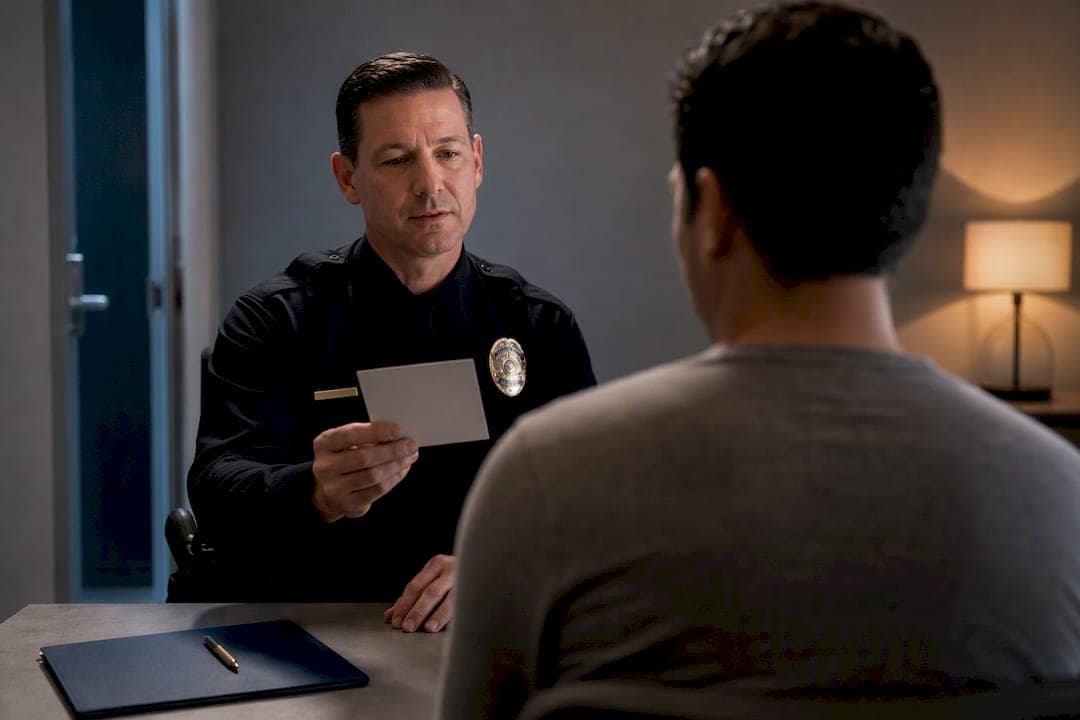
In California, police must give Miranda warnings only when you are in custody and subject to interrogation. Skipping that requirement can make your statements inadmissible in court, but it will not automatically get charges dismissed. Youth 17 and under get an added layer of protection: state law requires them to consult a lawyer before any custodial interrogation begins.
TL;DR:
- Police in California are only required to give Miranda warnings when a suspect is in custody and being interrogated; routine booking questions do not trigger the warning requirement.
- The custody determination depends on factors such as location, restraints, officer conduct, and whether the suspect reasonably believes they can leave, with traffic stops typically considered non-custodial.
- Exceptions to Miranda include situations involving immediate public safety threats, undercover officer interactions where the suspect is unaware, and administrative booking questions; these are narrowly applied and often litigated.
- To preserve your rights, clearly and unambiguously invoke your right to silence or a lawyer, and avoid volunteering information or hedging statements that courts may interpret as waivers.
- Suppression motions arising from Miranda violations exclude only the statement obtained unlawfully, not other evidence, and can influence plea negotiations and case strength rather than automatically dismissing charges.
Table of Contents
- Miranda Rights in California: What the Warnings Actually Say
- When Does Miranda Actually Apply? The Custody and Interrogation Test
- Exceptions: When Police Can Question You Without a Warning
- How to Invoke or Waive Your Miranda Rights
- What Happens When Miranda Gets Violated in California
- SB 203 and Juvenile Rights: Extra Protection for Minors
- Your Rights After Arrest: Arraignment, Phone Calls, and Recordings
- What to Do If You Think Your Miranda Rights Were Violated
- How Defense Attorneys Actually Use Miranda Issues in Court
- California Versus Federal Miranda Standards: What Actually Differs
- How Miranda Warnings Are Actually Delivered in California
- Why Miranda Warnings Shape the Entire Interrogation Process
- Landmark Cases That Shaped How Miranda Works in California
- Miranda Rights During a California DUI Stop
- The Origins of Miranda Rights and Why California Adopted Them Fully
- Why Early Legal Help Changes the Outcome
- Talk to a San Diego Criminal Defense Attorney Before You Say Anything Else
- Where These Rights Come From: Primary Sources
- Sources
- FAQ
Miranda Rights in California: What the Warnings Actually Say
The warnings police recite are not decoration. They come from a constitutional requirement laid out by the U.S. Supreme Court, and they exist to protect one specific thing: your Fifth Amendment right against self-incrimination.
Every valid Miranda warning has to communicate four ideas, though the exact wording can vary between departments:
- You have the right to remain silent.
- Anything you say can and will be used against you in court.
- You have the right to an attorney.
- If you cannot afford an attorney, one will be appointed for you before any questioning, if you wish.
California officers do not have to recite these word for word like a script from a TV drama. Courts only require that the warning "reasonably convey" the substance of these rights to a suspect. A San Diego police officer might phrase it slightly differently than a California Highway Patrol officer working a DUI stop, and both versions can hold up in court as long as the core rights come through clearly.
This all traces back to Miranda v. Arizona, the 1966 Supreme Court decision that created these procedural safeguards. The Court ruled that statements obtained during custodial interrogation are generally inadmissible unless police first inform suspects of their rights and the suspect knowingly, voluntarily, and intelligently waives them. Ernesto Miranda's own confession, given without any warning that he could stay silent or ask for a lawyer, became the case that changed interrogation procedure nationwide.
It helps to understand what Miranda is not. It is not a shield against arrest. It is not a requirement that police read you your rights the moment they slap on handcuffs. And it is not a guarantee that a case gets thrown out if an officer forgets to say the words. Miranda governs one narrow question: can the prosecution use what you said during a specific kind of police encounter? Everything else, including the arrest itself, evidence gathered separately, and physical evidence collected under a warrant, operates under different rules entirely.
When Does Miranda Actually Apply? The Custody and Interrogation Test
Two conditions have to exist at the same time before Miranda kicks in: custody and interrogation. Miss either one, and police can talk to you all day without a warning, and it will hold up in court.
Custody means your freedom of movement has been restricted to a degree comparable to a formal arrest. Courts use what is called the reasonable-person test: would a reasonable person in your position have felt free to end the encounter and leave? Several factors shape that answer:
- Location of the questioning (a squad car or interrogation room weighs toward custody far more than a sidewalk conversation)
- Whether you were physically restrained, handcuffed, or told you could not leave
- The number of officers present and their tone or language
- The length of the encounter and whether it escalated in intensity
- Whether you were told you were free to go
A traffic stop, notably, is usually treated as non-custodial even though you obviously cannot drive away mid-stop. That distinction matters a lot for DUI cases, which we cover in more detail further down.
Interrogation covers more than direct questions. It includes any words or actions by police that they should reasonably know are likely to get an incriminating response out of you. Courts call this the "functional equivalent" of interrogation. If an officer casually remarks to a partner, in earshot of a suspect, "I hope nobody gets hurt if that gun is still out there," and the suspect responds by revealing its location, that exchange can count as interrogation even without a single direct question asked.
Pro Tip: Booking questions are the exception people misunderstand most often. Basic information like your name, address, date of birth, and physical description falls outside Miranda entirely, so answering those questions honestly at intake does not waive anything or open the door to further interrogation.
Miranda warnings are required only when both custody and interrogation are present at the same time, and routine booking questions are generally excluded from that requirement even though they happen after arrest. This two-part test is the single most litigated issue in Miranda law, and it is where most suppression arguments live or die.
Exceptions: When Police Can Question You Without a Warning
A few narrow doctrines let police ask questions, or use your answers, without Miranda warnings in place. None of them are as broad as officers sometimes suggest, and each has been shaped by specific court decisions.
- The public safety exception. Under New York v. Quarles, police can ask limited, immediate questions when there is a genuine threat to public safety, such as asking an arrestee "where's the gun?" moments after an arrest in a crowded store. The exception is narrow and time limited. It covers questions aimed at neutralizing an active danger, not general fact finding about the crime.
- The undercover officer exception. Under Illinois v. Perkins, Miranda does not apply when a suspect does not know they are speaking with law enforcement, such as making admissions to an undercover officer posing as a fellow inmate. The reasoning is that Miranda protects against the coercive pressure of a known police interrogation, and that pressure is not present when the suspect has no idea who they are talking to.
- Routine booking questions. As covered above, basic identifying information gathered during the booking process falls outside Miranda's scope, since it is treated as administrative rather than investigative.
These exceptions get argued over constantly in California courtrooms, and prosecutors sometimes stretch them further than the case law supports. An officer who keeps asking questions well past the point of any immediate danger, under the guise of "public safety," is on shakier ground than the exception's narrow original purpose allows.
How to Invoke or Waive Your Miranda Rights
Once you have been warned, one of two things happens: you waive your rights, or you invoke them. Courts scrutinize both moments closely, and the standards are not symmetrical, which surprises a lot of people.
A waiver has to be knowing, intelligent, and voluntary. Courts look at the totality of the circumstances: your age, education, mental state, whether you appeared to understand the warning, and whether police used pressure or trickery to get you to talk. The prosecution carries the burden of proving a valid waiver occurred, and a waiver does not have to be written or spoken explicitly. Continuing to answer questions after being warned can, in some circumstances, count as an implied waiver.
Invoking your rights is where things get stricter. The law requires a clear and unambiguous statement. Silence alone is usually not enough. Courts have found that statements like "maybe I should talk to a lawyer" or "I don't know if I want to say anything" are too vague to count as invocation, according to the Cornell Law School Legal Information Institute's overview of Miranda standards. Compare that to a flat statement: "I am invoking my right to remain silent" or "I want a lawyer." Those stop the interview. That is the standard you want to meet.
- Say it plainly: "I am invoking my right to remain silent."
- Or say: "I want to speak with an attorney before answering any questions."
- Then actually stop talking. Volunteering information afterward can undercut the invocation.
- Avoid hedging language like "I think" or "maybe," which courts often read as ambiguous.
There is also a timing wrinkle worth knowing. Once you invoke your right to counsel, police generally cannot reinitiate questioning. But under Maryland v. Shatzer, if there is a 14-day break in custody after the invocation, police can approach you again with a fresh set of warnings. That rule catches a lot of people off guard, especially those who assume one invocation protects them permanently.
Pro Tip: Write down or mentally note the exact time you invoked your rights. If questioning continues afterward anyway, that timeline becomes a central piece of evidence in a suppression motion.
What Happens When Miranda Gets Violated in California
A Miranda violation triggers a suppression motion, not an automatic dismissal. That distinction trips people up constantly, so it is worth walking through exactly how it plays out in a California courtroom.
When a defense attorney believes police obtained a statement in violation of Miranda, they file a motion to suppress, typically under California Penal Code §1538.5 or through a separate motion addressing the statement specifically. A judge holds a hearing, reviews the circumstances of the interrogation (sometimes with recordings, sometimes based on officer and defendant testimony), and decides whether the statement came in properly. If the judge agrees a violation occurred, the statement, and often anything derived directly from it, gets excluded from trial.
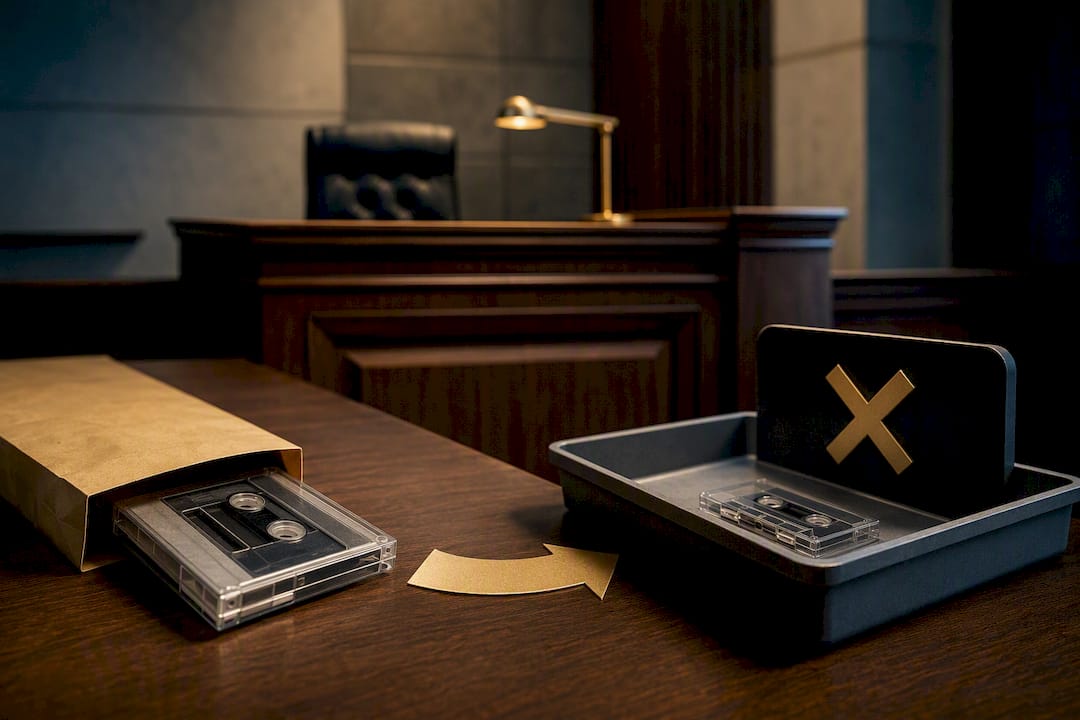
Here's the part that surprises people: suppression removes one piece of evidence. It does not touch physical evidence gathered independently, witness testimony, surveillance footage, forensic results, or anything else the prosecution has that does not depend on the tainted statement. A DUI case built on a breath test result and an officer's observations of erratic driving can survive a suppressed confession just fine. A drug case resting almost entirely on an unwarned admission is a different story.
What suppression really changes is leverage:
- It can gut a prosecution's strongest piece of evidence, especially in cases built around a confession.
- It often shifts plea negotiations, since prosecutors reassess their odds at trial once a key statement disappears.
- It can expose weaknesses in the arresting officer's report, which defense attorneys use to challenge credibility on other points too.
- It sometimes leads to reduced charges even when it does not lead to outright dismissal.
Suppression fights are won or lost on detail. What time did the interrogation start? Was the suspect handcuffed before or after the first question? Did the officer's warning actually cover all four required elements? That level of granularity is exactly why these motions demand careful reconstruction of the arrest timeline.
SB 203 and Juvenile Rights: Extra Protection for Minors
California treats young suspects differently, and the law backs that up with a hard rule. Under SB 203, codified as Welfare and Institutions Code §625.6, any suspect who is 17 years old or younger must consult with legal counsel before undergoing custodial interrogation and before waiving Miranda rights. That consultation cannot be waived by the youth themselves, no matter how eager they are to "just explain what happened."
The law took effect on January 1, 2021, and it reflects a policy judgment that has been building for years: teenagers, even sharp and articulate ones, are more susceptible to coercive pressure in an interrogation room than adults are.
- The consultation must happen before any waiver of Miranda rights, and not just before formal questioning starts.
- There is a narrow emergency exception for situations involving an imminent threat to life, but it is meant to be applied sparingly, not as a routine workaround.
- Courts are required to factor in noncompliance with SB 203 when they later decide whether a juvenile's statement is admissible.
For parents, the practical guidance is straightforward: if your child has been detained, insist on the consultation before any questioning happens, and do not let an officer's insistence that "this will only take a minute" talk you out of it. If a minor's SB 203 rights were bypassed, that failure becomes a serious avenue for challenging any resulting statement, and it often ties directly into broader juvenile record sealing strategies down the line.
Your Rights After Arrest: Arraignment, Phone Calls, and Recordings
Miranda is not the only protection working in your favor after an arrest. California law layers on several statutory rights that matter just as much, especially in the hours right after you are booked.
Under California Penal Code §825 requires that an arrested individual be brought before a magistrate for arraignment without unnecessary delay and within 48 hours of arrest, excluding Sundays and holidays, with limited extensions. If police blow past that window without a valid extension, it becomes a real issue your attorney can raise. Refusing to let an attorney visit a properly detained client is not a minor technicality either. It is a misdemeanor, and the statute allows for a penalty of up to $500 against the responsible officer.
You also have a right, under Penal Code §851.5, to make at least three completed telephone calls within the local calling area (or at your expense if outside it) immediately or as soon as practicable after booking. Calls can go to an attorney, a bail bondsman, or a relative, and calls to your attorney cannot be monitored. Calls to family, on the other hand, usually can be, and jail phone lines routinely warn callers that the call is being recorded. That is not a formality. Prosecutors have used recorded jail calls against defendants who casually discussed the facts of their case with a family member, assuming the call was private.
- Three completed calls minimum, offered promptly after booking.
- Attorney calls: protected from monitoring.
- Family or bondsman calls: often recorded, and fair game for prosecutors.
There is one more layer worth knowing about. Penal Code §859.5 requires electronic recording of custodial interrogations in murder investigations conducted at fixed police facilities. When that recording requirement is followed, it creates a rebuttable presumption about what was actually said, which can cut both ways depending on what the recording shows.
What to Do If You Think Your Miranda Rights Were Violated
If you believe police questioned you improperly, what you do in the next few hours and days matters. Here's the order of operations that protects you best.
- Stop talking, clearly and immediately. State plainly, "I am invoking my right to remain silent," or "I want a lawyer," and then stop. Do not try to explain your side of the story to "clear things up." That instinct has hurt more cases than almost anything else.
- Be careful on jail phone calls. Assume every call to family is recorded, because it usually is. Save the details of what happened for a private conversation with your attorney, not a call from a jail phone.
- Document everything as soon as you can. Write down the time you were detained, when questioning started, what was said before and after any warning, and the names or badge numbers of the officers involved. Memory fades fast, and these details often decide whether a suppression motion succeeds.
- Preserve evidence and witnesses. If anyone saw the arrest or overheard the interrogation, get their contact information before it disappears.
- Contact a California criminal defense attorney promptly. The sooner an attorney reviews the timeline, the better positioned they are to evaluate a suppression motion and any related statutory violations.
Pro Tip: Ask for a copy of the police report and any body camera or interrogation footage as early as possible. Footage sometimes gets overwritten or becomes harder to obtain the longer you wait, and it is often the single most persuasive piece of evidence in a suppression hearing.
How Defense Attorneys Actually Use Miranda Issues in Court
Building a Miranda argument is detail work, not a general appeal to fairness. When reviewing a case, defense attorneys typically work through a specific checklist:
- Was the suspect actually in custody at the moment questioning began, based on location, restraint, and officer conduct?
- Did the questioning meet the legal definition of interrogation, or does it fall under an exception like booking questions?
- Is there a recording or transcript establishing exactly what was said and when?
- Are there clear indicators of waiver, or did the suspect attempt to invoke rights that were ignored?
- Does the timing line up with statutory deadlines under PC §825 or PC §851.5, and were those requirements met?
Statutory deadlines often create leverage that has nothing to do with the interrogation itself. An arraignment delay past 48 hours, or a denial of phone calls under §851.5, can become independent grounds for challenging how a case was handled, even when the Miranda issue itself is contested. When suppression succeeds, it frequently reshapes the entire negotiation. A case that looked airtight because of a confession can suddenly turn into one where the prosecution has to rely on thinner circumstantial evidence, and that shift often produces better plea terms or, in some cases, a dismissal.
California Versus Federal Miranda Standards: What Actually Differs
The core Miranda rule comes from federal constitutional law, so California courts apply the same basic custody and interrogation test as courts in every other state. Where California pulls ahead is in the statutory layer built on top of that federal floor.
SB 203's mandatory attorney consultation for suspects 17 and under has no federal equivalent. Federal law and most other states allow a minor to waive Miranda rights without ever speaking to a lawyer first, as long as a court finds the waiver knowing and voluntary under the totality of circumstances. California decided that standard was not protective enough for young suspects and legislated a hard requirement instead.
California's arraignment and phone-call statutes also go beyond what the federal Constitution independently guarantees. The 48-hour arraignment window under PC §825 and the three-call requirement under PC §851.5 are state law protections, not federal ones, though they interact with federal due process principles. And Penal Code §859.5's recording requirement for murder interrogations reflects a state-specific evidentiary approach that many other jurisdictions have not adopted.
The bottom line: if you are arrested in California, you get the federal Miranda floor plus a stack of additional state protections that do not exist everywhere else. That combination is part of why California criminal procedure looks noticeably more protective on paper than the baseline federal rule alone would suggest.
How Miranda Warnings Are Actually Delivered in California
There is no single mandatory script printed in the California Penal Code. What courts require is substance, not exact phrasing, and most California law enforcement agencies use a standardized card or app prompt that officers read verbatim to avoid disputes later.
A typical California advisal goes something like this: "You have the right to remain silent. Anything you say can be used against you in court. You have the right to talk to a lawyer and have him present with you while you are being questioned. If you cannot afford to hire a lawyer, one will be appointed to represent you before any questioning, if you wish."
After delivering the warning, officers typically ask two follow-up questions: "Do you understand each of these rights I have explained to you?" and "Having these rights in mind, do you wish to talk to us now?" Your answers to those two questions, and whether you answer at all, become central evidence if a waiver is later disputed. Some departments record this exchange as a matter of practice, and under PC §859.5, recording becomes mandatory for murder interrogations conducted in a fixed facility.
Timing matters enormously here. Warnings have to come before interrogation begins, not partway through. If an officer starts asking substantive questions and only issues the Miranda warning after getting an incriminating answer, everything said before the warning is vulnerable to suppression, and sometimes what comes after is too, depending on the circumstances.
Why Miranda Warnings Shape the Entire Interrogation Process
Miranda does more than create a legal technicality lawyers argue about later. It changes how interrogations unfold in real time, because officers know that anything said without a proper warning risks becoming unusable.
Experienced interrogators in California, like anywhere else, are trained to build rapport before the formal warning, using casual conversation to gather background information that does not require Miranda at all (since it happens before custody, before interrogation, or both). Once warnings are given, the psychological dynamic shifts. A suspect who has just been told "anything you say can be used against you" is, at least in theory, making a fully informed choice about whether to keep talking.
In practice, plenty of suspects waive their rights anyway, often because they believe cooperating will help their case or because staying silent feels suspicious. That instinct is understandable and almost always works against the person being questioned. Miranda's real protective value shows up specifically in the moments after a suspect chooses to invoke it: officers are supposed to stop, and any continued questioning after a clear invocation becomes a strong basis for suppression.
The warnings also affect how much weight a confession carries at trial. Juries hear about Miranda advisals as part of establishing that a statement was voluntary, and defense attorneys frequently cross-examine officers on the exact circumstances of when and how the warning was given, since inconsistencies there can undercut the reliability of everything that followed.
Landmark Cases That Shaped How Miranda Works in California
A handful of Supreme Court decisions, applied consistently by California courts, define the boundaries covered throughout this article. Miranda v. Arizona itself remains the foundation, establishing that custodial interrogation without warnings produces presumptively inadmissible statements.
New York v. Quarles carved out the public safety exception, allowing brief, targeted questioning about an immediate danger, like the location of a weapon, without warnings first. California courts apply this narrowly, and prosecutors who try to stretch it into general investigative questioning tend to lose that argument.
Illinois v. Perkins established that undercover officers do not need to give Miranda warnings, since the coercive pressure Miranda addresses depends on the suspect knowing they are talking to police. California cases involving jailhouse informants or undercover operations lean heavily on this precedent.
Berghuis v. Thompkins clarified that staying silent is not, by itself, enough to invoke the right to remain silent. Suspects have to affirmatively and unambiguously state that they are invoking the right, a standard the Cornell Law Legal Information Institute breaks down as central to how courts evaluate invocation claims today.
Maryland v. Shatzer introduced the 14-day rule allowing police to reapproach a suspect for questioning after a break in custody following an invocation of the right to counsel. Together, these cases form the working framework California trial courts apply whenever a Miranda issue surfaces in a suppression hearing.
Miranda Rights During a California DUI Stop
DUI stops create some of the most misunderstood Miranda situations in California, mostly because so much happens before an arrest technically occurs. The initial traffic stop, field sobriety tests, and preliminary roadside questions ("Have you been drinking tonight? How much?") generally happen before custody attaches, so Miranda warnings are not required for any of it.
That surprises a lot of people, but the legal reasoning holds up: a routine traffic stop, even one that clearly involves suspicion of DUI, is not treated as the functional equivalent of arrest under California case law. You can be asked questions, asked to perform field sobriety tests, and asked to take a preliminary breath test, all without a Miranda warning, because you have not yet been taken into custody in the constitutional sense.
Custody typically attaches once you are formally arrested, usually after failing field sobriety tests or refusing them and being placed in handcuffs. From that point forward, further interrogation about the incident should be preceded by a Miranda warning. Statements made before the arrest, including admissions about drinking, are generally admissible regardless of whether a warning was given, since Miranda simply was not required yet.
This is part of why DUI defense strategy often focuses less on Miranda and more on the reliability of field sobriety tests, breath or blood test procedures, and whether the initial stop itself was lawful. If you are facing a first-time DUI charge in San Diego, the Miranda question is usually just one piece of a much larger evidentiary picture.
The Origins of Miranda Rights and Why California Adopted Them Fully
Miranda rights trace back to a 1963 arrest in Phoenix, Arizona, where Ernesto Miranda was questioned for two hours without ever being told he could remain silent or ask for a lawyer. He signed a written confession, and it became the centerpiece of his conviction. When the case reached the Supreme Court, the justices ruled in 1966 that the interrogation had violated Miranda's Fifth Amendment privilege against self-incrimination, because nothing about the process protected him from the inherently coercive pressure of a police interrogation room.
The decision did not just apply to Arizona. It became binding on every state, including California, as a constitutional floor for how custodial interrogations have to be conducted. California courts adopted the framework immediately and have spent the decades since refining exactly where its boundaries sit through case law addressing custody, interrogation, waiver, and invocation.
What makes California distinctive is how far the state legislature has gone beyond that federal floor. Long after Miranda became settled law nationwide, California lawmakers layered on additional protections, arraignment deadlines, phone call rights, and eventually SB 203's juvenile consultation requirement, reflecting a broader pattern of the state building statutory protections on top of constitutional minimums rather than treating Miranda as the finish line. Understanding that history helps explain why California criminal procedure often looks more protective than what the Constitution alone requires.
Why Early Legal Help Changes the Outcome
The biggest mistake I see people make after a Miranda issue arises is waiting. They wait to see how the case unfolds, wait to talk to a lawyer until after the arraignment, wait until charges feel "serious enough" to justify calling someone. That delay costs real leverage.
Suppression motions depend on details that fade fast: exact timing, who said what, whether an officer's tone crossed into coercive territory. The 48-hour arraignment clock and the phone-call rules under state law create narrow windows where an attorney's early involvement can catch a violation before evidence disappears or memories blur. Waiting even a few days can mean the difference between a strong suppression argument and a weak one built on secondhand recollection.
Experienced advocacy earlier in the process also changes how prosecutors negotiate. A defense attorney who identifies a real Miranda problem in week one is working from a position of strength that simply is not available to someone who raises the same issue for the first time months later, right before trial.
— Jake
Talk to a San Diego Criminal Defense Attorney Before You Say Anything Else
If you think your Miranda rights were violated in San Diego, the fastest way to protect yourself is a direct conversation with a lawyer who handles these motions regularly. A criminal defense law office built its practice on exactly this kind of detail work: reconstructing arrest timelines, reviewing interrogation footage, and identifying where police cut corners on custody, warnings, or waiver.

Logan Noblin brings a background as a published writer and journalist into how he builds cases, crafting a narrative around each client's specific circumstances rather than treating every arrest like a template. That approach applies across DUI defense, domestic violence cases, drug crime charges, and diversion program eligibility for veterans and clients dealing with mental health issues. If a Miranda violation, an arraignment delay, or a denied phone call played any role in your arrest, those are exactly the kinds of details his office reviews first.
When you reach out for a consultation, bring whatever paperwork you have: your arrest report, booking documents, and dates and times you can recall from the arrest itself. The firm will walk through whether a suppression motion is realistic and what your options look like from there. Visit the Law Offices of Logan Noblin to start that conversation now, before evidence and memories start slipping away.
Where These Rights Come From: Primary Sources
The Miranda framework covered in this article rests on a specific set of legal sources, and reading them directly is worth doing if you want the full text behind any of these rules.
Start with Miranda v. Arizona for the foundational Supreme Court ruling. For California's statutory layer, review Penal Code §825 on arraignment timing, Penal Code §851.5 on phone call rights, and the California DOJ's bulletin on SB 203 for the juvenile consultation requirement codified at Welfare and Institutions Code §625.6.
This article is general information, not a substitute for advice from a qualified lawyer. Consult a qualified legal professional about your own circumstances before acting on anything here.
Sources
- Miranda v. Arizona, 384 U.S. 436 (1966) — Legal Information Institute (text)
- California DOJ Information Bulletin on SB 203
- California Penal Code §825
- Miranda warning — Wikipedia
FAQ
Can a police officer open your car door during a traffic stop?
Generally, no, not without your consent, a warrant, or a specific legal justification like officer safety concerns or probable cause of a crime. Reaching into or opening a vehicle without one of those grounds can raise Fourth Amendment issues separate from any Miranda question, and it often becomes a point of challenge in DUI stop cases.
Can an officer walk up and ask for identification?
Yes. Police can approach you in a public place and ask questions, including for identification, without that encounter automatically becoming a detention or triggering Miranda. You are generally not required to answer unless you are being lawfully detained, and even then, Miranda warnings are not required for a brief investigative stop that has not become custodial.
Can police legally tell you to stop recording them?
Officers cannot lawfully order you to stop recording a public police encounter from a lawful vantage point, since recording public officials performing public duties is generally protected activity. Officers may impose reasonable restrictions if recording genuinely interferes with an active investigation or officer safety, but a blanket order to stop recording is typically not enforceable on its own.
Can you be handcuffed without being read your rights?
Yes. Handcuffing and arrest do not automatically require a Miranda warning. The warning is only required before interrogation begins while you are in custody, so police can lawfully arrest and handcuff you and then question you later, at which point the warning becomes mandatory.
Does a Miranda violation get my case dismissed?
Not automatically. A violation typically leads to a suppression motion that can exclude the improperly obtained statement, but prosecutors can still proceed using other independent evidence, so the practical impact depends heavily on what else is in the case.
What should I say if I want to invoke my Miranda rights?
State it clearly: "I am invoking my right to remain silent" or "I want to speak with an attorney before answering questions." Ambiguous statements like "maybe I should get a lawyer" have failed as valid invocations in court, so clear and direct language matters.