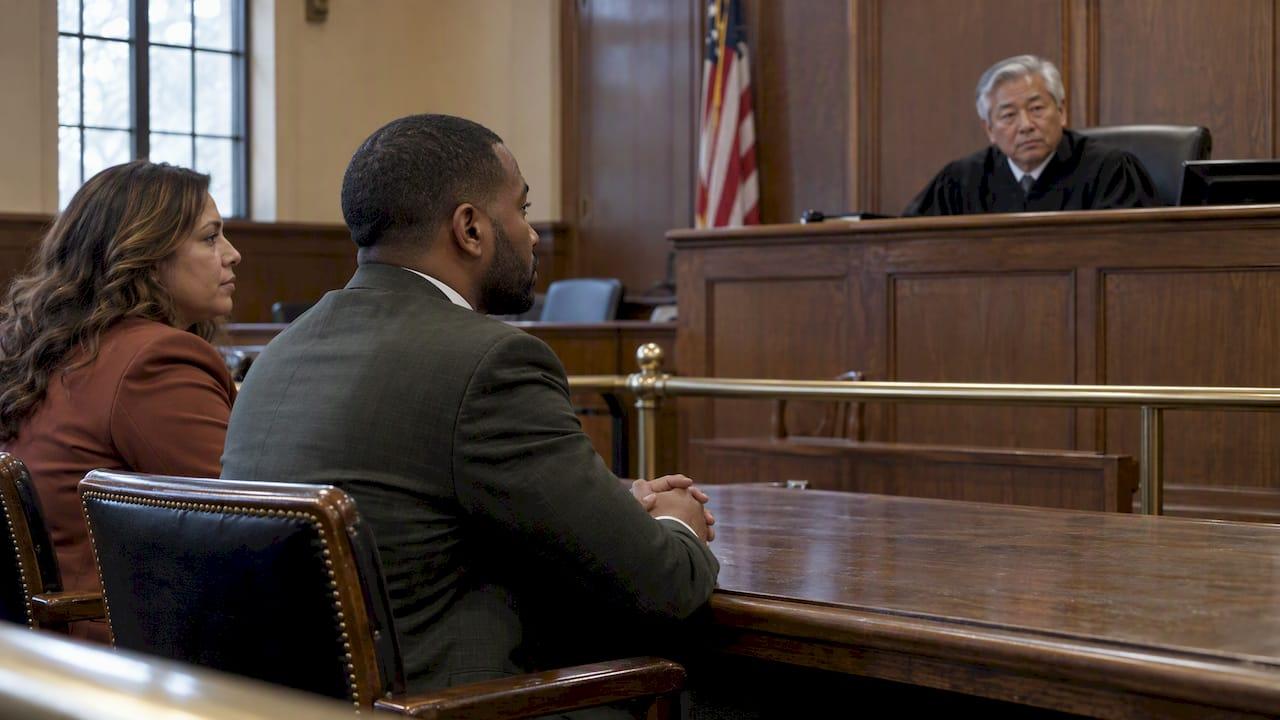
Mental health diversion lets a California court pause a criminal case so a person with a qualifying mental disorder can get treatment. If the person completes the program satisfactorily, the charges are dismissed. The rule is Penal Code 1001.36, and it covers many misdemeanors and felonies. It does not cover everything, and the process rewards careful preparation. Below we walk through who qualifies, how the request works, what treatment looks like, and what happens at the end.
TL;DR
- Mental health diversion is a pretrial program under PC 1001.36. The court postpones prosecution while you complete treatment, and successful completion ends in dismissal.
- You need a diagnosed mental disorder from the DSM, with a diagnosis or treatment in the last five years. The disorder must have been a significant factor in the alleged offense.
- A qualified mental health expert has to say your symptoms would respond to treatment, and the court must approve a treatment plan.
- Diversion lasts up to one year for misdemeanors and up to two years for felonies.
- Murder, voluntary manslaughter, rape and certain other sex offenses are excluded. Strong paperwork early in the case matters.
Table of Contents
- What mental health diversion is
- Who qualifies
- How the request works in court
- Treatment, monitoring and time limits
- What happens at the end
- Mental health diversion, military diversion and a 5150 hold
- Our perspective
- Getting help with a diversion request
- Steps to take now
- FAQ
- Sources
What mental health diversion is
The statute defines pretrial diversion as postponing prosecution, temporarily or permanently, at any point in the judicial process from the time charges are filed until adjudication. It is not a plea deal and it is not a trial. It is a treatment track that sits alongside the case.
If you perform satisfactorily, the court dismisses the charges. The arrest is then deemed never to have occurred, and access to the arrest record is restricted, according to the text of PC 1001.36.
That outcome is why people ask about it. A conviction can follow you into job applications, professional licensing, housing and immigration questions. A dismissal with a restricted arrest record is a very different starting point.
For how this plays out in our local courts, including San Diego's behavioral health court teams, see our guide to mental health diversion in San Diego.

Who qualifies
The statute sets out eligibility and suitability. They are two separate questions, and courts treat them that way.
Eligibility: the diagnosis and the link to the offense
Per the statute, you must meet these requirements:
- A recognized diagnosis. A mental disorder identified in the DSM, other than antisocial personality disorder and pedophilia. Examples people often raise include depression, bipolar disorder, schizophrenia, PTSD, anxiety disorders and ADHD. The right diagnosis for your case is for a clinician to decide.
- Recent diagnosis or treatment. The diagnosis or treatment has to fall within the last five years.
- A significant factor in the offense. The disorder must have played a significant role in the charged conduct.
- An expert opinion. A qualified mental health expert must say your symptoms, which motivated the criminal behavior, would respond to mental health treatment.
- Consent and waiver. You agree to diversion and waive your speedy trial right, with the other conditions the statute sets.
The link between the disorder and the offense
This is where many people expect a fight, but the law helps the defendant. The court must find the disorder was a significant factor unless there is clear and convincing evidence that it was not a motivating, causal or contributing factor. In reaching that decision, the court may look at police reports, preliminary hearing transcripts, witness statements, statements from treatment providers, medical records, expert reports, and any symptoms you displayed at or near the time of the offense. All of this is in PC 1001.36.
That last category matters. A body-camera clip, a 911 call or a witness describing how you acted can be as persuasive as a clinical record.
Suitability: will treatment work, and is the risk acceptable?
Even if you are eligible, the court decides whether you are suitable. It looks at the treatment plan and at whether you would pose an unreasonable risk of danger to public safety if treated in the community. The statute spells out that standard in Penal Code 1001.36.
Charges that are excluded
The statute excludes murder, voluntary manslaughter, rape and certain other sex offenses. Most other charges can at least be considered, including many DUI-adjacent, theft, drug, assault and weapon cases. Whether a particular charge is within reach depends on the exact code sections filed, so have a lawyer read the complaint before you assume you are in or out.
How the request works in court
Courts publish their own procedures, and they vary by county. A court packet from Mono County, updated in May 2026, describes the usual sequence:
- Application. The defense files an application with a signed release of information, so the court and treatment providers can see the relevant records.
- Initial hearing. The court first asks whether you have made a prima facie showing of eligibility.
- Suitability and treatment plan. The court then considers whether you are suitable and what the plan should be.
- Contested hearing. If the parties disagree, the court may set a contested hearing.
The same packet notes that at any stage the court may require a prima facie showing of eligibility and suitability, and that this can proceed informally, on offers of proof, reliable hearsay and the argument of counsel. In practice, that means a well-organized written application with a clinician's report often carries the day, and the quality of that package is something a defense lawyer controls.
Evaluations
The expert opinion is part of the eligibility showing. The evaluator needs enough information to connect your diagnosis to the facts of the case, including the police reports. Early in a case, we think about who the right evaluator is and what records they will need before anything is filed.
Treatment, monitoring and time limits
If the court grants diversion, it approves an inpatient or outpatient treatment plan that meets your needs. You report to the court through periodic progress reports. The program can last no longer than one year for a misdemeanor or two years for a felony, as the statute provides.

What this looks like day to day differs by person. It might mean weekly therapy and medication management, or a residential program. A plan that is realistic for your job, family and transportation is more likely to be completed.
Statewide experts and practitioners have identified recurring problems that can affect participants, including substance use evaluation and treatment, access to housing, and connecting people to health insurance, according to a 2024 statewide report on mental health diversion. Sorting out insurance and housing before the hearing, not after, makes a treatment plan stronger.
What happens at the end
If you complete it
The court dismisses the criminal charges, and the arrest is legally treated as though it never happened, with restricted access to the arrest record. That is the result described in PC 1001.36. If you hold a professional license or are looking for work, ask your lawyer how to answer application questions after a dismissal.
If you struggle or fall out of compliance
A missed appointment does not automatically end the program. Non-compliance can lead to a court hearing where the judge may modify treatment, terminate diversion or reinstate criminal proceedings. A Solano County court's procedural guidelines, revised October 2024, add that the court may also refer someone for a conservatorship evaluation if they are deemed gravely disabled.
If your treatment plan is not working, tell your lawyer early. Asking the court to modify the plan is a far better position than defending a termination hearing.
Mental health diversion, military diversion and a 5150 hold
These get mixed up, so here is the difference.
| Mental health diversion | Military diversion | 5150 hold | |
|---|---|---|---|
| Law | Penal Code 1001.36 | Penal Code 1001.80 | Welfare and Institutions Code 5150 |
| What it is | Pretrial treatment program inside a criminal case | Pretrial treatment program for current and former service members | Short involuntary psychiatric evaluation |
| Criminal case needed? | Yes | Yes | No |
| Outcome | Dismissal if completed | Dismissal if completed | Evaluation, not a charge or a punishment |
A 5150 is a 72-hour involuntary hold for evaluation when someone, because of a mental health disorder, is a danger to themselves or others or is gravely disabled. It is a civil mental health measure, not a criminal charge. A 5150 on your record can, however, help document a diagnosis and symptoms near an offense, which may support a diversion request.
If you served in the military, you may qualify under both statutes, and the right choice depends on the facts. Our guides on military diversion in California and on PC 1001.80 without pleading guilty explain that route. For lower-level cases, PC 1001.95 misdemeanor diversion is another option judges can use.
Our perspective
Most people who come to us about mental health diversion have a story the police report does not tell. The report records what happened. It rarely records the untreated condition behind it, the missed medication, the crisis, the years of struggling without help.
We build diversion cases around that story. Logan Noblin is a published writer and former journalist, and the work of humanizing a client in a way a judge can act on is central to how we approach these cases. We believe the strongest applications connect the diagnosis, the records and the facts of the incident into one clear account.
We also think timing matters. Our approach includes pre-charge intervention where possible, and early engagement with evaluators and treatment providers so the application is complete when it is filed. A thin application invites a contested hearing. A thorough one gives the court a reason to say yes.
Diversion is not a shortcut, and it asks a lot of the person who enters it. But for a client who qualifies, we see it as one of the most meaningful ways to resolve a case: treatment instead of a conviction, and a path to reclaiming your life.
Logan Noblin
Getting help with a diversion request
If you or a family member is charged and a mental health condition played a role, we can review the complaint, discuss whether PC 1001.36 fits, and plan the evaluation and treatment steps. Our work in this area is described on our page for San Diego mental health diversion. You can also see our wider diversion and treatment programs or contact us through our main site to set up a consultation.

If you have already finished a case and want to clear what is left, our expungement and record clearing services may help.
Steps to take now
- Gather records. Medical, therapy and medication records from the last five years, plus any hospital or crisis records, including a 5150 if there was one.
- Get the charging documents and police reports. Your lawyer needs the exact code sections and the narrative.
- Do not discuss the facts with police, the prosecutor or on social media.
- Continue treatment. Ongoing care supports both the diagnosis and the plan you will propose.
- Talk to a criminal defense attorney before any plea or hearing. Diversion is requested before a conviction, so the timing of the first steps matters.
FAQ
What qualifies for mental health diversion in California?
You need a DSM-identified mental disorder, other than antisocial personality disorder or pedophilia, with a diagnosis or treatment in the last five years. The disorder must have been a significant factor in the offense, and an expert must say your symptoms would respond to treatment. Certain charges, such as murder, voluntary manslaughter and rape, are excluded.
How long does mental health diversion last?
The program cannot exceed one year for a misdemeanor or two years for a felony. Within that cap, the court sets the length and approves a treatment plan. You report to the court through periodic progress reports.
What happens if I complete mental health diversion?
The court dismisses the charges, and the arrest is deemed never to have occurred, with access to the arrest record restricted. That is the outcome set by PC 1001.36 for people who perform satisfactorily.
What if I do not comply with the program?
The court can hold a hearing and modify your treatment, terminate diversion or reinstate criminal proceedings. In some cases a person found gravely disabled may be referred for a conservatorship evaluation. Raising problems with your lawyer early gives the best chance of fixing the plan.
Is a 5150 the same as mental health diversion?
No. A 5150 is a 72-hour involuntary psychiatric hold, while diversion is a court program inside a pending criminal case. The two are connected only in that 5150 records can help show a diagnosis.
Sources
- California Penal Code 1001.36
- Mental Health Diversion Process, Mono County Superior Court (updated May 2026)
- Mental Health Diversion Procedural Guidelines, Solano County Superior Court (revised October 2024)
- A Statewide Look at Mental Health Diversion (June 2024)
- California Welfare and Institutions Code section 5150