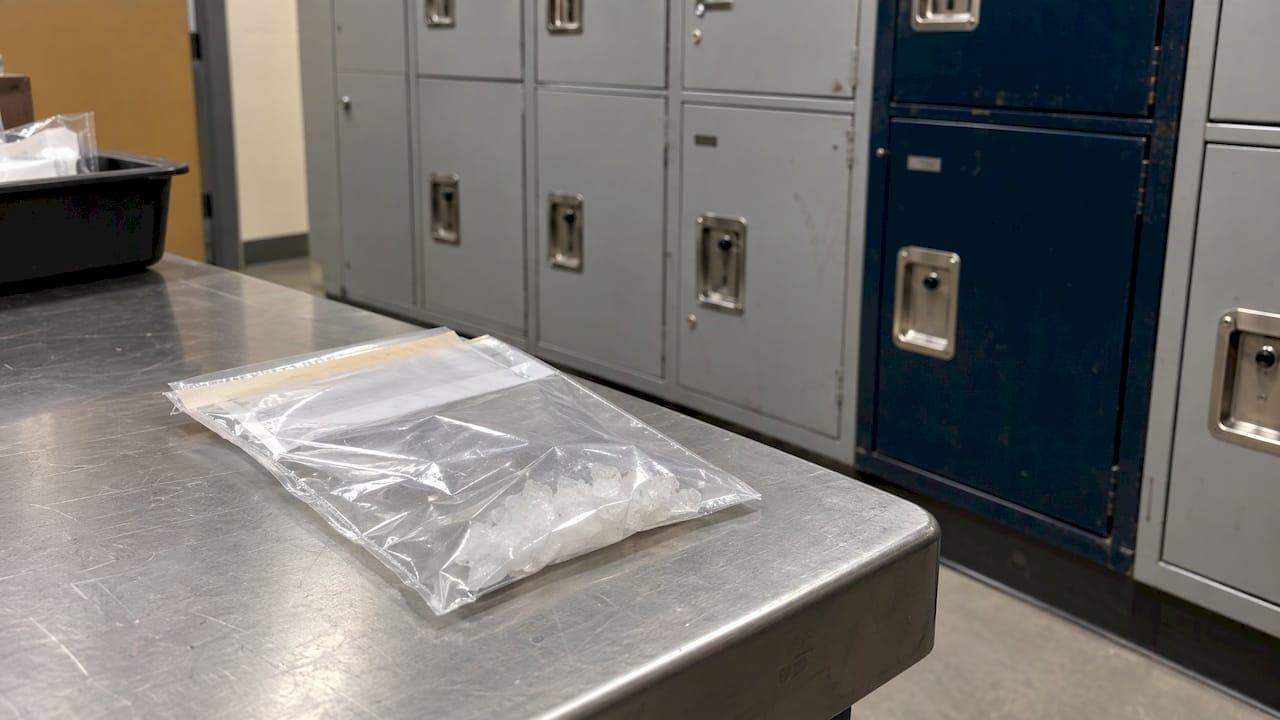
Health and Safety Code 11377 is California's law against possessing certain controlled substances, most often methamphetamine, without a valid prescription. Ordinarily it is a county-jail misdemeanor, not a prison felony, and many people charged under it never end up with a conviction on their record. Diversion, a suppressed search or a prosecutor who cannot prove knowing possession can each change the outcome. What decides the result is how early a defense lawyer gets involved and which of those paths fits your facts. At the Law Office of Logan Noblin, APC, drug possession and diversion are a core part of what we handle in San Diego.
TL;DR
- HS 11377(a) makes it a crime to possess specified controlled substances, commonly methamphetamine, without a valid prescription.
- The base penalty is up to one year in county jail. A felony sentence is limited to people with specified prior convictions.
- Diversion programs, including military diversion under Penal Code 1001.80, can lead to a dismissal for eligible defendants.
- Defenses usually turn on how the drugs were found, whether you knew about them, and whether you had lawful authorization.
- The first days after an arrest or a charging notice matter most, so speak to a criminal defense attorney before you talk to anyone else about the case.
Table of Contents
- What HS 11377 actually prohibits
- What prosecutors must prove
- Misdemeanor or felony? Penalties under HS 11377
- Defenses that can apply to an HS 11377 charge
- Diversion: ending the case without a conviction
- What to do in the first days after a charge
- Why the record matters beyond the sentence
- Our perspective
- If you are charged in San Diego
- FAQ
- Sources
What HS 11377 actually prohibits
The text of Health and Safety Code section 11377 prohibits unauthorized possession of specified controlled substances unless the possession is authorized by a qualifying prescription. In practice, the substance in almost every case is methamphetamine, which is why searches for this code number and "meth possession" lead to the same pages. The statute also reaches other listed substances, so the lab report or the charging document matters: it tells you exactly what the prosecution says you had.
Note what the section does not cover. It is the simple possession statute, the personal-use charge. Selling, transporting, or possessing for sale falls under different sections with much heavier exposure, and prosecutors sometimes file those first and then negotiate down. If you are looking at a charge under HS 11378, the possession-for-sale statute, the stakes and the strategy are different. The same goes for drug transportation and drug sales charges.
The prescription exceptions
Two exceptions are written into the statute. The first is the obvious one: a valid prescription. The second, in subsection (c), covers a person who is not the prescription holder but holds the substance at the prescription holder's direction or with their express authorization, and whose sole intent is to deliver it for the prescribed use or to discard it lawfully. A caregiver picking up a family member's medication is the typical example. The statute's text states both conditions, and both must be met.
What prosecutors must prove
A possession case is a proof case. The prosecution carries the burden on every element, and an element it cannot establish is where a defense lawyer works. In general, California drug possession cases require the state to show that:
- You possessed the substance, meaning you had control over it, alone or with others.
- You knew the substance was there.
- You knew it was a controlled substance.
- The amount was enough to be used as a drug, a usable quantity.
The official jury instruction for simple possession, CALCRIM No. 2304, is where judges and lawyers see these elements laid out. Because the instruction is what a jury would actually hear, defense strategy is built backward from it: which element is weakest on these facts?
Here is where cases get contested. Possession does not require the drugs to be in your pocket. They can be in a car, a bedroom, or a shared bag, and that is exactly why "constructive possession" cases are so fact-driven. If three people were in a car and a baggie was found under a seat, the question is who knew about it and who controlled it, not simply who was nearest.
Misdemeanor or felony? Penalties under HS 11377
People often ask whether HS 11377 is a wobbler, an offense that can be charged either way. For the base offense, the answer is narrower than many web pages suggest.
The statute provides that a violation of subsection (a) is punishable by county-jail imprisonment for not more than one year. The exception is for people with specified prior convictions, who can instead be sentenced under Penal Code section 1170(h). One published legal guide describes that felony pathway as applying to certain serious priors, often called super strikes, or to people required to register as sex offenders, and lists the 16-month, two-year or three-year range that goes with it.
In plain terms:
| Situation | Typical exposure |
|---|---|
| First-time possession, no qualifying priors | Misdemeanor, up to one year in county jail |
| Specified serious prior or sex-offender registration | Felony sentencing under Penal Code 1170(h): 16 months, two years or three years |
Maximums are not what most people actually receive. Judges consider the facts, your history and whether you are engaged in treatment. That is why the more important question is often not "what is the maximum?" but "can this case end without a conviction at all?" A deeper look at how sentencing ranges work across drug offenses is in our guide to drug possession penalties in California.
A related note for anyone with a charge under the sister statute for other drugs: our page on defending HS 11350 charges in San Diego Superior Court walks through how those cases move through the courthouse, and much of that process applies here too.
Defenses that can apply to an HS 11377 charge
No single defense fits every case. The ones below are the ones a defense attorney checks first, in roughly the order they tend to matter.
The search was unlawful
Most drug possession cases begin with a traffic stop, a probation or parole search, a pat-down or a warrant. If police stopped you without a legal basis, extended the stop beyond what justified it, or searched without valid consent or a warrant, your attorney can file a motion asking the court to exclude the drugs. When the drugs are the whole case, suppression can end it. This is why the police report, body-camera footage and dispatch records should be reviewed before any plea discussion.
You did not know about the substance
Knowledge is an element. If the drugs were in a borrowed car, a shared house or someone else's bag, the prosecution has to connect them to you with more than proximity. Statements you made to officers, text messages and fingerprint or DNA evidence are the kind of evidence that fills that gap, so what you said at the scene matters a great deal.
Lawful authorization
A valid prescription, or authorization under the caregiver exception in subsection (c), is a defense written into the statute itself. Pharmacy records, a doctor's note and the original container help document it.
Not a usable amount, or not the substance alleged
The prosecution needs lab confirmation of what the substance is. Chain of custody gaps, testing questions or residue-level amounts can weaken a case. These are technical arguments, but they are the ones that sometimes lead to dismissals.

Diversion instead of trial
Sometimes the strongest outcome is not winning at trial but avoiding a conviction through a program. That deserves its own section.
Diversion: ending the case without a conviction
For many people charged under 11377, diversion is the realistic route to a clean outcome. Eligibility depends on your charge, your history and the court, so it is worth having an attorney review it before you plead to anything.
Military diversion under Penal Code 1001.80
If you are a current or former member of the U.S. military, this is the first thing to check. California's military diversion statute may apply to a current or former service member suffering from sexual trauma, traumatic brain injury, post-traumatic stress disorder, substance abuse or mental-health problems stemming from military service. The same legislative text states that the defendant must consent and waive speedy-trial rights, that treatment may use federal or community services including Department of Veterans Affairs programs, and that the diversion period cannot exceed two years.

The detail that surprises veterans is how the process starts. You do not necessarily have to plead guilty to get in, and we explain that in our page on entering military diversion without pleading guilty. For the full procedure, see our PC 1001.80 guide and the page on military diversion in San Diego.
Other diversion and treatment routes
California also uses pretrial diversion, treatment-based sentencing and drug courts as alternatives to jail for eligible people charged with nonviolent drug possession, and successful completion can lead to dismissal. Which route is available depends on the county and the judge. Our pages on pretrial diversion, judicial diversion and mental health diversion under PC 1001.36 explain how each works in San Diego.
What to do in the first days after a charge
What you do early shapes the options later. A sensible sequence:
- Stop discussing the facts. Do not explain, apologize or text about it. Statements are often the prosecution's best evidence on knowledge.
- Write down what happened while you remember it: where you were, who was there, what the officers said and did, and whether anyone searched you or the car.
- Gather documents. Prescriptions, pharmacy records, treatment history, military service records (DD-214) and proof of employment all matter for authorization and diversion.
- Note every court date. A missed appearance can lead to a warrant, which turns a manageable case into a harder one. If that has already happened, see our page on warrants and probation defense.
- Hire a criminal defense attorney before your first appearance if you can, so the arraignment is used to preserve options rather than close them.
With a drug charge, the decisions about what to say, what to sign and whether to plead are hard to undo. A lawyer's first job is to keep those options open.
Why the record matters beyond the sentence
Even a misdemeanor drug conviction can follow you into job applications, housing, and for professionals, licensing boards. Nurses, teachers, contractors and others who hold a state license can face separate administrative consequences. If you hold a license, tell your attorney at the first meeting so the plan accounts for it from the start.
And if a conviction has already happened, there may be a way to clean it up. Our pages on expungement and sealing arrest records describe how relief after a case works.
Our perspective
Most people who call us about an 11377 charge are sure the case is already lost. Usually it is not. The charge is a misdemeanor in the ordinary case, the prosecution has to prove knowing possession of a usable amount, and there are often several ways to end the case without a conviction.
We approach a drug possession case the way we approach a trial: by finding the story the file does not tell. Who is this person? What led to the arrest? Is there a service history, a health issue or a treatment record a judge should see? Judges and prosecutors respond to a clear, honest account of a client's life, and that account is what moves a case toward diversion or dismissal.
We also look for ways to act before charges are filed. Pre-charge intervention can change what a prosecutor decides to file, and it is one reason we encourage people to call early, not after the first court date. For veterans, our knowledge of diversion programs means we check military diversion first, not last.
Trial experience matters here too. When the evidence is weak, a defense lawyer who is ready to go to trial negotiates from a stronger position than one who is not.
Logan Noblin
If you are charged in San Diego
If you are facing an 11377 charge, the Law Office of Logan Noblin, APC handles drug crime defense in San Diego, including possession, diversion applications for veterans and people with mental-health or substance-use needs, and post-case record relief. Logan Noblin is a former Attorney of the Year, and the firm's approach combines compassionate service with aggressive advocacy. To talk through your charge and your options, contact the firm.

FAQ
Is HS 11377 a wobbler?
Not in the ordinary case. A violation of subsection (a) is punishable by up to one year in county jail. The statute allows felony sentencing under Penal Code 1170(h) only for people with specified prior convictions.
How much time can you get for HS 11377?
The base penalty is up to one year in county jail. For the narrow group with qualifying priors, felony sentencing can mean 16 months, two years or three years. Actual sentences depend on your record, the facts and whether you complete treatment or diversion.
Can a veteran avoid a conviction on an HS 11377 charge?
Possibly. Military diversion under Penal Code 1001.80 may apply to current or former service members whose substance abuse, PTSD, brain injury, sexual trauma or mental-health problems stem from service. The program can last up to two years and requires your consent and a speedy-trial waiver. Eligibility is decided by the court, so have an attorney review your case.
Can the charge be dismissed?
Yes, in the right circumstances. A dismissal can come from a successful motion to suppress evidence, a failure of proof on knowledge or the nature of the substance, or completion of a diversion program. Which route fits depends on the police report and your history.
Should I talk to police about the drugs?
No. Do not explain or answer questions about whose drugs they were. Ask for an attorney and let a lawyer handle communication, since your statements can be used to prove knowledge.
Sources
- California Code, Health and Safety Code section 11377
- SB 492, Pretrial diversion for veterans (California Legislative Information)
- HS 11377(a) California: Charges, Penalties and Defenses (LegalClarity)