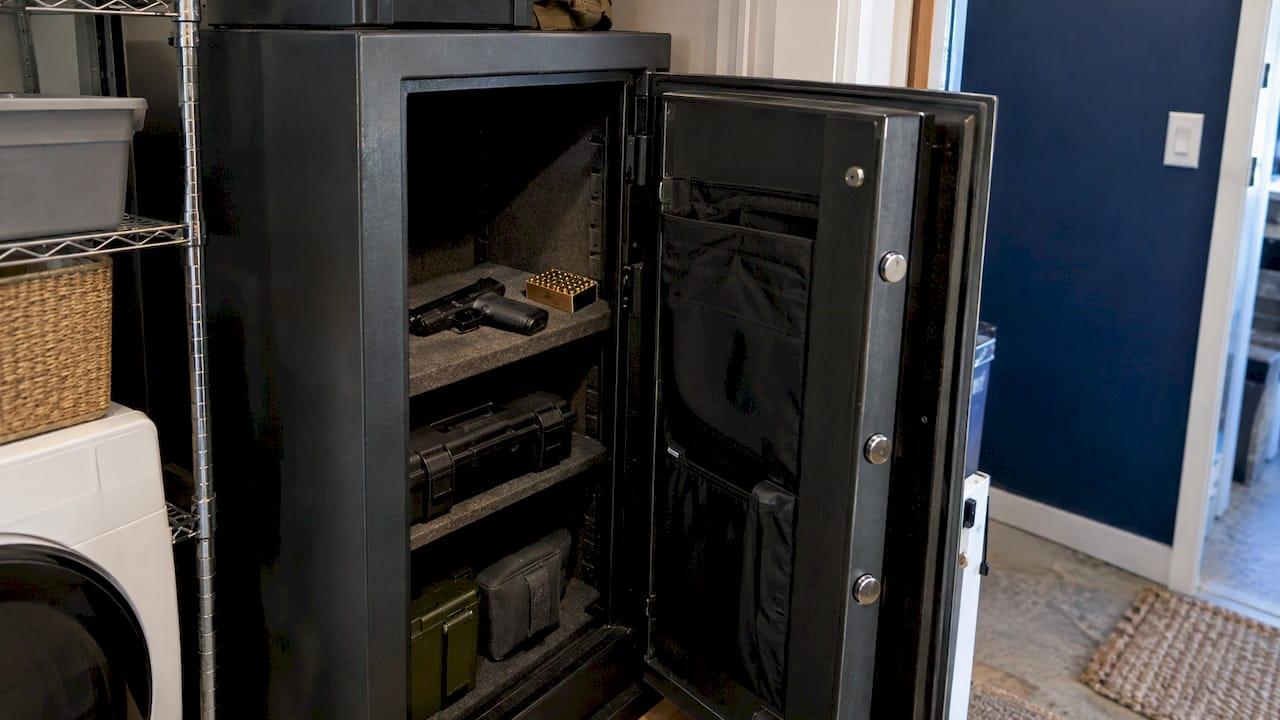
California can take away your right to own or buy firearms and ammunition in three situations tied to a domestic violence allegation: when a court issues a restraining order against you, when you are charged with certain offenses, and when you are convicted. Federal law adds its own ban on top, and the two systems do not line up. A state restriction may end while the federal one continues. This guide explains who is covered, how long each ban lasts, what you must do with your guns, what happens if you do not, and where a defense attorney can change the outcome.
TL;DR
- A restraining order can trigger a firearm ban in California before any conviction. Once you are served, you generally have 24 hours to give up your guns.
- A conviction for a listed violent misdemeanor generally carries a 10-year state ban. A qualifying Penal Code § 273.5 misdemeanor entered on or after January 1, 2019 generally carries a lifetime ban.
- Federal law separately bans firearms for life after a qualifying misdemeanor domestic violence conviction, and the state ban expiring does not automatically lift it.
- Possessing a gun while prohibited is its own crime, state and federal, so the way you handle the case from day one matters.
- Getting the charge reduced, dismissed or diverted, or fighting the order, can protect your gun rights, which is why early legal advice matters.
Table of Contents
- When the ban starts: orders, charges and convictions
- How long the California ban lasts
- The federal ban is separate
- What you must do with your firearms
- Penalties for possessing a gun while prohibited
- Can you get your gun rights back?
- Protecting your gun rights while the case is open
- Who is especially affected
- What we do about it
- Perspective
- FAQ
- Sources
When the ban starts: orders, charges and convictions
Most people assume a gun ban follows a conviction. In California it often starts much earlier.
Restraining orders
The California Courts self-help guide says a person served with a domestic violence restraining order must follow the firearm and ammunition restrictions that come with it, and it sets a 24-hour deadline to relinquish firearms after service. Giffords Law Center reports that California permits firearm restrictions for emergency, ex parte, noticed-hearing and judgment-based domestic violence orders. That means a temporary order issued after a one-sided request, before you have had a chance to tell your side, can already put you under a gun ban.
By statute, Family Code § 6389 bars a person subject to a protective order defined in Family Code § 6218 from owning, possessing, purchasing or receiving a firearm or ammunition while that order is in effect.
If you are facing a restraining order request, our page on DVRO defense in San Diego explains how these hearings work and why the first hearing matters for your firearm rights.
Pending criminal charges
A criminal case can also bring a restriction before a verdict. According to Giffords, California courts may prohibit a defendant charged with a domestic violence misdemeanor, but not yet convicted, from buying or possessing firearms. Criminal protective orders issued in the case can carry firearm conditions as well.
Convictions
A conviction produces the longest-lasting bans. The next section breaks down the length.
How long the California ban lasts
The duration depends on the offense, not only on whether it was a misdemeanor or a felony.
| Situation | Typical California consequence |
|---|---|
| Restraining order in effect | Ban lasts while the order is in effect |
| Listed violent misdemeanor (for example assault, battery or stalking) | Generally 10 years |
| Qualifying § 273.5 misdemeanor entered on or after January 1, 2019 | Generally for life |
| Felony conviction | Felons are generally barred from firearms, and the ban is long-term |
The 10-year rule is described by Giffords: California generally imposes a 10-year prohibition after violent misdemeanors such as assault, battery or stalking, whatever the victim's relationship to the person convicted. The lifetime rule is narrower. Giffords says it applies to willfully inflicting corporal injury resulting in a traumatic condition against a current or former spouse, cohabitant, dating partner, or the other parent of the person's child.
The state Attorney General's overview of key California firearms laws says the main state prohibitions are in Penal Code sections 29800 to 29825 and 29900. So if you want to know exactly which category your charge falls into, the code section you are convicted under, and the year the conviction is entered, are what count.
Why the exact charge matters
Two cases that look alike to a layperson can end up in different categories. A domestic battery under Penal Code § 243(e)(1) is treated differently from a corporal injury charge under § 273.5. We cover the first in our guide to PC 243(e)(1) and the firearms rule. When a case is negotiated, the code section in the final plea is not a technicality. It can decide whether you lose gun rights for 10 years or for life.
The federal ban is separate
Federal law runs on its own track, and a California analysis that ignores it is incomplete. The Attorney General's state summary does not include the separate federal prohibitions under 18 U.S.C. § 922(g).
After a misdemeanor conviction: § 922(g)(9)
The U.S. Attorney's Office for the Central District of California explains that possessing a firearm or ammunition after a conviction for a qualifying misdemeanor crime of domestic violence is a federal Gun Control Act crime under § 922(g)(9), and the prohibition generally lasts for life. The misdemeanor must involve the statutory relationship and the use, attempted use or threatened use of physical force or a deadly weapon, and the person must have received the required criminal-process protections, according to a summary of federal law.
While a protection order is in place: § 922(g)(8)
The federal order-based ban is narrower than California's. A Los Angeles County federal-prosecution summary says § 922(g)(8) applies only to a qualifying protection order: one issued after notice and an opportunity to participate, restraining conduct toward an intimate partner or the partner's child, and either containing a credible-threat finding or explicitly prohibiting force. The federal ban lasts only while that order remains in effect. So an ex parte California order may trigger the state ban while not meeting the federal test.
The statute reaches possession of a firearm or ammunition in or affecting interstate commerce, and receipt of one that has been shipped in interstate or foreign commerce.
A state ban ending does not end the federal ban
This is the trap that catches people years later. In United States v. Chovan, the Ninth Circuit held that a California misdemeanor domestic violence conviction did not fall out of § 922(g)(9) just because California's 10-year restriction expired. The court explained that a person who never lost the core civil rights of voting, jury service or holding public office cannot use the federal "civil rights restored" exception. Federal restoration exceptions are read on their own terms, and they do not follow state-law expiration automatically.
In practice: if you were convicted years ago, do not assume you are free to buy a gun because 10 years have passed. Check your situation with an attorney first.
What you must do with your firearms
If an order or conviction applies to you, the law tells you what to do and how fast.
- Stop possessing, buying and receiving. This includes ammunition, not only guns.
- Relinquish within the deadline. After service of a restraining order, the court guide says relinquishment must happen within 24 hours.
- Use a lawful route. California permits surrender to local law enforcement, or sale, transfer or storage through a licensed gun dealer. The same guide requires you to file the completed proof form with the court.
- Keep your receipt. Proof that you complied can matter later at a hearing or in a criminal case.
Do not hand guns to a friend or relative informally. A private handoff outside the permitted routes can create new problems for both of you. Giffords notes that California law authorizes search warrants to recover firearms that a person subject to a protective order failed to relinquish.
If you carry for work or hold a concealed carry permit, the same rules reach you. Our page on CCW violations in San Diego explains how permit issues and gun charges interact.
Penalties for possessing a gun while prohibited
The ban itself is enforced with new criminal charges.
- California. Penal Code § 29825 covers knowingly buying or receiving, attempting to buy or receive, or possessing a firearm while prohibited by a covered order. The punishment is up to one year in county jail or, for purchase or receipt, state prison. A state Senate analysis describes a violation as a misdemeanor for possession and a wobbler for purchase or receipt.
- Federal. The Central District of California states that a violation of § 922(g)(8) or § 922(g)(9) carries a maximum prison term of 10 years.
A domestic violence dispute that might have ended with a restraining order or a misdemeanor can turn into a weapons case if a gun is found at your home. That is why handling firearms correctly in the first days matters as much as the underlying case. If you are already charged with having a gun you were not allowed to have, see our page on felon in possession of a firearm defense or carrying a loaded firearm.
Can you get your gun rights back?
Sometimes, but the answer depends on which ban you are asking about.
Orders. A state ban tied to a restraining order generally ends when the order ends. Fighting the order, or negotiating its terms, is the most direct way to shorten that period.
State conviction bans. A 10-year ban runs out by its own terms. A lifetime ban for a qualifying § 273.5 misdemeanor entered on or after January 1, 2019 does not.
Federal ban. After Chovan, an expired state restriction is not enough on its own. Whether any federal exception applies turns on the facts of the conviction and the person's civil rights history, so this is a question to put to a lawyer before you act, not after.
Cleaning up the record. Some people ask whether an expungement helps. Our expungement practice can review what relief is available for a past case, but we do not promise that any record-clearing step restores firearm rights. Whether it does depends on the offense and on federal law, and we would tell you that plainly at the start.

Protecting your gun rights while the case is open
The best time to protect firearm rights is before a plea. Here is how the decisions fit together.
- At the restraining order stage. A temporary order can be issued without you present. The follow-up hearing is your chance to contest it. What you say, what you file, and whether you agree to terms can all affect how long the firearm restrictions run. Learn more about restraining order defense.
- At the charging stage. A strong defense can lead to a dismissal or a not guilty verdict, which avoids a conviction-based ban entirely. We also look at diversion options where they fit the facts, and at pre-charge intervention, when a case has not yet been filed.
- At the plea stage. If a resolution makes sense, the specific code section, the label of the offense and the date it is entered can change both the state and federal consequences. Never accept a plea without asking, in writing, how it affects firearms.
- At the sentencing and probation stage. Probation terms often include a firearm condition. Violating it can bring new charges. Our warrants and probation services page covers what to do if there is a violation or a warrant.
For a broader view of how these cases move through court, read domestic violence charges in California: what to know. If children are involved, a charge or order can reach custody too, as we explain in how a domestic violence charge can affect child custody.
Who is especially affected
Veterans and service members. Many service members own firearms and are used to carrying them for work. A domestic violence charge can end that, and with it a career. Diversion programs for military and mental health cases are one area we handle, and the right outcome can keep the firearm question from becoming permanent.
Licensed professionals and security workers. A gun ban can cost you a job directly, and a conviction can threaten a professional license on top of that. We help people whose licenses are at risk from criminal charges.
Gun owners who are not the accused. If you share a home with someone under an order, ask how the guns in the house are stored and who can reach them. Anything in the restrained person's possession or control can cause trouble.
What we do about it
The Law Office of Logan Noblin, APC defends domestic violence, restraining order and related weapons cases in San Diego. Our approach is to build a clear, personal account of who you are and what happened, and to present it to prosecutors, judges and juries. Where the facts allow, we work to keep a case from becoming a conviction at all, because a conviction is what creates the longest bans.
If you have been served with an order, charged, or told that a plea would cost you your guns, talk to us before you decide anything. You can start with our San Diego domestic violence defense page, or go to our main site to reach the firm.

We review the order or charging document, explain which firearm rules apply to you under state and federal law, and lay out your options for the hearing or the case. If the charge involves a battery count, our page on battery and domestic battery defense shows how we approach it.
Perspective
In our experience, people come in worried about the criminal charge and only later realize the gun ban may outlast the case. We think that order of worry should be reversed. Deadlines on firearms start the day you are served, and the way a case ends can decide whether the ban is temporary or permanent.
That is why we begin with the end result. Before we talk about a plea, we ask what it does to your firearm rights, your job, your license and your family. Our work is built on trial preparation, early intervention and diversion knowledge, with the aim of dismissals and acquittals rather than the best available conviction.
Every client has a story that the paperwork does not tell. As a published writer and former journalist, Logan Noblin puts effort into telling that story clearly, because judges and juries decide on people, not only on code sections.
Logan Noblin
FAQ
Can I lose my gun rights from a restraining order alone?
Yes. California courts can attach firearm and ammunition restrictions to emergency, ex parte, noticed-hearing and judgment-based domestic violence orders, and the court self-help guide sets a 24-hour deadline to relinquish after service. The ban generally lasts while the order is in effect.
How long is the gun ban after a misdemeanor domestic violence conviction in California?
For listed violent misdemeanors, California generally imposes a 10-year ban. A qualifying § 273.5 misdemeanor entered on or after January 1, 2019 generally carries a lifetime ban. Separately, federal law generally bans firearms for life after a qualifying misdemeanor crime of domestic violence.
If my 10-year California ban expires, can I buy a gun again?
Not necessarily. In United States v. Chovan, the Ninth Circuit held that the expiration of California's 10-year restriction did not remove the conviction from the federal prohibition. Speak to an attorney before attempting any purchase, because buying while federally prohibited is itself a crime.
What should I do with my guns after being served with a restraining order?
Give them up within 24 hours through a permitted route: local law enforcement, or a licensed gun dealer for sale, transfer or storage. Then file the proof form with the court and keep your receipt. Do not pass them informally to a friend or relative.
Can charges alone lead to a gun ban?
It can happen. According to Giffords, California courts may bar a person charged with a domestic violence misdemeanor, but not yet convicted, from buying or possessing firearms. The specific terms depend on the court's orders in your case.
Sources
- How to obey orders prohibiting firearms and ammunition (California Courts Self-Help)
- Domestic Violence Gun Laws in California (Giffords Law Center)
- California Family Code § 6389
- California Penal Code § 29825
- Overview of Key California Firearms Laws (California Attorney General)
- Domestic Violence Laws (U.S. Attorney's Office, Central District of California)
- Federal Felony Prosecution of Armed Domestic Abusers (Los Angeles County)
- United States v. Chovan (Ninth Circuit, 2013)
- Federal § 922(g)(8) appellate decision (Justia)
- SB 899 Senate Public Safety analysis (California Senate)
- Federal and state firearm laws summary (Armed with Knowledge)