PC 243(e)(1) is California's misdemeanor statute for domestic battery, covering any willful, unlawful touching against a spouse, cohabitant, co-parent, or dating partner. A conviction carries up to a $2,000 fine, up to one year in county jail, or both, plus a mandatory yearlong batterer's treatment program if the court grants probation. The rest of this guide breaks down the statute's language, defenses, restraining order fallout, and what to do the moment you're charged.
TL;DR:
- A domestic battery charge under PC 243(e)(1) applies specifically to spouses, cohabitants, dating partners, or co-parents, not casual acquaintances or roommates without a romantic history.
- Prosecutors must prove that contact was willful, unlawful, and made within a protected relationship, with intent rather than harm being the key focus.
- Penalties include up to $2,000 fine, one year in jail, or both, but most defendants receive probation with mandatory batterer's treatment for at least one year.
- Firearms must be surrendered within 24 to 48 hours of order service, and failure to file proof of surrender can lead to additional charges.
- Building a defense often involves challenging the relationship, intent, or self-defense, with evidence preservation and avoiding contact with the victim being crucial immediately after arrest.
Table of Contents
- What PC 243(e)(1) Actually Says
- What Prosecutors Must Prove
- Penalties, Probation, and the Mandatory Treatment Program
- Restraining Orders and the Firearms Surrender Deadline
- Building a Defense: What Weak Cases Look Like
- Life After a Conviction: Records, Custody, and Getting Relief
- What to Do the Moment You're Charged
- How a Defense Attorney Approaches These Cases
- Does PC 243(e)(1) Apply the Same Way Statewide?
- What Counts as "Domestic Violence" Under This Statute
- From Arrest to Arraignment: What Happens Next
- The Consequences That Outlast the Courtroom
- A Straight Answer on What Actually Matters Here
- How the Law Offices of Logan Noblin Handles Domestic Battery Cases
- Sources
- FAQ
What PC 243(e)(1) Actually Says
The statutory text applies battery law to a specific set of relationships, and FindLaw's version of the code reads nearly identically if you want a second reference point. The statute punishes battery committed against a spouse or former spouse, a cohabitant or former cohabitant, a person you're dating or used to date, the parent of your child, or your fiancé or fiancée. That's the entire scope of who counts as a protected victim under this specific subsection.
Battery itself comes from a separate law. PC 242 defines battery as any willful and unlawful use of force or violence on another person. Notice what's missing from that definition: injury. You don't need bruises, cuts, or broken bones for a battery charge to stick. A shove, a slap, or even an unwanted grab during an argument can meet the legal threshold, which surprises a lot of people who assume "battery" means someone ended up in the emergency room.
What separates PC 243(e)(1) from ordinary battery is the relationship between the two people involved, not the severity of the contact. Prosecutors charge under this subsection specifically because it targets domestic and dating relationships, and that relationship element becomes one of the first things a defense attorney examines. If the alleged relationship doesn't actually meet the statute's categories, an entire domestic battery case can collapse into, at most, a simple battery charge under PC 242, or nothing at all.
What Prosecutors Must Prove
A misdemeanor domestic battery charge doesn't survive on accusation alone. Prosecutors carry the burden of proving several distinct elements beyond a reasonable doubt, and a defense strategy usually starts by picking apart which one is weakest.
- Willful contact occurred. The prosecution has to show you intentionally made physical contact, even briefly or without leaving a mark. Accidental contact during a heated argument doesn't meet this bar.
- The contact was unlawful. Force applied with legal justification, such as reasonable self-defense, doesn't qualify as unlawful under the statute.
- The victim fits a protected category. The alleged victim must be a current or former spouse, cohabitant, dating partner, or co-parent. Roommates who were never romantically involved don't count, nor do casual acquaintances.
- No valid consent or defense applies. If the contact happened during mutual physical horseplay both parties consented to, or in genuine self-defense, that undercuts the unlawful element.
Intent matters more than outcome here. The law asks whether you meant to make contact, not whether you meant to cause harm or actually did. That distinction trips people up constantly, especially in cases where someone grabbed a partner's arm to stop them from leaving during an argument, with zero intent to hurt anyone. Prosecutors can still charge that as domestic battery because the touching was willful and unwanted, regardless of motive.
Penalties, Probation, and the Mandatory Treatment Program
PC 243(e)(1) is a misdemeanor, which caps the exposure well below felony domestic violence charges like PC 273.5. But "misdemeanor" doesn't mean minor consequences.
Statutory maximums for a conviction include:
- A fine of up to $2,000
- Up to one year in county jail
- Or both the fine and jail time, at the judge's discretion
By the numbers: A PC 243(e)(1) conviction exposes you to a fine capped at $2,000 and up to one year in county jail, with courts free to impose both simultaneously.
Most defendants don't serve the full jail term. Judges routinely suspend execution of a jail sentence and grant probation instead, but that probation comes with strings attached by law, not judicial preference. PC 1203.097 requires anyone placed on probation for a domestic violence offense to complete a batterer's treatment program lasting a minimum of one year. This isn't optional counseling. It's a statutory condition, and skipping sessions can trigger a probation violation.
Beyond treatment, expect additional probation terms layered on top: victim restitution, a criminal protective order, community service, and periodic check-ins with a probation officer. Completing the treatment program early and consistently often becomes a bargaining chip during plea negotiations, since courts view program compliance as evidence you're taking the case seriously rather than just waiting it out.
Restraining Orders and the Firearms Surrender Deadline
Criminal charges under PC 243(e)(1) frequently arrive alongside a civil domestic violence restraining order, and the two tracks move on separate clocks. You might see forms like DV-110 (temporary restraining order), DV-130 (the order after a full hearing), or DV-730 (orders tied to a related case). Missing a hearing or misunderstanding which order is temporary versus permanent is a common, costly mistake.
Firearms rules attached to these orders are strict and fast-moving. Once served, California requires firearms surrender within a tight window, often 24 to 48 hours, by turning weapons over to law enforcement, selling them to a licensed dealer, or storing them with an approved third party. You then have to file form DV-800 to prove you complied. Local superior courts, including the Sacramento Superior Court's domestic violence firearms packet, walk through this process and list the related statutes that commonly appear in these cases, including PC 240, 241, 242, 243, 243.4, and 244.5.
- Read every order in full and note every deadline, not just the surrender date.
- Surrender firearms exactly as instructed and keep receipts.
- File DV-800 immediately after compliance.
- Never contact the protected party to "clear things up," even by text.
Pro Tip: Filing DV-800 late doesn't just look bad. It can trigger a separate firearms violation charge stacked on top of your existing case, which is a mistake entirely within your control to avoid.
Building a Defense: What Weak Cases Look Like
Domestic battery cases often hinge on one person's word against another's, which makes evidence quality the whole ballgame. Several defense strategies show up repeatedly in these cases.
- Self-defense or defense of another. If you used reasonable force to stop an attack or protect someone else, that can defeat the unlawful element entirely.
- Mutual combat or consent. Some encounters involve both parties engaging physically by choice, which undermines the claim that contact was unwanted.
- Lack of intent. Accidental contact during a chaotic moment, like bumping into someone while grabbing car keys during an argument, isn't willful battery.
- Mistaken identity or false accusation. Emotionally charged breakups and custody disputes sometimes produce exaggerated or fabricated claims.
Building any of these defenses depends on evidence discipline. Police reports get scrutinized for inconsistencies, witness statements get cross-checked against timelines, and medical records (or their absence) speak volumes about severity. Surveillance footage and phone metadata, including timestamps on texts or call logs, often settle disputes that would otherwise come down to conflicting testimony. Defense attorneys also lean heavily on discovery motions to force the release of body camera footage, 911 call recordings, and officer notes that don't always make it into the initial report.
One mistake shows up constantly: contacting the alleged victim to apologize or explain. That single decision can generate a new allegation of witness intimidation or a restraining order violation, on top of the original charge.
Pro Tip: Never delete a text, edit a video, or "clean up" your phone after an incident. Original files with intact metadata often prove more helpful to a defense than anything you could say in an interview.
Life After a Conviction: Records, Custody, and Getting Relief
A PC 243(e)(1) conviction doesn't disappear once probation ends. It shows up on standard criminal background checks, which affects everything from apartment applications to certain professional licenses. Family court judges also weigh domestic violence convictions heavily in custody and visitation decisions, sometimes requiring supervised visitation even years after the case closed.
Immigration consequences deserve their own conversation with an immigration attorney, since domestic violence convictions can trigger removal proceedings or bar certain relief for non-citizens, and the analysis depends heavily on specific case facts.
Relief options do exist once the case is behind you:
- Expungement under PC 1203.4 can allow you to withdraw a guilty or no-contest plea and have the case dismissed, though it doesn't erase the record entirely.
- Diversion programs, when available and completed, may keep a conviction off your record altogether.
- Certificate of rehabilitation or record sealing may apply years later, depending on your full criminal history.
Most people become eligible to pursue expungement or related record relief once probation successfully ends, and the earlier you start that conversation with counsel, the sooner you can put the case behind you.
What to Do the Moment You're Charged
The decisions you make in the first 48 hours after an arrest often shape the entire case. Priorities, in order:
- Comply with every order immediately. Follow any restraining order or no-contact condition to the letter, even if you believe it's unfair or based on exaggeration.
- Preserve everything. Don't delete texts, don't edit photos or videos, and don't erase call logs. Preserving original evidence with intact metadata is one of the strongest things you can hand your attorney.
- Gather your paperwork. Collect the police report, booking records, any protective order paperwork, and every message exchanged with the other party.
- Write a timeline while it's fresh. Names, dates, and what happened in the order it happened, before memory starts to blur details.
- Bring it all to your first consultation. A complete evidence packet lets an attorney evaluate dismissal, reduction, or diversion options far faster than starting from scratch.
Pro Tip: Bring your phone itself to the consultation, not just screenshots. Screenshots strip metadata that can prove exactly when a message was sent or a photo was taken.
Expect that first meeting to focus on realistic goals: outright dismissal if the evidence is thin, a reduced charge through negotiation, or entry into a treatment-based diversion program that avoids a conviction altogether.
How a Defense Attorney Approaches These Cases
A defense workflow for PC 243(e)(1) typically starts with a full review of police reports, 911 audio, and any body camera footage, followed by early motions challenging weak evidence before a case ever reaches trial. Attorneys often push for diversion or treatment-based resolutions when a client has no criminal history and the facts support it, reserving trial for cases where the prosecution's evidence genuinely falls apart under scrutiny.
The Law Offices of Logan Noblin built its domestic violence defense practice around exactly this kind of case-by-case evaluation, with Logan Noblin's background securing multiple not-guilty verdicts and dismissals in San Diego courts.
Does PC 243(e)(1) Apply the Same Way Statewide?
PC 243(e)(1) itself is state law, so the statute's language and maximum penalties apply identically whether you're arrested in San Diego, Sacramento, or anywhere else in California. What varies isn't the law. It's how individual counties and courts implement it.
Some counties run dedicated domestic violence courts with specialized prosecutors who handle nothing but these cases, which tends to mean faster case processing but also prosecutors who've seen every defense argument before. Other jurisdictions fold domestic violence cases into general misdemeanor calendars, where caseloads and scheduling can stretch a case out over many months.
Batterer's treatment program approval also varies locally. Courts maintain their own lists of approved providers under PC 1203.097, and a program accepted in one county might not automatically satisfy a different county's probation department. Bail schedules and own-recognizance release practices differ too. Some counties release domestic violence defendants on standard conditions, while others impose stricter pretrial supervision or GPS monitoring, particularly if the alleged incident involved any weapon.
None of this changes what the prosecution has to prove. It changes how quickly your case moves, which judge you draw, and which local resources satisfy probation terms. An attorney who regularly appears in your specific county's courts usually has a real advantage over one unfamiliar with local practices, simply because they know which motions that particular bench tends to grant.
What Counts as "Domestic Violence" Under This Statute
The phrase "domestic violence" gets used loosely in everyday conversation, but PC 243(e)(1) applies a narrower, specific definition tied to relationship status rather than the nature or severity of the act itself. The statute covers spouses and former spouses, current and former cohabitants, people in a dating or former dating relationship, the parents of a shared child, and fiancés or fiancées.
Notice what's absent from that list: roommates with no romantic history, siblings, or extended family members living in the same household. Those relationships might fall under other statutes, but not this one. If the prosecution can't establish that the qualifying relationship existed at the time of the incident, the case can't proceed as domestic battery, regardless of what actually happened physically.
"Cohabitant" causes more disputes than any other category. Courts look at factors like shared finances, joint lease agreements, length of time living together, and whether the relationship had a romantic or sexual component. Two people splitting rent as platonic roommates generally don't meet this bar, but the line gets blurry fast when a romantic relationship existed at some point during the cohabitation, even if it had ended before the alleged incident.
Dating relationships get scrutinized just as closely. A single date doesn't automatically create a "dating relationship" under California law; courts weigh factors like frequency of contact, exclusivity, and how the parties themselves characterized the relationship. This is precisely the kind of factual dispute where a defense attorney can challenge whether PC 243(e)(1) even applies, sometimes reducing the case to a lesser charge or getting it dismissed outright.
From Arrest to Arraignment: What Happens Next
Once police make an arrest for suspected domestic battery, the process moves through fairly predictable stages, though timing varies by county workload.
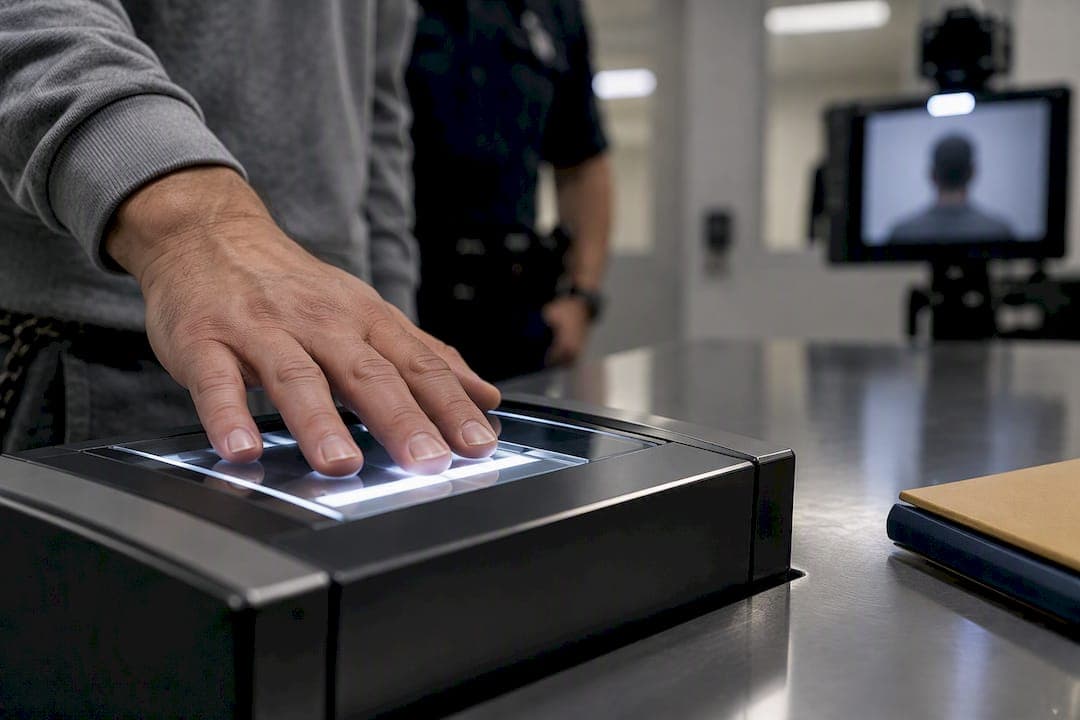
Booking happens first, typically at a local jail, where you're fingerprinted and photographed. Many defendants are released within hours on bail or their own recognizance, though judges sometimes impose a no-contact condition immediately, even before formal charges are filed.
Arraignment comes next, usually within 48 hours of arrest, excluding weekends and holidays. At arraignment, the court formally reads the charge, you enter a plea (typically not guilty at this stage while your attorney reviews the evidence), and the judge addresses bail and any protective order requests. This is also frequently when a criminal protective order gets issued, separate from any civil restraining order the alleged victim might have filed independently.
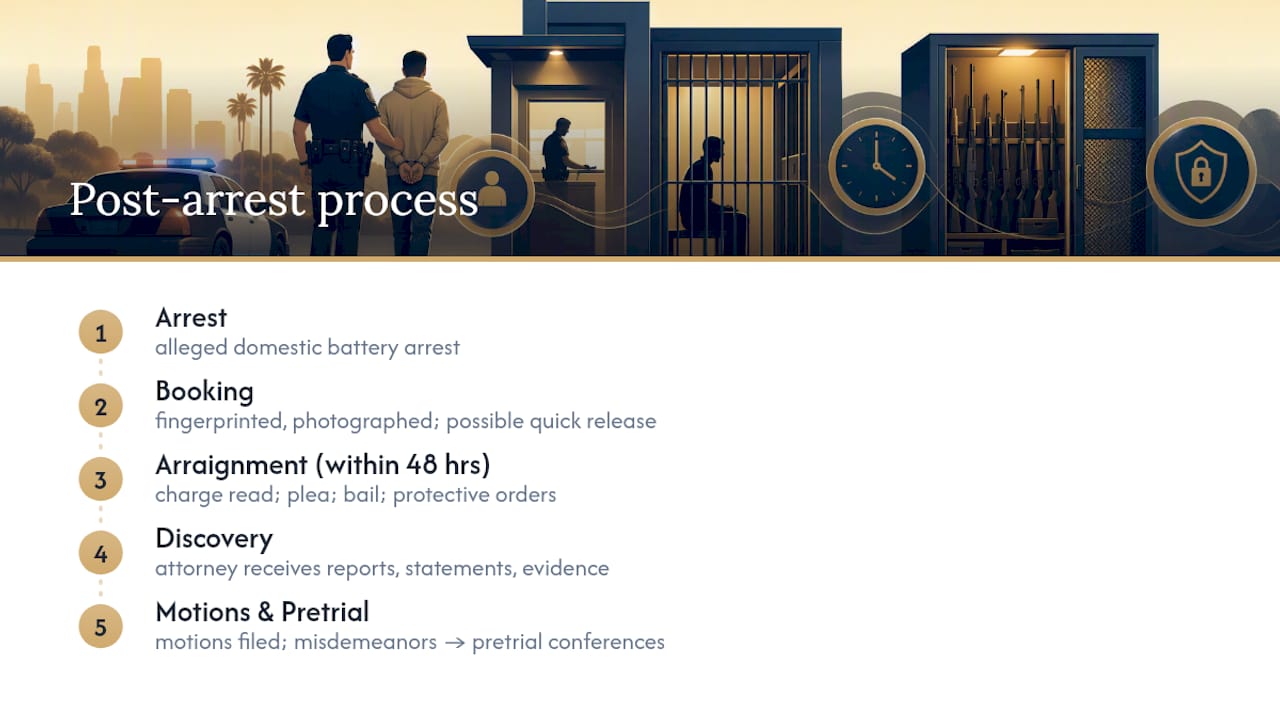
Following arraignment, your attorney receives discovery, meaning police reports, witness statements, and any recorded evidence the prosecution plans to use. This period is when defense motions typically get filed, challenging weak evidence or pushing for early dismissal. If the case doesn't resolve through negotiation or dismissal, it proceeds toward a preliminary hearing in more serious matters, though misdemeanor cases like PC 243(e)(1) often move directly toward pretrial conferences rather than a full preliminary hearing, which is generally reserved for felony charges.
Throughout this entire sequence, compliance with every court order remains critical. A single missed check in or unauthorized contact with the alleged victim can complicate an otherwise strong defense position.
The Consequences That Outlast the Courtroom
A misdemeanor conviction might feel less severe than a felony, but the ripple effects reach further than most people expect going into the process.
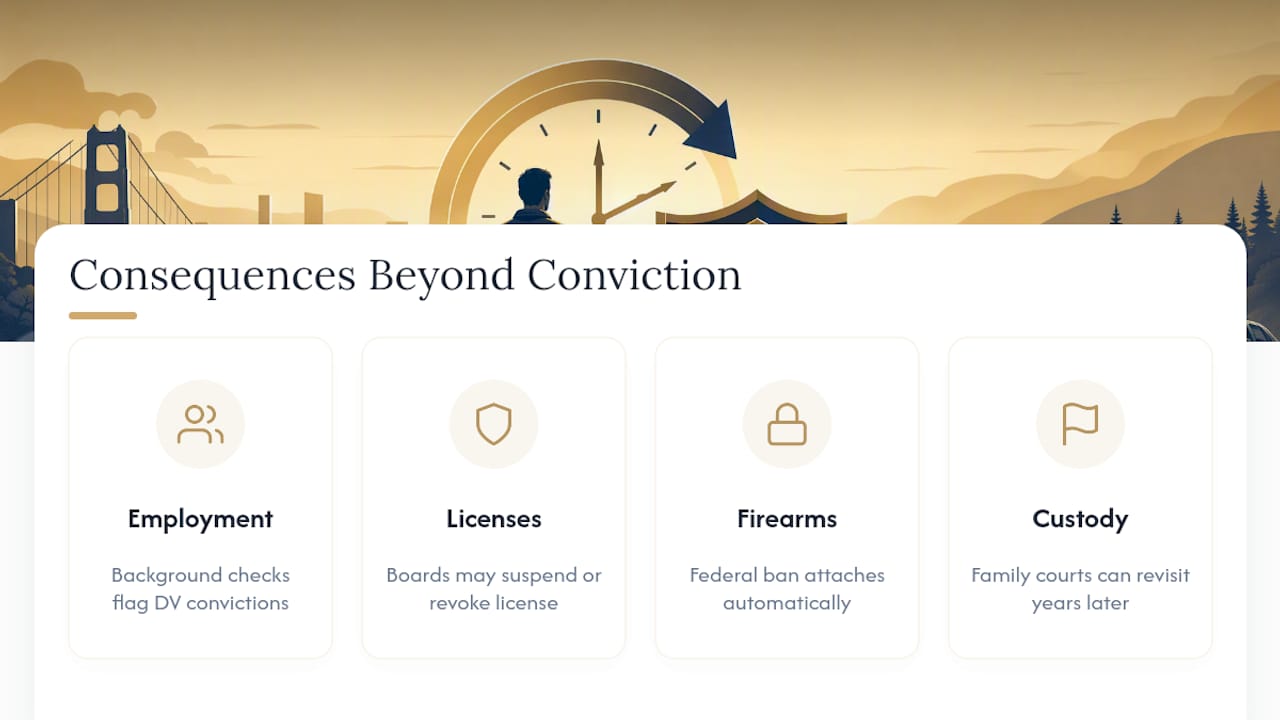
Employment screening is the most immediate concern for many defendants. Background check companies flag domestic violence convictions specifically, and certain professions react to that flag more harshly than a typical misdemeanor. Teachers, healthcare workers, and anyone holding a professional license face licensing board scrutiny that can result in suspension or revocation hearings entirely separate from the criminal case itself.
Federal firearms restrictions attach automatically to qualifying domestic violence convictions, and this consequence often surprises defendants who assumed a state misdemeanor wouldn't trigger federal law. Losing firearm rights can affect certain jobs outright, including law enforcement, security work, and military service.
Housing applications increasingly include background checks that flag any violence-related conviction, and some landlords deny applications outright regardless of how long ago the conviction occurred. Custody arrangements, as mentioned earlier, often carry the longest tail of all, since family court judges can revisit a domestic violence history years after the criminal case closed if new custody disputes arise.
Social relationships take a hit too, one that's harder to quantify but no less real. Friends, extended family, and community connections sometimes pull back after a domestic violence charge becomes public, even when the case ends in dismissal. This is part of why moving quickly toward the strongest available resolution, whether that's dismissal, diversion, or a favorable plea, matters as much for your life outside the courtroom as it does for your criminal record.
A Straight Answer on What Actually Matters Here
Most people facing a PC 243(e)(1) charge get fixated on the criminal record and lose sight of the faster clock ticking underneath it: firearms deadlines, no-contact orders, and probation conditions that start counting the moment a judge signs off. Evidence preservation and immediate compliance protect you more than any argument you could make weeks later.
Talk to an attorney before you talk to anyone else, including the person who filed the report.
— Jake
How the Law Offices of Logan Noblin Handles Domestic Battery Cases
Facing a PC 243(e)(1) charge alone means navigating firearms deadlines, treatment program requirements, and courtroom procedure without anyone in your corner who's done it before. Some defense attorneys bring diverse backgrounds, including experience in writing and journalism, to build narratives that resonate with judges and juries.

The firm handles domestic violence defense from arraignment through trial, along with DVRO defense, diversion program advocacy, and post-conviction relief like expungements once a case resolves. If you're bringing a case to a consultation, arrive with your police report, any protective order paperwork, your phone with original messages intact, and a written timeline of events. That packet lets Logan Noblin evaluate your realistic options, whether that means fighting for dismissal, negotiating a reduction, or pursuing treatment-based diversion, faster than starting from a blank slate. Reach out through Logancriminaldefense to schedule a consultation and get a straight answer on where your case stands.
This article is general information, not a substitute for advice from a qualified lawyer. Consult a qualified legal professional about your own circumstances before acting on anything here.
Sources
- California Legislative Information — Penal Code § 243
- California Courts self-help — How to obey orders prohibiting firearms and ammunition
FAQ
What does PC 243(e)(1) mean?
PC 243(e)(1) is the section of California's battery law that specifically applies when the alleged victim is a spouse, former spouse, cohabitant, dating partner, or co-parent. It's charged as a misdemeanor, carrying up to a $2,000 fine and one year in county jail, with mandatory batterer's treatment if probation is granted.
How is PC 243.4 different from PC 243(e)(1)?
PC 243.4 covers sexual battery, meaning unwanted touching of an intimate body part for sexual gratification or abuse, which is a legally distinct offense from the domestic battery covered under PC 243(e)(1). The two statutes address entirely different types of contact and carry different penalty structures.
How long does a misdemeanor battery charge stay on your record?
A misdemeanor domestic battery conviction stays on your criminal record permanently unless you pursue relief like expungement under PC 1203.4. Expungement can dismiss the case after probation ends, but it doesn't erase the arrest record entirely from every database.
Is a battery charge worse than an assault charge?
Neither charge is automatically "worse," since assault (PC 240) involves an attempt to commit violent injury while battery (PC 242) requires actual physical contact, and the two carry different penalty ranges depending on the specific circumstances and any aggravating factors. A domestic battery charge under PC 243(e)(1) specifically adds the mandatory treatment program requirement that a standalone assault charge doesn't carry.
Do I need a lawyer for a first-time PC 243(e)(1) charge?
Yes. Even a first offense carries firearms surrender deadlines, mandatory treatment conditions, and lasting record consequences, and the Law Offices of Logan Noblin regularly evaluates these cases for dismissal, reduction, or diversion opportunities before they reach trial.