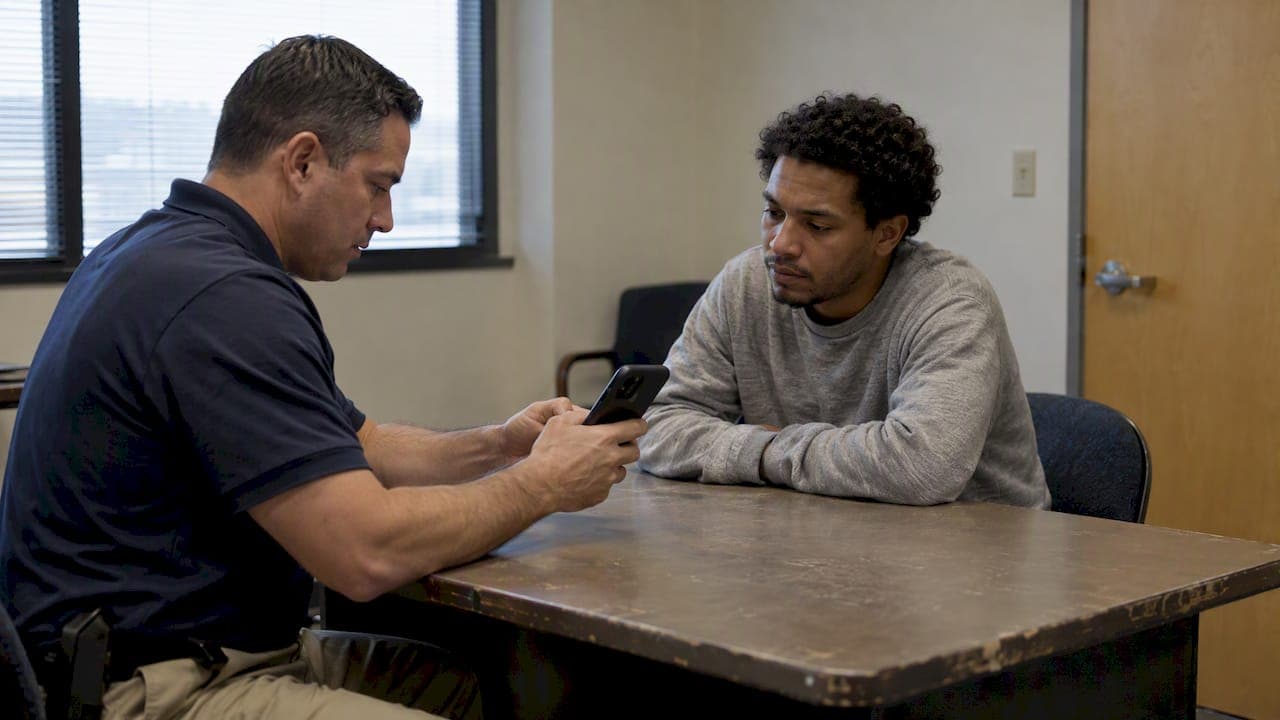
A "4th waiver" in California is a court condition, usually tied to probation, mandatory supervision, or a plea deal, that lets officers or probation search you, your home, your car, or your devices without a warrant. Many forms now reach phones and passwords too. If anyone asks you to sign one or invokes one against you, say you do not consent and call a criminal defense attorney before you do anything else.
TL;DR:
- Waiver language may authorize searches of your person, home, vehicle, phones, and cloud accounts, including demands for passwords and access codes.
- Ask counsel to narrow the clause before sentencing; courts may limit device searches to relevant apps or time periods, or require reasonable suspicion.
- A court weighs whether a condition relates to the offense or future crime; In re Ricardo P. also requires courts to assess electronic search intrusiveness.
- If officers proceed, state that you do not consent, do not physically interfere or provide passwords, and record the date, names, and search details afterward.
- Refusing a waiver tied to a plea offer may cost you that deal, so compare its search scope with the benefit before accepting.
Table of Contents
- What a 4th Waiver Typically Covers in California
- When Courts Add a Fourth Amendment Waiver to Your Case
- The Legal Limits: The Lent Test and In re Ricardo P.
- What to Do If You're Asked to Consent or Already Have a Waiver
- How We Approach Fourth Amendment Waiver Cases in Court
- Talk to Our Office About a Search Condition or Waiver
- FAQ
- Sources
What a 4th Waiver Typically Covers in California
Fourth Amendment waiver language varies by county and judge, but most forms follow a similar pattern. They authorize searches of your person, vehicle, and residence at any time, with or without a warrant, with or without reasonable suspicion, by any peace officer or probation officer. Many current templates go further and address electronic devices directly, citing the California Electronic Communications Privacy Act and asking for consent to seize and examine phones, laptops, and cloud accounts.
A sample Fourth Amendment waiver and ECPA consent form used in Nevada County shows how specific this language gets: it orders the person to submit to searches of their person, vehicle, and residence, and separately requires disclosure of passwords and passcodes to any electronic device probation or law enforcement wants to examine.
Clauses readers commonly encounter include:
- Submission to search of person, vehicle, and residence at any time
- Consent to seizure and inspection of cell phones, computers, and storage media
- A requirement to provide passwords, passcodes, or biometric access on request
- Consent to search of cloud accounts, messaging apps, or social media tied to the device
The exact wording matters. A broad, unmodified version can reach years of personal messages and photos that have nothing to do with the original offense.
When Courts Add a Fourth Amendment Waiver to Your Case
A waiver rarely appears out of nowhere. It typically shows up at one of three points: during plea negotiations, at sentencing when probation is granted, or as a term of mandatory supervision for certain felony sentences. Each context carries different leverage.
- Plea negotiations. Prosecutors frequently offer a reduced charge or dismissed count in exchange for probation terms that include a search condition.
- Sentencing for probation. A judge can impose a waiver as a probation condition even without a plea agreement, usually tied to the facts of the offense.
- Mandatory supervision. For certain low-level felonies served partly in custody and partly under supervision, search conditions often mirror probation terms.
Parole, probation, and mandatory supervision are not interchangeable even though waivers show up in all three. Parole conditions are set by the parole authority after a state prison term and tend to be the broadest. Probation conditions come from the sentencing court and must relate to the case. Mandatory supervision sits in between, supervised locally but still bound by whatever the sentencing judge ordered.
Because these waivers are often negotiated rather than simply handed down, the scope is frequently adjustable before anyone signs anything.
Pro Tip: Ask your attorney to review the exact waiver language before sentencing, not after. Narrowing the clause at that hearing is far easier than challenging it later.
The Legal Limits: The Lent Test and In re Ricardo P.
Not every search condition survives scrutiny. California courts measure probation conditions, including Fourth Amendment waivers, against a three-part standard known as the Lent test. A condition is invalid unless all three factors point toward upholding it:
- It has no relationship to the crime for which the person was convicted
- It relates to conduct that is not itself criminal
- It requires or forbids conduct not reasonably related to future criminality
All three have to be true for a court to strike the condition, which makes Lent a demanding standard for challengers but not an impossible one.
Electronics get special treatment. In In re Ricardo P., the California Supreme Court held that electronics search conditions on probation must pass the Lent test too, and that courts have to weigh how intrusive a device search actually is before imposing one. The court's reasoning leaned on the privacy logic from Riley v. United States, which recognized that a modern phone holds years of messages, photos, location history, and financial records, far more than a search of a car or a backpack would ever reveal.
That distinction is the key figure worth remembering here: Lent is a three-part conjunctive test, and a condition fails it, and becomes challengeable, when even one of the three factors is missing. A waiver written broadly enough to sweep in a defendant's entire phone, with no tie to drug sales, fraud, or whatever the underlying offense involved, is a strong candidate for a narrowing motion under this standard. Common remedies include limiting the search to specific apps or time periods, removing device access entirely when the offense had no electronic component, or requiring reasonable suspicion before a device search instead of allowing it on demand.

What to Do If You're Asked to Consent or Already Have a Waiver
If a probation officer or police officer tells you a waiver lets them search your phone, your car, or your home, your response in the moment matters as much as anything your attorney does afterward.
- Say clearly: "I do not consent to this search. I want to speak with my lawyer."
- Do not physically resist or block the search if officers proceed anyway.
- Do not volunteer passwords, unlock your phone, or explain what is on it.
- Write down the date, time, officer names, and exactly what was searched as soon as you can.
Saying you do not consent preserves your legal position even if the search happens anyway, because a warrantless search is presumed unreasonable unless an exception like a valid waiver applies. That objection is often what makes a later motion possible.
From there, counsel has several paths: a motion to strike or narrow the condition before sentencing, a request for a probation modification hearing once you are already under supervision, or, if the search already happened, a motion to suppress evidence that exceeded the waiver's scope. Staying in contact with your probation officer and documenting compliance also matters, since a fight over a waiver's scope can turn into a probation violation allegation if it is not handled carefully.
Pro Tip: Never try to negotiate search terms with an officer in the field. Object, stay calm, and let your attorney argue scope in front of a judge.
How We Approach Fourth Amendment Waiver Cases in Court
We treat a search condition as a term to negotiate, not a formality to accept. When a plea or sentencing includes a proposed waiver, we push to tie its scope to the actual facts of the case, limiting or removing device access when the offense had nothing to do with electronics. We see this issue most often in DUI cases, drug offenses, and probation violation hearings, where boilerplate language gets attached without anyone checking whether it would survive a Lent challenge. Logan Noblin's background handling DUI defense, drug crime defense, and diversion program advocacy across San Diego shapes how we approach these conditions at sentencing and beyond.
Talk to Our Office About a Search Condition or Waiver
If you are facing a proposed Fourth Amendment waiver, already have one on your record, or had a search exceed what your waiver actually allows, we handle that fight directly. Our practice covers probation modification, motions to narrow or strike overbroad conditions, and diversion program advocacy when that route fits your case better than a straight plea.

We also handle the underlying charges these waivers usually attach to, including DUI defense and drug crime defense. If you want to talk through your options before you sign anything or before your next court date, reach out through our main contact page to set up a consultation.
This article is general information, not a substitute for advice from a qualified lawyer. Consult a qualified legal professional about your own circumstances before acting on anything here.
FAQ
What does a 4th waiver mean in California probation terms?
A 4th waiver, short for a Fourth Amendment waiver, is a probation or supervision condition that lets officers search your person, vehicle, residence, and often your electronic devices without a warrant. Many current forms also require you to disclose passwords for any device officers want to examine.
Is PC 166(a)(4) a misdemeanor or a felony?
California Penal Code §166(a)(4) defines willful disobedience of a lawful court order as a misdemeanor. Repeat violations involving a protected person can carry enhanced penalties under related statutes, so the consequences scale with the history behind the violation.
What crime is addressed under California Penal Code 420?
California Penal Code §420 makes it a misdemeanor to unlawfully prevent or obstruct someone from entering or establishing residence on certain public lands in California. It is unrelated to search conditions but sometimes comes up in the same penal code discussions as other misdemeanor provisions.
Can I refuse to sign a Fourth Amendment waiver?
You can object, and an attorney can try to negotiate narrower terms, but refusing a waiver that is part of a plea deal may mean losing that particular deal. Many defendants accept a waiver as a deliberate trade-off for a better outcome elsewhere in the case, which is why reviewing the language with counsel before sentencing matters, especially when considering options like diversion vs. probation.
How do I challenge a search condition that already exists?
Your attorney can file a motion to modify or strike the condition using the Lent standard, or raise the issue at a probation-modification hearing if circumstances have changed. If a search already exceeded the waiver's scope, a motion to suppress the resulting evidence may also be available.
Sources
- FindLaw: California Penal Code § 166
- California Legislative Information: PEN § 420
- In re Ricardo P. - California Supreme Court opinion (2019)
- Nevada County Superior Court: Fourth Amendment waiver and ECPA consent (sample form)