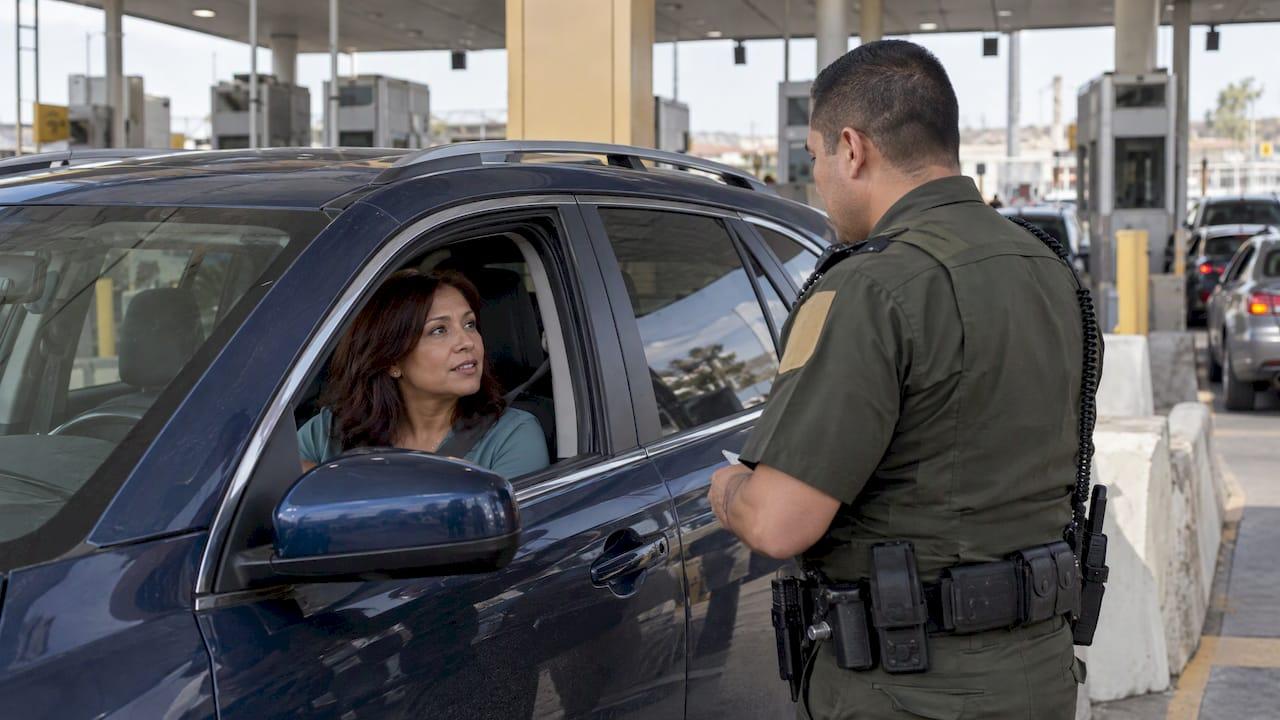
An arrest at the San Ysidro Port of Entry is almost always a federal matter. It moves fast: you are questioned by Customs and Border Protection (CBP) officers, charged by a federal complaint and brought before a magistrate judge. The decisions made in the first hours, especially what you say and whether you have a lawyer beside you, often shape the whole case. We handle federal and border cases in San Diego, and this guide explains the process so you or your family can act early and with a clear head.
TL;DR
- Border arrests at San Ysidro are prosecuted in federal court in the Southern District of California, not in a San Diego County court.
- The most common charges are importing a controlled substance, bringing in aliens for financial gain, and reentering after deportation.
- Federal rules require a first appearance before a magistrate judge without unnecessary delay, where charges, rights, counsel and release are addressed.
- Say little beyond your identity, sign nothing you do not fully understand, and ask for a lawyer before answering questions about the vehicle, the trip or any items.
- Families can locate a detainee through the facility where the person is held, with the full name and date of birth ready.
Table of Contents
- Why a San Ysidro arrest is different from an ordinary arrest
- What happens in the first hours
- The charges we see most often at San Ysidro
- Bail, detention and what a judge looks at
- How families can find someone arrested at San Ysidro
- Collateral consequences that reach beyond the criminal case
- What to do in the first 24 hours
- Our view on border cases
- How we help after a border arrest
- FAQ
- Sources
Why a San Ysidro arrest is different from an ordinary arrest
San Ysidro connects San Diego and Tijuana and is described by federal prosecutors as the world's busiest land border crossing. The Southern District of California, which covers San Diego and Imperial counties, is the fourth-busiest federal district, largely because of border-related crime. In the week covered by the September 18, 2026 release alone, federal prosecutors filed 132 border-related cases.
Three things make these cases unlike a typical local arrest:
- Federal law applies. The charges come from federal statutes, and the prosecutor is the U.S. Attorney's Office.
- Officers have broad inspection power at the border. According to a Congressional Research Service report, CBP may conduct warrantless inspections and searches at or near the border under customs and immigration laws, subject to Fourth Amendment limits. That is why a vehicle can be taken apart at secondary inspection without a warrant.
- The timeline is compressed. Federal rules require that a person arrested be brought before a magistrate judge without unnecessary delay, so the first court date comes within a day or so, not weeks later.
The practical result: the facts that prosecutors rely on, such as statements, phone contents, vehicle compartments and who knew what, are collected in the first hours. A defense strategy has the most room to work when it starts before the first interview is over.
What happens in the first hours
Every case differs, but the usual sequence looks like this.
Secondary inspection and questioning
A driver or passenger is sent to secondary inspection after a dog alert, a scan, an inconsistent answer or a system flag. Officers may search the vehicle, bags and electronic devices. If something is found, agents from Homeland Security Investigations or another federal agency commonly conduct an interview.
This interview is where many cases are won or lost. You have the right to remain silent, and the federal court process itself begins by informing the defendant of the charges and rights at the first appearance. Before that, you can state your name, say you wish to remain silent and say you want a lawyer. Everything else can wait.
Common mistakes at this stage:
- Explaining. People try to talk their way out and instead supply the knowledge element prosecutors need. Many border cases turn on whether the driver knew about a hidden compartment or package.
- Signing statements. A written statement or a waiver of rights form can be used later. Do not sign anything you have not had explained by counsel.
- Consenting to a phone search without understanding what it exposes, including messages, location history and contacts.
- Guessing about the vehicle. "I borrowed it" or "I just bought it" can be checked against records and contradicted.
The complaint and the arrest
If the officers believe a crime occurred, they arrest you and a prosecutor files a criminal complaint, a short sworn document that lays out the allegations. Federal officers have authority to arrest at the border. The CRS report explains that port-of-entry inspectors and Border Patrol agents may make warrantless arrests in defined circumstances, still subject to the Fourth Amendment's probable cause requirement.
As to a frequent question, whether border officers can arrest U.S. citizens: yes. The charges in the weekly federal filings include U.S. citizens. In the November 3, 2026 case list, for example, a U.S. citizen is listed as arrested and charged with importation of a controlled substance. Citizenship does not shield anyone from a federal drug or smuggling charge.
Booking and the first appearance

According to the Department of Justice's Justice 101 guide, the defendant is brought before a magistrate judge the same day or the day after arrest and charging. At that hearing the judge explains your rights and the charges, arrangements are made for an attorney, and the judge decides whether you are held or released. The DOJ's criminal procedures page adds that the judge determines whether you can afford counsel, appoints a public defender if not, and sets release conditions including any bond, while the prosecutor may ask that you be detained.
The federal initial appearance script also notes that a person who is not a U.S. citizen may request consular notification, and that a defendant charged by complaint has a right to a preliminary hearing on probable cause, which may be waived in writing. That waiver is a decision to make with a lawyer, not alone in a holding cell.
The charges we see most often at San Ysidro
The weekly releases from the U.S. Attorney's Office show the same categories again and again. According to the September 18, 2026 release, recurring charges include importation of a controlled substance, bringing in aliens for financial gain and reentering the U.S. after deportation.
| Charge | What the government must show | Typical scenario |
|---|---|---|
| Importation of a controlled substance | The substance came across the border, and you knew you were bringing a controlled substance in | Drugs concealed in a vehicle compartment, a spare tire or luggage |
| Bringing in aliens for financial gain | You brought a person who lacked authorization to enter, for payment or profit | A person concealed in a seat, trunk or modified compartment |
| Reentry after deportation | You were removed before and entered again without permission | A previously removed person is identified at inspection |
| Illegal entry | You entered outside the proper process | Crossing between ports or with false claims |
The research shows how varied the facts are. A federal release describes a case in which CBP found 198 packages of methamphetamine in a non-factory compartment of a truck, and another driver charged after an undocumented person was found in a modified rear bench seat. These are allegations from complaints, and a complaint is not a finding of guilt.
Why "knowledge" is the heart of many border cases
In drug importation cases, the government usually has to prove you knew a controlled substance was in the vehicle. Many drivers say they did not. That makes the details matter: who owned or recently handled the vehicle, travel history, text messages, the story you told at the booth and whether the compartment was visible or sophisticated. A careful review of these facts is how a defense is built, and it is the kind of work we do in our federal and border defense practice. If your charge involves drugs, our pages on federal drug importation and illegal smuggling describe how those cases are handled.
Bail, detention and what a judge looks at
Release is not automatic in federal court. The DOJ explains that before deciding on bail, a judge holds a hearing to learn facts about the defendant: how long you have lived in the area, whether family is nearby, your prior record, whether you threatened witnesses, and whether you present a danger to the community. The federal script describes release on recognizance or bond, unless a hearing finds that no conditions will assure appearance and community safety.
For border defendants, the sticking point is often the risk of flight, since many live in or travel to Mexico. A bail presentation that is organized in advance helps. Useful items include:
- Proof of a stable San Diego or Southern California address, or a relative willing to host you
- Employment letters and pay records
- Family members who can attend the hearing and act as sureties
- A clean or limited criminal history, documented
- A concrete plan for reporting to pretrial services
Family members should gather these documents while the arrested person is still being processed. A lawyer who knows the local magistrate judges can use them far more effectively than a defendant speaking for themselves at a first appearance.
How families can find someone arrested at San Ysidro
People are not always held in one place. A person facing criminal charges is typically in U.S. Marshals custody, and the location can change quickly. Some detainees are held at facilities that also house immigration detainees.
Two official sources help:
- Otay Mesa Detention Center. ICE's facility page says family can call (619) 671-8700 Monday through Friday, 7:30 a.m. to 4 p.m., for detainee information, with the person's full name, any aliases, date of birth and country of birth ready. Visits are non-contact, visitors are searched and nothing may be passed to detainees.
- Federal criminal detainees. The facility operator's page notes that U.S. Marshals inmates are directed to call 1-800-869-4499, a different route from immigration detainees at the same site.
When you call, have the arrest date, the port of entry and the person's identifying details. If the person cannot be found, a lawyer can contact the arresting agency and the court quickly to establish where the client is and when the first appearance will occur.
Collateral consequences that reach beyond the criminal case
A border arrest can affect more than the sentence. Depending on your situation, consider:
- Immigration status. A permanent resident or visa holder can face removal consequences from certain convictions. A defense plan should account for them before any plea is discussed.
- Border crossing privileges. A pending case or conviction can affect a border crossing card or a trusted traveler program.
- Professional licenses. Nurses, teachers, contractors, real estate agents and others can face licensing board action after a charge or conviction. Protecting a license is part of the work we do.
- Military service and clearances. Service members and veterans arrested at the border can face command and clearance consequences along with the criminal case. We also handle military defense and diversion matters.
- Vehicle and property. Vehicles used in an offense can be subject to seizure.
These issues should be raised at the start, because the best outcome is not always the quickest resolution. A plea that looks short on paper can carry a lasting cost elsewhere.
What to do in the first 24 hours
- Stop talking. State your name, say you are exercising your right to remain silent and ask for a lawyer.
- Do not consent to searches of your phone or sign statements without counsel.
- Write down what happened as soon as you can: the lane, the officers, what was asked, what was taken, what was said. Memory fades quickly.
- Family: gather identifying details and ties documents, and locate the detainee using the official numbers above.
- Preserve evidence. Keep receipts, travel records, messages and ownership papers for the vehicle. Do not delete anything. Deleting messages can create a separate problem.
- Get a defense lawyer involved before the first appearance if you can. Counsel can be appointed at the hearing, but a retained attorney can prepare the bail presentation and start investigating immediately.
Our view on border cases
Most people arrested at San Ysidro have never been in federal court. They are frightened, they are tired, and the person across the table has done this a thousand times. That imbalance is the first thing a defense has to correct.
We approach these cases the way we approach any case: by finding the person's real story and testing the government's. In a drug importation case, that often means asking what the person actually knew, and what the evidence does and does not show. In a smuggling case, it means looking closely at how the person came to be in that vehicle and what the officers really observed.
Early involvement matters. When we can step in before charges are final, there are more options, including pre-charge intervention and, in some situations, diversion. Once a statement is signed, there are fewer.
Our work is built on trial experience, on clear presentation of the facts and on treating each client as a person rather than a case number. If you or a family member has been arrested at the border, call before the next hearing, not after it.
Logan Noblin
How we help after a border arrest
The Law Office of Logan Noblin, APC defends clients in San Diego against federal and border charges, including drug importation, smuggling and illegal entry, alongside DUI, drug, theft and fraud, and other criminal matters. Logan Noblin has earned multiple not guilty verdicts and case dismissals, and the firm offers pre-charge intervention and a story-driven approach designed to make your case clear to judges and juries.

If you or someone you love was arrested at San Ysidro, start with our Federal & Border Defense page or reach us through the Logan Noblin Law website. We can explain the charge, the next hearing and your options. Fees depend on the case type and are set as a retainer, hourly or flat fee.
FAQ
Can Border Patrol or CBP arrest a U.S. citizen?
Yes. Federal officers at the border can arrest anyone they have probable cause to believe committed a crime, and citizens are charged in border cases. The CRS report explains that these arrests remain subject to Fourth Amendment probable cause and excessive-force limits. Citizenship affects immigration consequences, not whether a drug or smuggling charge can be filed.
How soon will the arrested person see a judge?
Usually the same day or the day after arrest and charging, according to the Department of Justice. At this initial hearing the judge explains rights and charges, addresses counsel and decides on release or detention. Federal rules require the appearance without unnecessary delay.
Should I answer questions at secondary inspection?
You can give your name and then say you want to remain silent and speak with a lawyer. Statements made without counsel are often used to argue that a driver knew about hidden items. Asking for a lawyer is a right, not an admission.
Where do I call to find a family member?
For Otay Mesa Detention Center, ICE lists (619) 671-8700 on weekdays from 7:30 a.m. to 4 p.m. Have the full name, aliases, date of birth and country of birth ready. Federal criminal detainees may be tracked through a different route, as described above.
Can a border arrest be dismissed or reduced?
Some are. Outcomes depend on the evidence, how the search and statements were obtained and what the person knew. The government also has a duty to timely disclose evidence favorable to the defense, and the federal script notes that failure can lead to dismissal of charges or reversal of a conviction. A lawyer reviewing the file is the way to learn what applies in your case.
Sources
- U.S. Attorney's Office, Southern District of California: 132 border-related cases, September 18, 2026
- U.S. Attorney's Office, Southern District of California: 93 border-related cases, November 2026
- U.S. Attorney's Office, Southern District of California: 95 border-related cases, July 2025
- Congressional Research Service: Border and immigration arrest authority (LSB10559)
- Department of Justice: Justice 101, Initial Hearing / Arraignment
- Department of Justice: Federal criminal procedures
- Federal Rule of Criminal Procedure 5: Initial Appearance
- Federal initial appearance script, U.S. District Court (March 2022)
- ICE: Otay Mesa Detention Center
- Otay Mesa Detention Center facility page