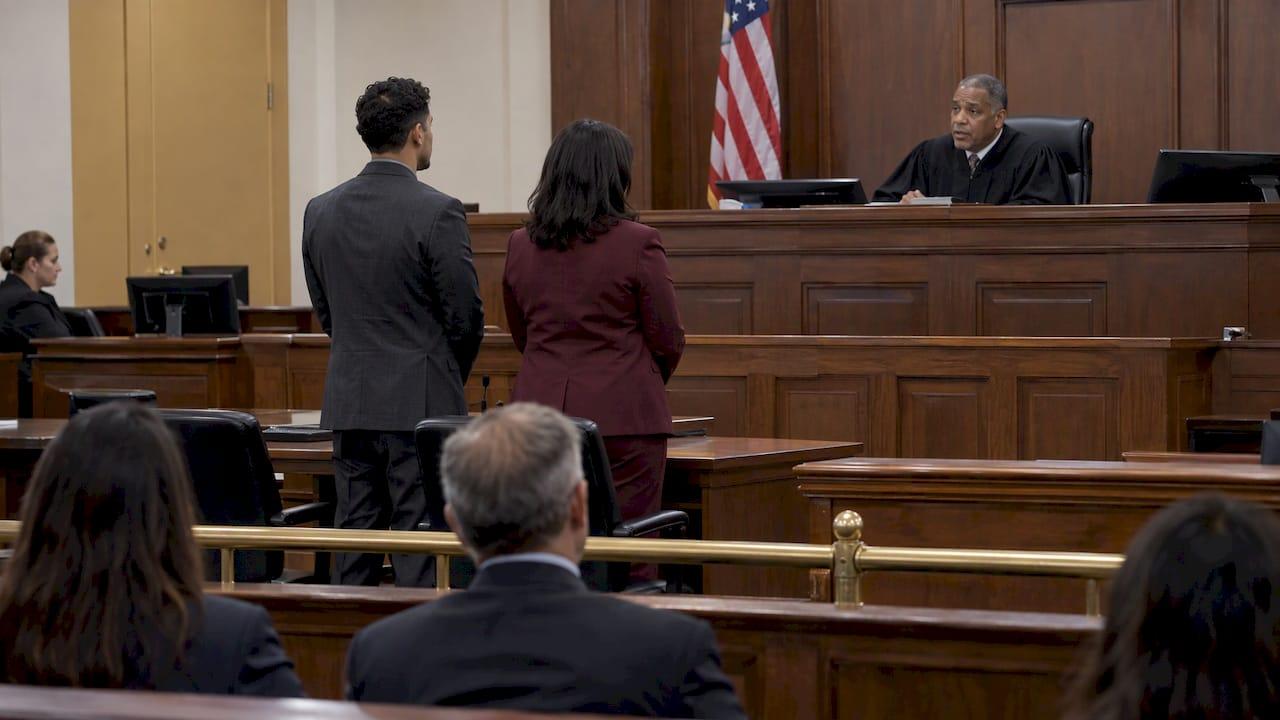
Under 8 U.S.C. § 1326, illegal reentry is a federal felony with a two-year maximum prison term in the base case. That maximum rises to 10 years or 20 years when the person was removed after certain prior convictions. The prior record, and the exact order of events in it, decides which ceiling applies. The actual sentence is usually set below that ceiling by the federal guidelines. A federal defense lawyer who reads the record early can change the outcome. We handle federal and border cases in San Diego, and this is how the statute works.
TL;DR
- Base penalty: a fine under Title 18, up to 2 years in prison, or both, for someone previously removed who enters, attempts to enter, or is found in the U.S. without consent.
- 10-year maximum: if removal came after three or more qualifying misdemeanors or a non-aggravated felony.
- 20-year maximum: if removal came after an aggravated-felony conviction.
- The real sentence comes from the Sentencing Guidelines, starting at base offense level 8 and moving up with the prior record.
- Challenges exist: the prior-conviction classification, the sequence of dates, and the validity of the old removal order can each change the range.
Table of Contents
- What the statute says
- The three maximums
- Supervised release and other consequences
- How the guidelines turn a ceiling into a sentence
- Issues that can change the penalty tier
- How § 1326 differs from § 1325
- What to do if you or a family member is charged
- Promo
- Our perspective
- FAQ
- Sources
What the statute says
Section 1326(a) covers a person who was denied admission, excluded, deported or removed, or who left while an order was outstanding. If that person later enters, tries to enter, or is "found in" the United States without the Attorney General's consent, the statute says they shall be fined under Title 18, imprisoned not more than 2 years, or both. The "found in" language matters. The offense can be charged when someone is discovered here, not only when they cross the line.
The Congressional Research Service describes it as a felony, with enhanced penalties up to 20 years in some cases. Fines are set by reference to Title 18, which is the general federal fine statute. Several of the pages that rank for this query quote a $250,000 figure for felonies. That is the usual Title 18 felony ceiling for an individual.
The three maximums
| Situation | Statute | Maximum prison |
|---|---|---|
| Previously removed, no qualifying record | § 1326(a) | 2 years |
| Removal came after three or more drug or person misdemeanors, or a felony that is not an aggravated felony | § 1326(b)(1) | 10 years |
| Removal came after an aggravated-felony conviction | § 1326(b)(2) | 20 years |
The U.S. Sentencing Commission's 2026 immigration primer lays out the same three tiers. It also notes that the 20-year tier turns on whether the earlier conviction is an aggravated felony as defined in 8 U.S.C. § 1101(a)(43). That definition is a long list of offense categories, not just serious-sounding crimes.
There is also a narrow tier for people removed on terrorism-related grounds. Section 1326(b)(3) provides a ten-year term that must run consecutively to any other sentence, according to the same primer.

Why the order of events matters
The enhancement applies only when the removal came after the qualifying conviction. A conviction that happened after the last deportation does not raise the statutory range. The Sentencing Commission's 2015 report on illegal reentry says so directly. A timeline of every conviction, removal and reentry is therefore the first document a defense team builds.
Supervised release and other consequences
Prison is not the whole sentence. Courts can add supervised release, which is post-prison supervision under 18 U.S.C. § 3583. The Sentencing Commission's primer on supervised release lists the standard conditions: no new offenses, no unlawful drug use, DNA collection when authorized, payment of fines and assessments, and in most cases drug testing.
For the base two-year offense, the Fifth Circuit has held it is a Class E felony with a maximum supervised-release term of one year. Higher tiers fall in higher felony classes and carry longer terms.
A conviction also creates a new aggravated record. It can feed future enhancements, because a prior illegal-reentry felony counts toward a four-level guideline increase, as the immigration primer explains.
How the guidelines turn a ceiling into a sentence
Judges do not sentence at the maximum by default. They start from the Sentencing Guidelines, § 2L1.2. The Commission's training presentation on § 2L1.2 states a base offense level of 8 for unlawfully entering or remaining in the country. Specific offense characteristics then add levels for earlier convictions such as drug trafficking offenses with sentences over 13 months, crimes of violence, firearms offenses, and others.
The primer adds two more adjustments. One or more prior felony illegal-reentry convictions bring a 4-level increase. Two or more misdemeanor illegal-entry convictions under § 1325(a) bring 2 levels.
The final number combines with criminal history to produce a guideline range. Courts stayed within that range more often after the 2016 amendment: the Commission's 2022 study found an average in-range rate of 66.0% in the five fiscal years afterward. That means the guideline calculation is where most of the fight happens. Every level is worth months.

Issues that can change the penalty tier
The printed maximum is a starting point. These are the points that most often move it.
Is the old conviction really an aggravated felony?
Courts compare the elements of the prior state offense with the federal definition. In one Fifth Circuit case, a Texas sexual assault conviction did not categorically qualify as an aggravated felony, so the defendant fell under the 10-year ceiling instead of the 20-year one. Whether state law labels the crime a felony or a misdemeanor is also not the whole story. The Eighth Circuit treated an Iowa "aggravated misdemeanor" punishable by up to two years as a felony for § 1326(b)(1).
Was the enhancement properly charged and proved?
The Supreme Court allows prior convictions to raise a statutory maximum without a jury finding, per the immigration primer's discussion of Almendarez-Torres. Details still matter. The Ninth Circuit has held that facts showing removal followed an aggravated-felony conviction must be admitted or proved to a jury to reach the 20-year maximum. How an indictment alleges the removal date can also affect whether the enhancement survives, as the primer describes.
Was the original removal order valid?
A defendant can sometimes attack the deportation order underlying the charge. The Supreme Court in Palomar-Santiago held that all three requirements of § 1326(d) must be met. The older Mendoza-Lopez decision holds that when a hearing denied meaningful judicial review, the government cannot use that order as reliable proof of an element of the crime. These challenges are technical and deadline-driven, so they belong with counsel from the start.
How § 1326 differs from § 1325
Section 1325 covers improper entry by someone who was not previously removed. It is a misdemeanor for a first offense. Section 1326 requires a prior removal, denial of admission or similar order, and it is a felony. The two connect in the guidelines: repeat § 1325(a) convictions count as "illegal reentry offenses" for the enhancements above. Most readers facing a § 1326 charge are dealing with the more serious statute.
What to do if you or a family member is charged
The first days set the case. These steps help most.
- Do not discuss immigration history with agents. Statements about prior removals are the core evidence for the charge.
- Gather the paperwork: prior removal or deportation orders, conviction records, and dates of every departure and return.
- Get the prior records classified. Whether each earlier conviction fits the 10-year or 20-year tier changes the entire negotiation.
- Work out the guideline range early. Plea offers make sense only against a calculated range.
- Ask about every challenge: the removal order, the charging language and the sequencing of dates.
Promo
If the charge is in the Southern District of California or involves the border, our Federal & Border Defense practice handles illegal entry, smuggling and related federal felonies. Our page on illegal entry charges explains how we approach these cases, and our write-up of average outcomes in § 1326 cases gives more detail on timing.

Logan Noblin offers consultations, and the firm takes federal felony cases, with pre-charge intervention available where a case has not yet been filed.
Our perspective
A § 1326 case looks simple on paper: a prior removal, a new presence, a charge. In practice it is a records case. The difference between two years and twenty often sits in a single conviction's elements or a date on a removal order.
Our approach is to build the story of the person behind the file. Judges sentence people, and the guidelines leave room for context: family ties, why someone returned, the circumstances of the earlier case. We use deep trial experience to test the government's proof and negotiate from a calculated range, not from fear of the statutory maximum.
Where intervention comes before charges, the options are widest. If you know a family member may be targeted, call early.
Logan Noblin
FAQ
What is the maximum penalty under 8 USC 1326?
The maximum is 2 years for the base offense, 10 years under § 1326(b)(1), and 20 years under § 1326(b)(2) for removal after an aggravated felony. A fine under Title 18 can be added to any tier. Actual sentences are driven by the guidelines and usually fall below these ceilings.
Is illegal reentry a felony?
Yes. The Congressional Research Service describes § 1326 as a felony offense. The base two-year offense is a Class E felony, according to the Fifth Circuit's decision cited above.
Can the 20-year maximum be avoided?
Sometimes. If the earlier conviction does not categorically match the aggravated-felony definition, the ceiling drops to 10 years, as in the Texas sexual assault case above. Whether it applies depends on the exact state statute and the record.
Does a conviction after deportation raise the maximum?
No. Under the Sentencing Commission's 2015 report, a conviction that occurred after the last deportation has no added effect on the statutory range. It can still matter for guideline criminal history.
Sources
- 8 U.S.C. § 1326: Reentry of removed aliens
- U.S. Sentencing Commission, Primer on Immigration Offenses (2026)
- Congressional Research Service, Immigration-Related Criminal Offenses
- U.S. Sentencing Commission, Report on Illegal Reentry Offenses
- U.S. Sentencing Commission, Primer on Supervised Release
- Fifth Circuit, United States v. Resendiz-Villa
- U.S. Sentencing Commission, § 2L1.2 presentation
- U.S. Sentencing Commission, Federal Sentencing of Illegal Reentry (2022)
- Fifth Circuit, Texas sexual assault aggravated-felony decision
- Eighth Circuit, United States v. Figueroa-Alvarez
- Ninth Circuit, United States v. Guerrero-Jasso
- Supreme Court, United States v. Palomar-Santiago
- Supreme Court, United States v. Mendoza-Lopez